2026届上海市黄浦区初三二模英语试卷及答案解析
- 2026-09-19 07:20:16
参考答案:
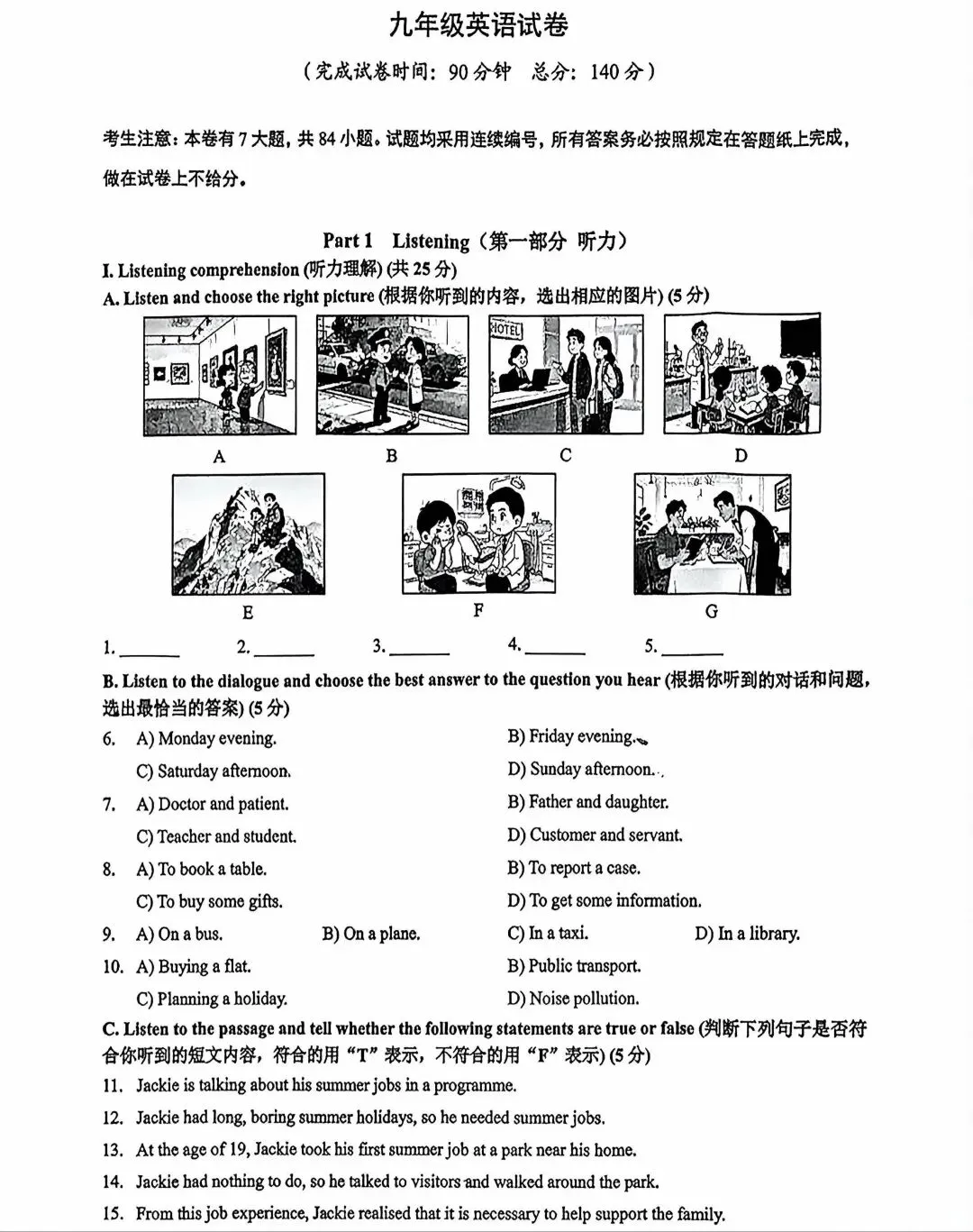
一、听力(略)
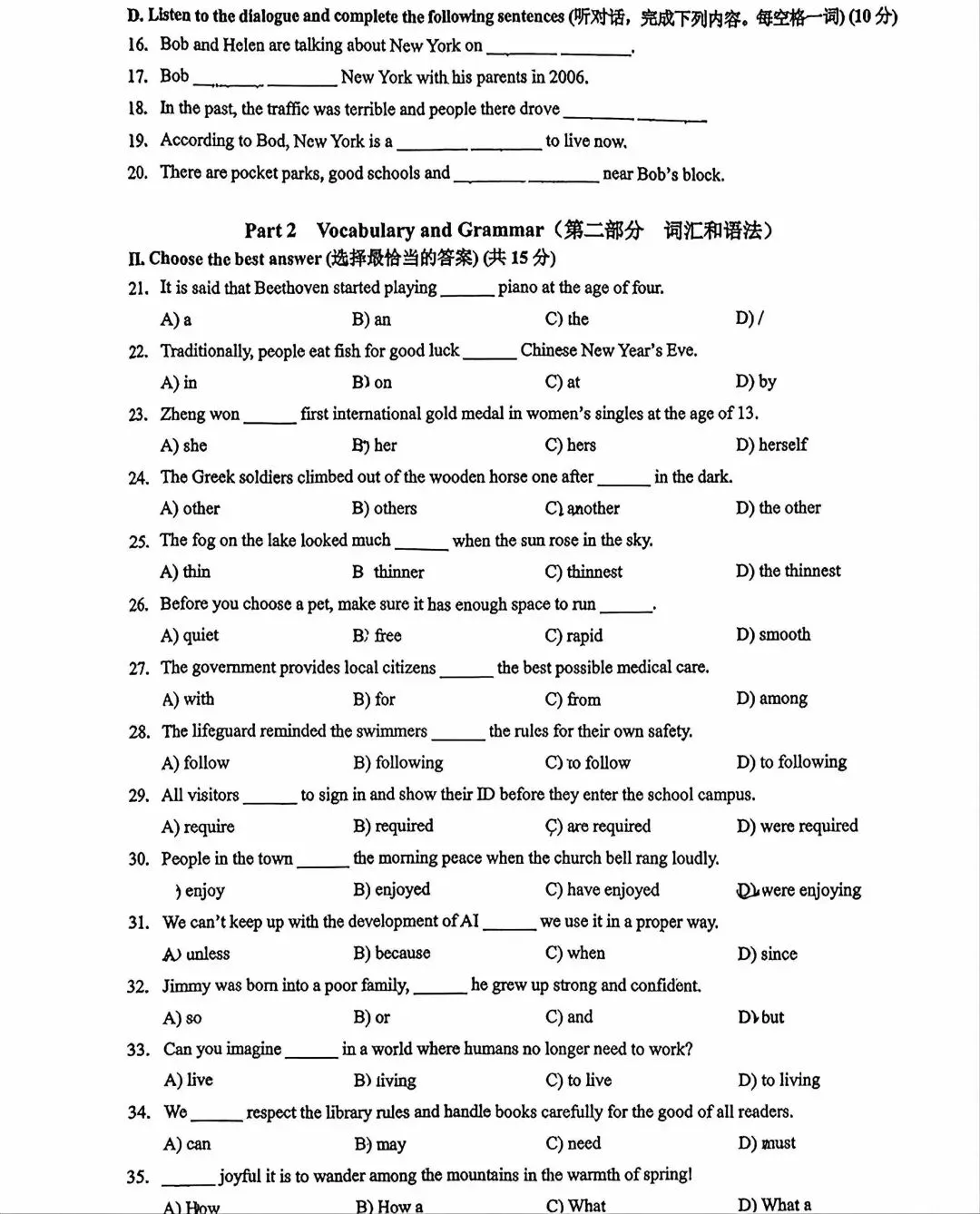
二、词汇与语法(21-35题)
21.C.
乐器名词前需加定冠词
the,play the piano
为固定搭配。
22.B.
具体某一天的晚上
Chinese New Year's Eve,
介词用on。
23.B.
修饰名词短语
first international gold medal,
需用形容词性物主代词her。
24.C.
one after another为固定短语,
意为“一个接一个”。
25.B.
much后接形容词比较级,
thin的比较级为thinner。
26.B.
run free为固定搭配,意为“自由奔跑”,符合宠物饲养语境。
27.A.
provide sb. with sth.
为固定搭配,意为“为某人
提供某物”。
28.C.
remind sb. to do sth.
为固定搭配,意为“提醒某人
做某事”。
29.C.
主语All visitors与require
为被动关系,句子为一般现在时,
故用are required。
30.D.
当教堂钟声响起时,人们“正在享受”宁静,用过去进行时were enjoying。
31.A.
unless意为“除非”,引导条件状语从句,句意为“除非我们合理使用AI,否则无法跟上其发展”。
32.D.
前后句为转折关系:“出生在贫困家庭,但成长得强壮自信”,用but。
33.B.
imagine doing sth.为固定搭配,
意为“想象做某事”,故用living。
34.D.
句意为“我们必须遵守图书馆规则”,must表示义务、必须。
35.A.
感叹句中心词为形容词joyful,
用How引导,结构为
How + adj. + 主语 + 谓语。
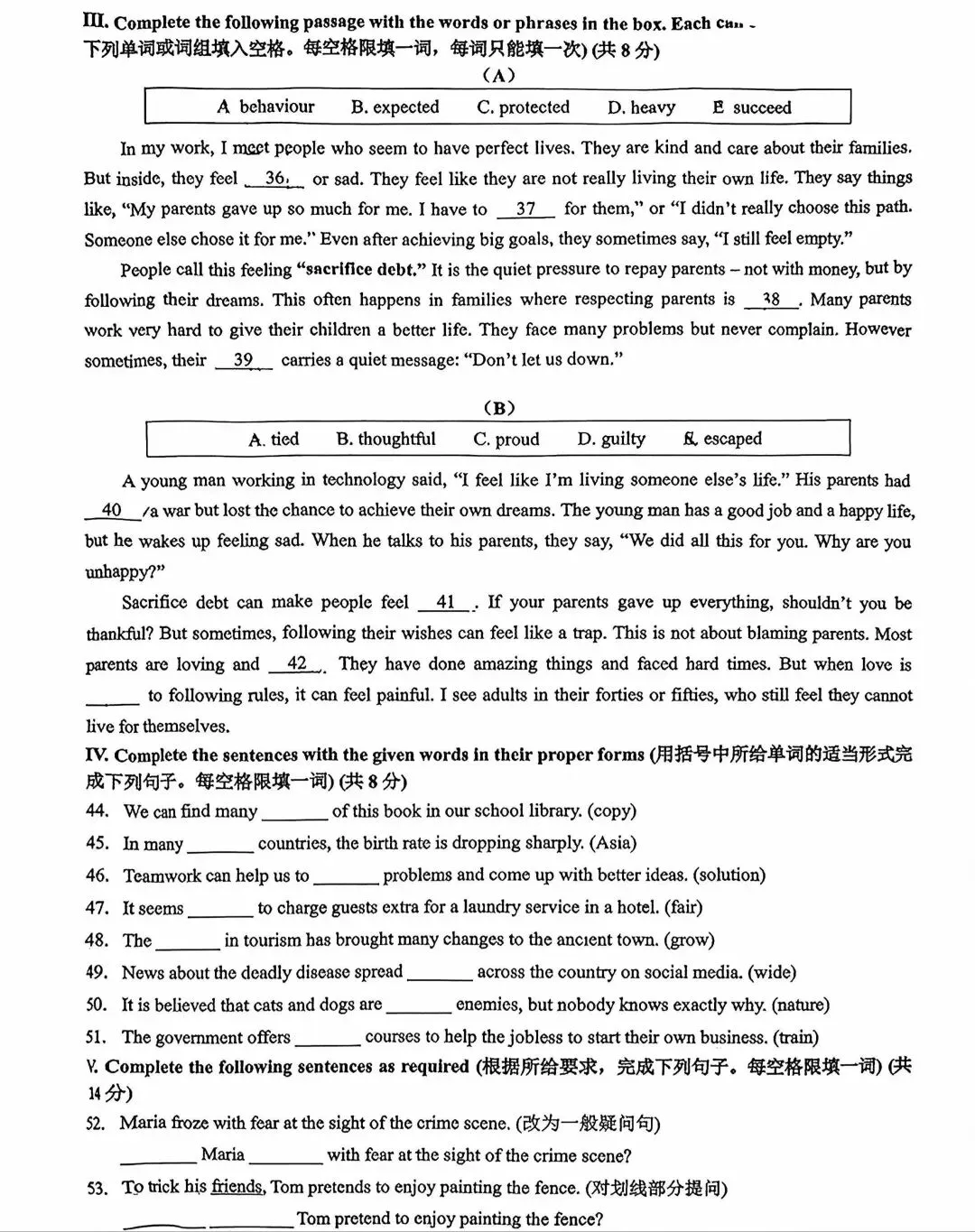
三、选词填空(36-43题)
(A)
36.C (protected) → 修正:
结合上下文,应为`D (heavy)`
(感到沉重或悲伤)
解析:前文提到“看似完美生活,
内心却____或悲伤”,`heavy`
可表示“心情沉重”,符合语境。
37.E (succeed)
解析:句意为“父母为我付出太多,我必须为他们____”,succeed for them
表示“为他们成功”,贴合“牺牲
债务”主题。
38.B (expected)(被动语态)
解析:句意为“在很多家庭中,尊重父母是被____的”,expected
表示“被期望的”,符合被动语境。
39.A (behaviour)
解析:句意为“他们的____传递着无声信息:别让我们失望”,
behaviour(行为)符合语境。
(B)
40.E (escaped)
解析:句意为“他的父母从战争中____”,escaped a war
表示“逃离战争”,符合语境。
41.D (guilty)
解析:句意为“牺牲债务会让人感到____”,后文提到“父母放弃一切,你难道不该感恩吗”,说明人会感到愧疚,guilty符合。
42.B (thoughtful)
解析:句意为“大多数父母是充满爱和____的”,thoughtful(体贴的)与loving并列,符合语境。
43.A (tied)
注:题目漏标选项,根据
“被____于遵守规则”,应为
tied to,表示“被束缚于”
解析:句意为“当爱与遵守
规则____时,会让人痛苦”,
be tied to表示“与……绑定/被
束缚于”,符合语境。
四、词形转换(44-51题)
44.copies
many后接名词复数,copy
的复数为copies
45.Asian
修饰名词countries,用形容词
Asian,意为“亚洲的”
46.solve
help sb. to do sth.,
用动词原形,solution的动词
形式为solve
47.unfair
It seems + adj.,
根据语境“额外收费是____的”,
用fair的反义词unfair
48.growth
The + n. + in tourism,
`grow`的名词形式为growth,
意为“旅游业的增长”
49.widely
修饰动词spread,用副词,
wide的副词形式为widely,
意为“广泛传播”
50.natural
修饰名词`enemies`,用形容词,`nature`的形容词形式为
`natural`,意为“天敌”
51.training
修饰名词`courses`,用动名词
作定语,`train`的动名词形式为`training`,意为“培训课程”
五、句型转换(52-58题)
52.Did; freeze
解析:一般过去时的一般疑问句,
需用助动词`Did`,动词`froze`
变回原形`freeze`。
53.Why does
解析:划线部分
`To trick his friends`
表目的,用`Why`提问;句子
为一般现在时,主语`Tom`
为第三人称单数,助动词用`does`。
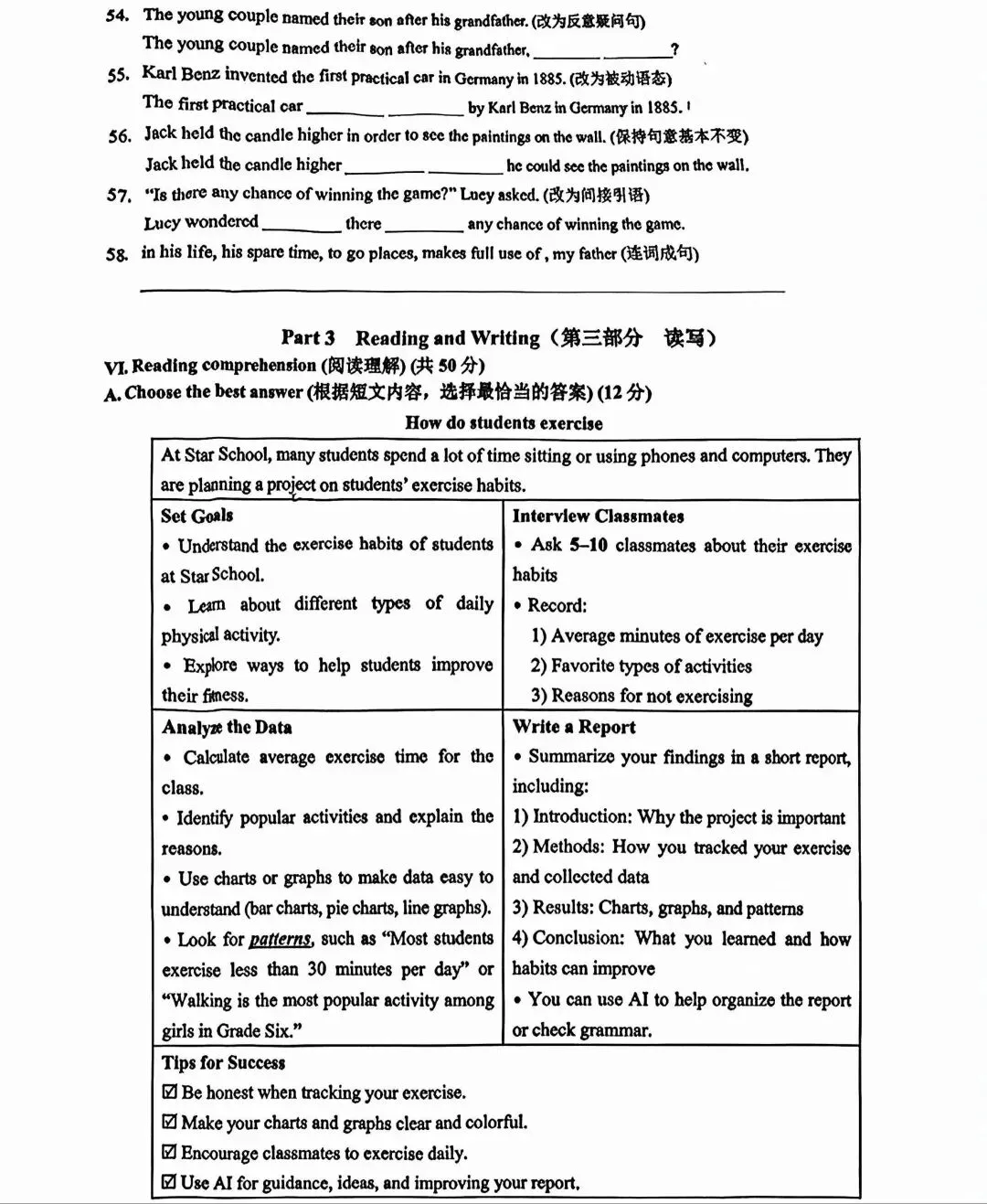
54.didn't they
解析:反意疑问句遵循
“前肯后否”,句子为一般过去时,
主语The young couple
用they指代,故为didn't they。
55.was invented
解析:一般过去时的被动语态,结构为
was/were + 过去分词,主语为单数,故为was invented。
56.so that
解析:`in order to`表目的,
同义转换为`so that`引导的
目的状语从句。
57.if/whether; was
解析:直接引语为一般疑问句,
间接引语用if/whether引导;
主句为过去时,从句is变为was。
58.My father makes full use of his spare time to go places in his life.
解析:连词成句需遵循主谓宾结构,make full use of为固定短语,意为“充分利用”。
六、阅读理解
(A篇:59-64题)
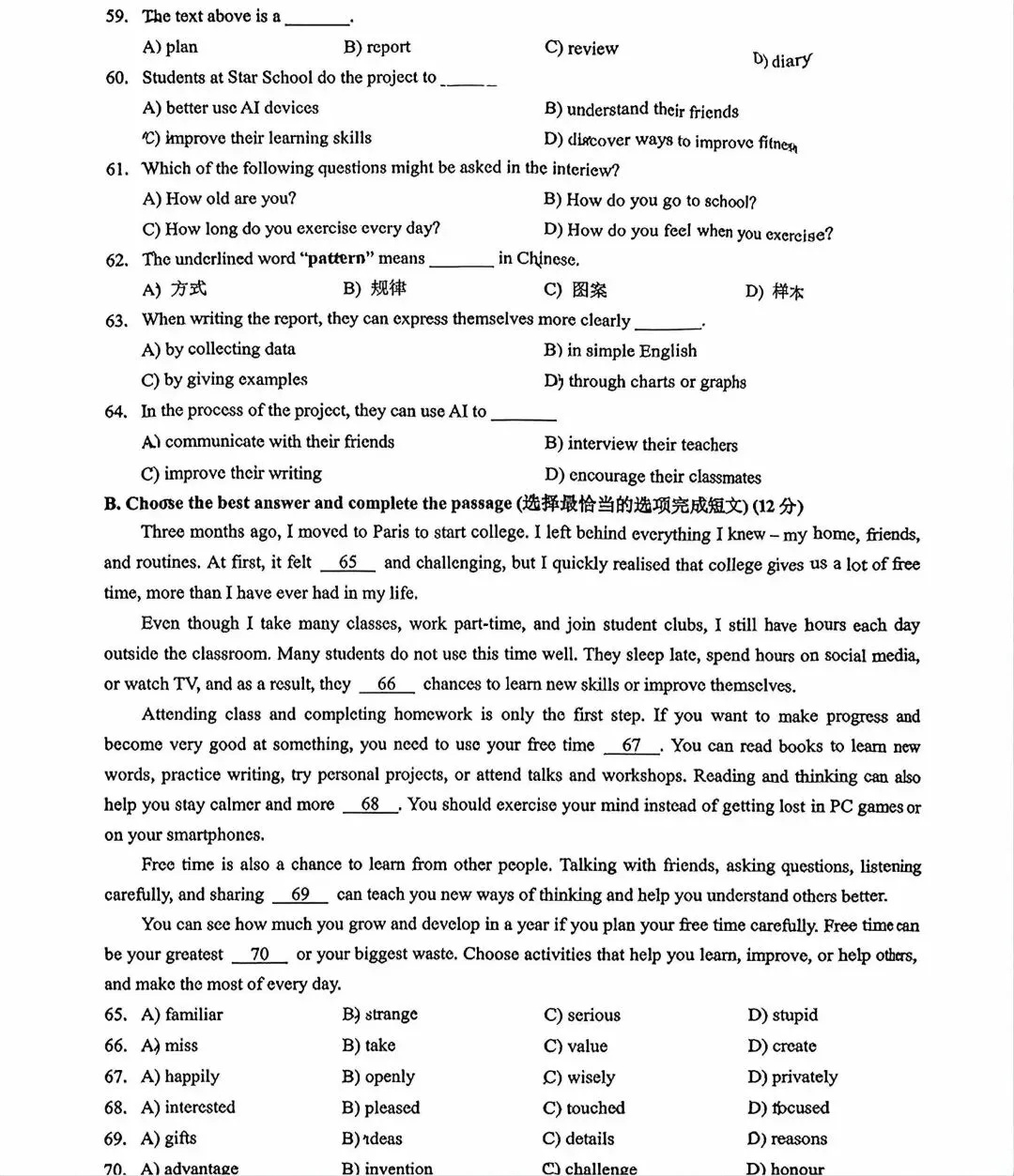
59.A (plan).
文本包含项目的步骤(目标、访谈、分析、报告),属于一份“项目计划”,而非单纯的报告/回顾/日记。
60.D.
项目目标明确提到
`Explore ways to help students improve their fitness`,
即“发现改善健康的方法”。
61.C.
访谈部分的记录项包括
`Average minutes of exercise per day`,对应问题“每天运动多久”。
62.B.
文中Look for patterns, such as
Most students exercise less
than 30 minutes...,
指的是运动的“规律/模式”。
63.D.
分析数据部分提到
Use charts or graphs to
make data easy to
understand,即通过图表让表达
更清晰。
64.C.
报告部分提到
You can use AI to help
organize the report or check grammar,即AI辅助提升写作。
七、完形填空
(B篇:65-70题)
65.B (strange).
前文提到“离开熟悉的一切”,
初到巴黎的感受应是“陌生的”。
66.A (miss).
学生熬夜、刷手机,会“错过”
学习新技能的机会,符合语境。
67.C (wisely).
句意为“要想进步,需要____
利用空闲时间”,wisely
(明智地)符合语境。
68.D (focused).
阅读和思考能让人更冷静、更
“专注”,与沉迷游戏的状态形成对比。
69.B (ideas).
与朋友交流、分享“想法”,能
学习新思维,符合语境。
70.A (advantage).
句意为“空闲时间可以是你最大的____,也可能是最大的浪费”,advantage(优势)与“浪费”
形成对比。
八、首字母填空(71-76题)
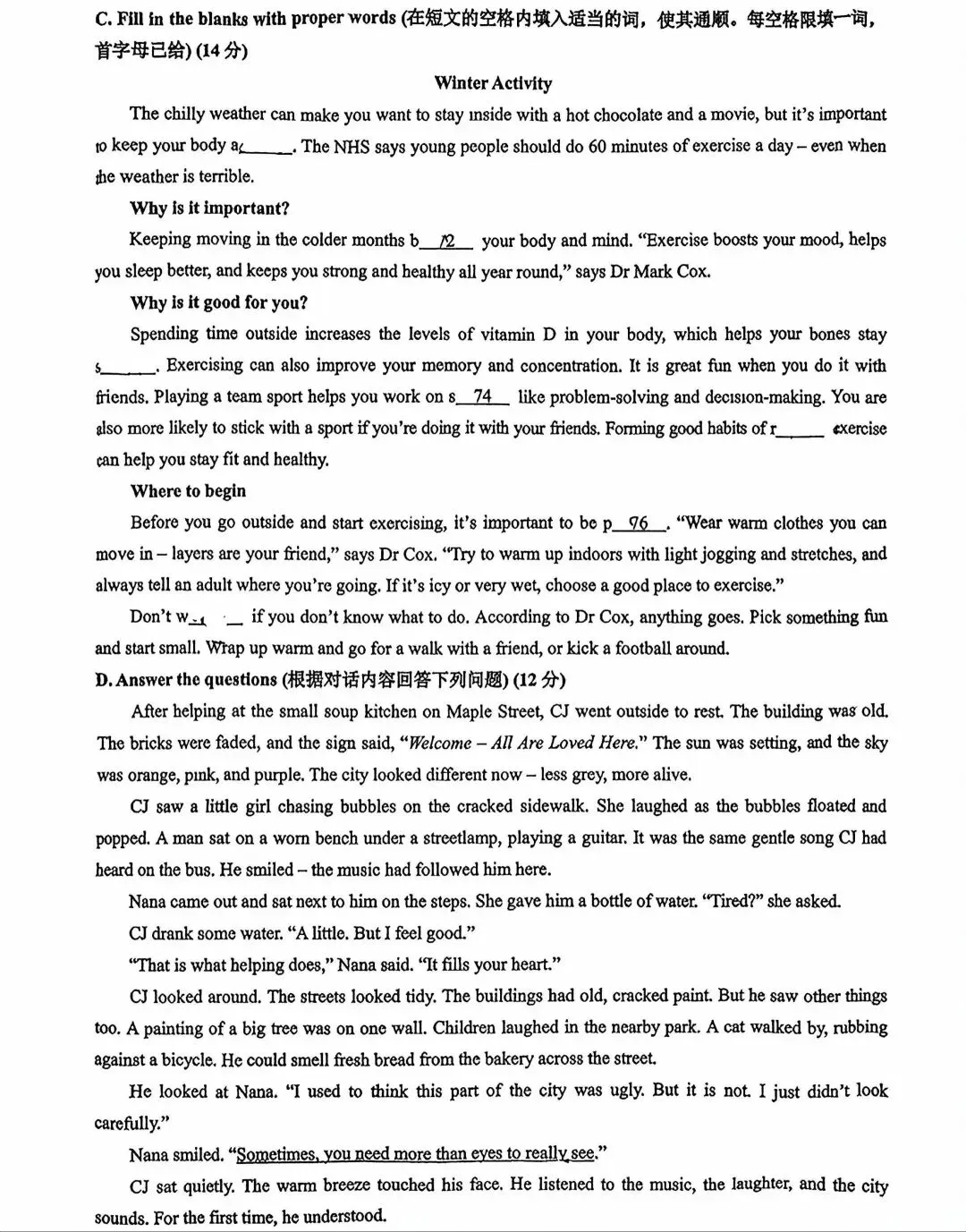
71.active
keep your body active,
保持身体活跃)
72.benefits
Keeping moving benefits
your body and mind,
运动对身心有益,主语为动
名词,动词用第三人称单数
73.strong
helps your bones stay strong,
帮助骨骼保持强壮
74.skills
work on skills like problem-
solving,培养解决问题的技能,
用复数
75.regular
good habits of regular
exercise,规律锻炼的好习惯
76.prepared
it's important to be prepared,
做好准备很重要
77.worry
Don't worry if you don't know
what to do,
不知道做什么也别担心
九、阅读理解
(D篇:78-83题)
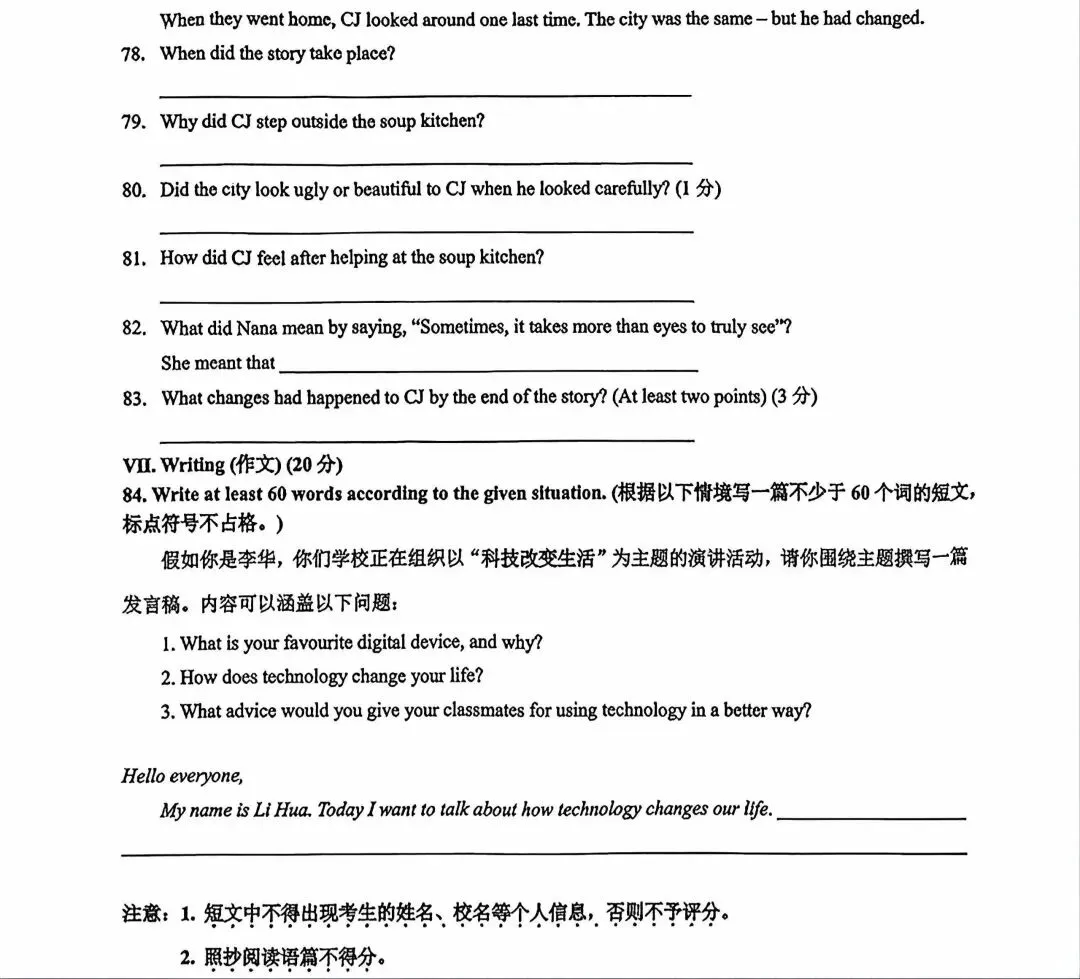
78.At sunset / in the evening.
解析:文中提到
The sun was setting,
说明故事发生在日落时分(傍晚)。
79.Because he was tired and
wanted to rest.
解析:文中提到After helping
at the small soup kitchen...
CJ went outside to rest,
可知他出去是为了休息。
80.Beautiful.
解析:CJ最后说I used to
think this part of the city was
ugly. But it is not. I just didn't
look carefully,说明他认真
看后觉得城市很美。
81.He felt a little tired but good.
解析:文中CJ回答
"A little. But I feel good.",
直接对应答案。
82.we need to use our heart
and feelings to truly see the
beauty of things, not just
our eyes.
解析:结合上下文,CJ之前只看到破旧的建筑,后来发现了美好事物,Nana的话意为“真正的看见需要用心,而非只用眼睛”。
83.1. He no longer thought the
city was ugly; he found
beauty in small things.
2. He learned to look at the
world with his heart, not just
his eyes.
3. He understood that
helping others fills your
heart.(写出两点即可)
解析:从CJ的认知变化、学会用心观察、理解帮助他人的意义等角度作答。
十、写作范文
Hello everyone, My name is
Li Hua. Today I want to talk
about how technology
changes our life. My
favourite digital device is
my tablet. It helps me
take online classes, read
e-books and draw whenever
I want. Technology has made
my life much easier: I can
study with educational apps,
stay in touch with friends
far away, and even order
food or books with just a few
clicks.But we should use
technology wisely. Don’t
spend too much time playing
games or scrolling through
short videos. Instead, use it to
learn new skills, explore
the world and connect with
people. Let’s make technology
a helpful tool, not a distraction.
Thank you!

