2026.5.9新托福考试真题回忆
- 2026-09-19 01:21:13
点击↑托你的福回复"TPO",领取8套新tpo!
1. 回复“模考”,免费参加托福/雅思/SAT真题模考
2. 回复考试日期如“0117”,领取考试预测题
3. 回复托福成绩如“托福98”,获得雅思成绩换算
官网:tuonidefu.com.cn

阅读
题型1
填空题
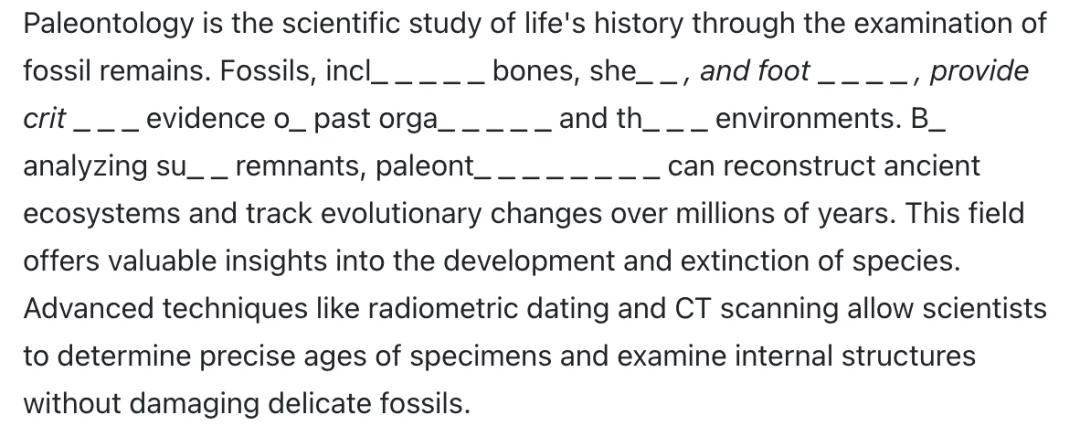
1、古生物学Paleontology
2、city: spiritual、cultural
3、3D打印技术
4、AI 的潜力与边界
5、Idea-makers
6、Philosophy
7、艺术能触动人的情绪
8、Cities as Innovation Hubs城市为何成为机会与创新的枢纽
9、Desert Ecosystems
10、The Gilded Age(19 世纪末美国镀金时代的剧烈变迁)
11、City expansion
12、Baroque music:音乐史上的巴洛克时期(约16世纪末至18世纪初)
题型2
1、印度各地的美食
2、健身房续费
3、基础设施维修
4、水管维修通知
5、文学课程介绍
6、“闹鬼”事件通知
题型3
学术阅读
1、Evolutionary Trends in Graphic Design
2、Parallel Algorithms:
From Challenges to Opportunities: 并行算法通过将大任务拆分并行处理来加速计算,既能快速分析医疗等领域海量数据(需合理分配资源),又能针对不同硬件优化,是深度学习等技术发展的关键。
3、Quantum Dots 量子点:
纳米尺度的发光材料
4、Metaphilosophy:
元哲学反思哲学能否突破文化与语言边界、质疑传统普遍真理的跨语境有效性,指出语言非中立且哲学理论难有全球普适性,同时认可跨文化哲学对话的可能并倡导以自省与严谨推动哲学稳健发展。
5、意大利鲁特琴歌(Italian Lute Song):
其兴起源于 1500 年左右音乐活字印刷术降低琴谱制作传播成本的技术革新,以及贵族宫廷赞助创作刊印、提升整体艺术水准的宫廷支持。
6、出生率死亡率模型Demographic Dynamics:
人口结构动态模型阐释了社会从农业向工业转型时,人口会经历高出生高死亡、死亡率先降引发人口膨胀、后续出生率随教育投入上升大幅下滑,进而出现老龄化与劳动力短缺,而低生育率还会同时倒逼社会创新并加重社会负担的完整演变过程。
7、罗马帝国瓦解带来的影响:
罗马帝国瓦解重塑了欧洲与地中海政治格局,既造成中央集权崩塌、权力分散、战乱频发并催生封建制与诸多小王国,也让各地获得自主发展创新的空间、借地方政权与修道院维系文化学术传承,而拜占庭延续罗马统治也印证帝国解体并非只会带来动荡,还为多元政治制度探索提供了可能。
8、Growth Mindset in Education教育中的"成长型思维"理念
9、Urban Resilience 城市韧性:
城市韧性是城市抵御灾害、气候冲击及经济社会动荡,并实现事前防范与灾后恢复的能力,可依托绿色基建、可再生能源、社区参与及智慧城市技术提升,但仍受资金、政治分歧与技术推广成本制约,却对城市可持续发展至关重要。
题型1
题型2
对话
1、学校停车楼施工慢,学生要改成公交月票
2、晨跑路段人流拥挤
3、周五guest speaker讲座介绍
4、学生申请转专业
5、所选课程教授请假,被建议换课
6、大学艺术博物馆19世纪纽约展
7、火车站旁新开的健康食品店
8、男生计划进山徒步,需去户外用品店购鞋
题型3
1、当晚 Gala 流程:签到领取胸牌、手册,19:00 开餐
2、学校更新作业平台,需提前注册账号
3、宿舍会议:研讨噪音管控与公共空间使用新规
4、校园堆肥项目下周一启动
5、图书馆需刷学生卡方可入场
6、校园摄影比赛截止时间
7、大学生成就奖颁奖典礼
8、学生志愿者俱乐部
9、本学期系列客座讲座
10、赏析大地艺术经典作品《螺旋防波堤》
题型4
1、Dark Stores:
暗店是坐落于市中心、仅服务线上订单、不接待线下顾客的仓储式零售配送中心,凭借低成本与高效极速配送具备显著优势,却会冲击传统实体店并造成零售相关岗位结构失衡,未来还将依托自动化持续重塑零售业,同时行业也需平衡其带来的经济与社会影响。
2、冰因水分子特殊结构出现反常密度,故而浮于水面
3、文艺复兴大师达芬奇
4、古罗马帝国储物器具 Armarium最初存放兵器,后民间用于收纳珍宝、书籍与衣物
5、西伯利亚爆炸坑:
全球变暖致使西伯利亚地下天然气喷发,形成巨型爆炸坑
6、Film Class 回忆:
对比纪录片documentaries与民族志电影ethnographic films两种拍摄方式
7、对比传统人类中心视角与多物种人类学multispecies anthropology对动物的不同认知
8、玛雅文明:
玛雅石雕可记载降水,干旱饥荒加速玛雅文明消亡
9、超大型超市:
大型超市的运营模式及其对本地商业和社区的冲击
10、两组实验探究懒怠工蜂是否会变得勤劳
题型1
第1套:
You are a member of a school club, and your club is planning to hold a holiday party. You have learned that the local community center, managed by Mr. Khan, might be a suitable venue for this event.
Write an email to Mr. Khan. In your email, you should:
Explain the purpose of the holiday party and mention the expected number of participants.
Ask about the total price for renting the venue.
Inquire whether the venue can provide the facilities you need.
第2套:
You have recently discovered a beautiful park for long walks near your university campus. You think your friend Alex would enjoy the experience and you want to invite them to join you on an upcoming weekend.
Write an email to Alex. In your email, do the following:
Describe the park and what makes it special.
Invite Alex to join you for a walk in the park during an upcoming weekend.
Suggest to Alex what they should prepare for the trip.
第3套:
You and your friend Alex have been talking about taking a trip during spring break. You recently found a travel package to a nearby city and think it would be perfect for both of you.
Write an email to Alex. In your email, you should:
Explain why you think this travel package is a good choice for your trip.
Describe what the travel package includes.
Invite Alex to join you on the trip.
第4套:
Your professor, Dr. Smith, recently assigned a group project due in two weeks. You are frustrated because not all of your group members are contributing equally to the project.
Write an email to Dr. Smith. In your email, do the following
Describe the issue you are facing with your group members
Describe your specific contribution to the project
Explain why you and the group have been unable to address this issue.
第5套:
You recently visited Mountain View Park. While you enjoyed your time there, you noticed a few issues that you feel should be brought to the management's attention.
Write an email to Ms. Harris, the park manager. In your email, you should:
Explain what you enjoyed about your visit to the park.
Point out specific problems you observed, such as litter and a lack of drinking water facilities.
Provide concrete suggestions for how these issues could be addressed.
第6套:
You recently completed a cooking class taught by Ms. Baker. You were very satisfied with the experience and would like to thank her. You are also eager to keep improving your cooking skills and would like her guidance.
Write an email to Ms. Baker. In your email, you should:
Explain why you enjoyed the class and why you are writing to thank her.
Ask for her advice on how to further improve your cooking skills and request recommendations for learning resources.
Express your gratitude to her.
第7套:
You are a student leader at your school and have been assigned to help plan your class field trip.You have found a travel agency that offers comprehensive travel packages and want to contact the travel agent, Mr. Brown, to inquire about their services.
Write an email to the travel agent, Mr. Brown.In your email, do the following:
Explain the purpose and dates of the class field trip.
Ask about the available offers for large groups.
Request details on how they can accommodate specific travel needs and additional services offered.
题型2
第1套:
Dr. Achebe:
Today's educational institutions need to prepare students for a world impacted by climate change and other environmental problems. Education that focuses on science and technology can help students develop innovative solutions to environmental problems. On the other hand, education that emphasizes social sciences and ethics can foster students' deeper understanding of environmental problems and their effects. In your view, which of these two approaches best prepares students to face climate change and other environmental issues?
Claire:
Focusing on social sciences like history and human geography helps us to see how our actions affect global communities. By learning about different cultures and the environment, we understand the need for collective action. This knowledge encourages us to work together to improve the environment on a global scale.
Andrew:
Technical skills are essential in combating climate change. They provide tangible solutions to environmental issues. Education should prioritize teaching these skills, as they directly address and solve problems like renewable energy development and waste reduction. A practical approach like this can ensure a better future for all.
第2套:
Dr. Gupta:
The arts include a variety of fields: literature, painting, and dance, just to name a few. Some people believe the arts play a vital role in human communication and growth,reflecting cultural values and commenting on societal issues. On the other hand, some people believe that the arts are mainly valuable as a source of entertainment and personal enjoyment, with little or no wider significance. Which view on the arts' role in society do you hold? Why?
Claire:
I think the role that the arts play in society is highly significant. Art can convey powerful messages and provoke thought and discussion about important social and cultural issues. It can also preserve history and traditions, allowing future generations to understand and appreciate their heritage.
Paul:
I think people like Claire overestimate the impact that the arts have on society. Obviously, the arts can provide a sense of joy and relaxation, offering an escape from the stresses of everyday life. But there are many disciplines and fields that play a much more vital role in promoting communication and growth, such as journalism and psychology.
第3套:
Dr. Gupta:
Today, I'd like to discuss how young people develop financial literacy. On one hand, structured courses can provide a solid foundation in financial concepts and help individuals make more informed money-related decisions. On the other hand, some argue that true financial literacy is better acquired through real-world experience and personal practice. In your opinion, which approach plays a more important role in developing financial literacy: formal classroom instruction or hands-on experience? Why?
Claire:
I believe structured courses are more important because they teach fundamental concepts—such as budgeting, investing, and risk management—in a systematic way. Without this foundational knowledge, people might make costly mistakes in real life.
Andrew:
While courses are useful, I think hands-on experience matters more. Managing your own income, paying bills, and learning from actual financial setbacks teach lessons that textbooks simply cannot replicate.
第4套:
Dr. Diaz:
Today, I'd like to discuss how universities should prepare students for an ever-changing job market. Some people believe that university curricula should be flexible and quickly adapt to market shifts to ensure students learn relevant, practical skills. Others argue that curricula should remain stable and consistent, giving students a broad general education that prepares them for any career path. Considering both viewpoints, do you think schools should frequently adjust their courses in response to changes in the job market? Why or why not?
Paul:
I don't think schools should change their curricula too often. A stable curriculum benefits students more in the long run. The job market changes too quickly, and if schools keep adjusting their courses, they may actually undermine the systematic nature of education. Students should instead focus on gaining broad knowledge across different fields, earning essential certifications, and building foundational abilities during college. They can always specialize later.
Kelly:
I believe universities need to be more flexible. Society is evolving at a rapid pace, and schools cannot afford to stay the same. Colleges need to establish a teaching system that can respond to market demands in a timely manner. This would help students acquire the skills that employers actually need and better adapt to the future work environment.
第5套:
Dr. Diaz:
Many people believe that social media platforms—which allow users to exchange information and ideas in virtual communities—have significant potential in education. They can facilitate student collaboration and provide instant access to abundant resources. However, concerns about misinformation and privacy issues have raised questions about their suitability in educational settings. In your opinion, can social media be effectively used as an educational tool? Why or why not?
Paul:
I support using social media for education. These platforms offer immediate communication and rapid feedback, which allows students to continue interacting with professors after class. This effectively extends learning beyond the classroom walls and creates more opportunities for academic engagement.
Kelly:
I have reservations about this approach. Not all students are familiar with or use social media, so those who don't may feel excluded. Additionally, some students cannot afford smartphones or reliable internet access due to financial constraints. Relying on social media as a teaching tool could therefore create inequality among students.
题型1
复述句子
第1套:
准备presentation
You are working at a school as part of an internship. Your supervisor is training you to help students prepare for their science project presentations. Listen to the supervisor and repeat what the supervisor says. Repeat only once
Start by setting up the projector screen.
Use the whiteboard to highlight key points
Arrange your project materials neatly on the tables.
Check all the equipment to ensure it works properly.
Make sure your computer is set up with your presentation.
It's a good idea to practice delivering your speech in front of some friends.
Take time to review your notes thoroughly, so you'll feel confident and prepared.
第2套:
社区艺术项目community arts program场景:教小学生水彩画
第3套:
校园招聘会接待培训
第4套:
校园志愿园艺组新成员上岗 botanical garden 的岗前培训
第5套:
class registration
You are being trained to help new students register for classes. Listen to your trainer and repeat what she says. Repeat only once.
Enter your name and student ID number.
Browse the course catalog to choose your classes.
You can use the schedule planner tool to avoid time conflicts.
If a class is already full, a pop-up message will appear.
Contact the instructor to see if more seats can be added.
You can still add or drop classes up until the second week of the new semester.
For your records, print out a list of your classes or email a copy to yourself.
第6套:
home improvement store
第7套:
Assist visitors at a university career fair
题型2
面试
第1套:
People's experiences with setting personal goals
You have agreed to participate in a research study about people's experiences with setting personal goals. You will have a short online interview with a researcher. The researcher will ask you some questions.
Thank you for agreeing to participate. I'd like to ask you some questions about your experiences with setting personal goals. First, think of a time, recent or not, when you have something you wanted to achieve. What was it?
Gotcha. In general, how do you handle difficulties or obstacles that come up whileworking toward what you want to achieve?
Understood. In your opinion, how important is goal setting for personal growth?
Thanks. Last question. Do you think children should be taught to set personal goals from an early age? Why or why not?
第2套:
gardening
First, do you have a garden or any plants that you take care of? If so, how often do you spend time gardening, and if not, why?
What kinds of plants or gardens have you seen or heard about that you found interesting or appealing? Describe them and talk about why you found them interesting or appealing.
What challenges do you think people face when trying to grow plants or maintain a garden?
Some people believe that gardening can have positive effects on personal mental health and well-being. Do you agree or disagree with this viewpoint? Why?
第3套:
entertainment preferences
You received an email from your university inviting you to join a research study about entertainment preferences. You have scheduled a short online interview with a researcher to answer a few questions.
1. Today, I'd like to ask you some questions about your entertainment preferences. What kind of movies do your family or friends generally like to watch? For example, do theyprefer action movies, comedies, dramas or other types?
2. I see, when you watch a movie, do you prefer to watch after work or school on weekdays, or do you like to watch during the weekends? Why?
3. Interesting. Next, I'd like to get your opinion. In the past, people mostly watched moviesand theaters. Today, many people watch movies at home. Do you think that movie theaters will continue to exist in the future? Why or why not?
4. Good points. I just have one more question. Some people believe that movies can be apowerful tool for educating people and raising awareness about important issues. Do you agree with this idea? Or do you think there are other more effective ways to educate people? Explain why you think so?
第4套:
Music preferences
You received an email from your university inviting you to join a research study about music preferences. You have scheduled a short online interview with a researcher to answer a few questions.
Thank you for agreeing to participate. I'd like to ask you some questions about your music preferences. First, how often do you listen to music? Do you listen daily, weekly orless often?
Thank you. What genres or types of music do you usually enjoy listening to? For example, do you prefer classical, rock or jazz music? Give details to explain your answer.
Interesting. Can you tell me about a concert or live music event you would like toattend? Why would you make that particular choice?
Great. Some people believe that music can have a powerful effect on our emotions and moods. Do you agree or disagree with this viewpoint? Why?
第5套:
People's experiences with hobbies
You have volunteered for a research study at your university about people's experiences with hobbies. You will have a short online interview with a researcher. The researcher will ask you some questions.
Thanks for being involved in this research. I'd like to ask you some questions about hobbies. First, what kinds of hobbies do you think are especially popular today? Why do you think that is?
Sounds good. Next, what role do you think friends, family or community play in encouraging someone to take up a hobby?
Noted. Now many people start hobbies but don't continue with them. What do you think leads people to give up on their hobbies?
Okay. Thanks. Last one. Some people believe spending time on hobbies is essential, while others see it as a luxury. What is your opinion?
第6套:
plan making
You have volunteered for a research study at your university about people's experiences with making plans. You will have a short online interview with a researcher. The researcher will ask you some questions.
Thanks for being involved in this research. I'd like to ask you some questions about planning. First, when people make plans and face difficulties or obstacles, what suggestions would you give to deal with these problems?
Sounds good. Next, what role do you think parents and family play in helping young children learn to make plans?
Noted. Now, should young kids learn to make plans and arrange their time at an early age? Do you think it is good for them?
Okay. Thanks. Last one. Some people think it is important for children to learn planning at a young age, while others believe it is unnecessary. What is your opinion?
第7套:
运动习惯
第8套:
social media
You have volunteered for a research study at your university about people's experiences with social media. You will have a short online interview with a researcher. The researcher will ask you some questions.
Thanks for being involved in this research. I'd like to ask you some questions about social media. First, how often do you use social media, and what do you mainly use it for?
Sounds good. Next, what aspects of using social media make you feel happy or troubled?
Noted. What do you think about the boundary of sharing personal content on social media? What kind of content is proper to share online?
Okay. Thanks. Last one. Do you think social media brings more positive or negative impacts to society? Please explain your reasons.

如果你要考托福/SAT/雅思/GRE,请试试下面这个绿色二维码,给你A+级的备考体验:


部分展示