初中八大时态综合练习题
- 2026-11-18 03:13:29
初中八大时态综合练习题题目订正 24题:A:studies; plays 33.题: 删除my father 79:why___she___angry 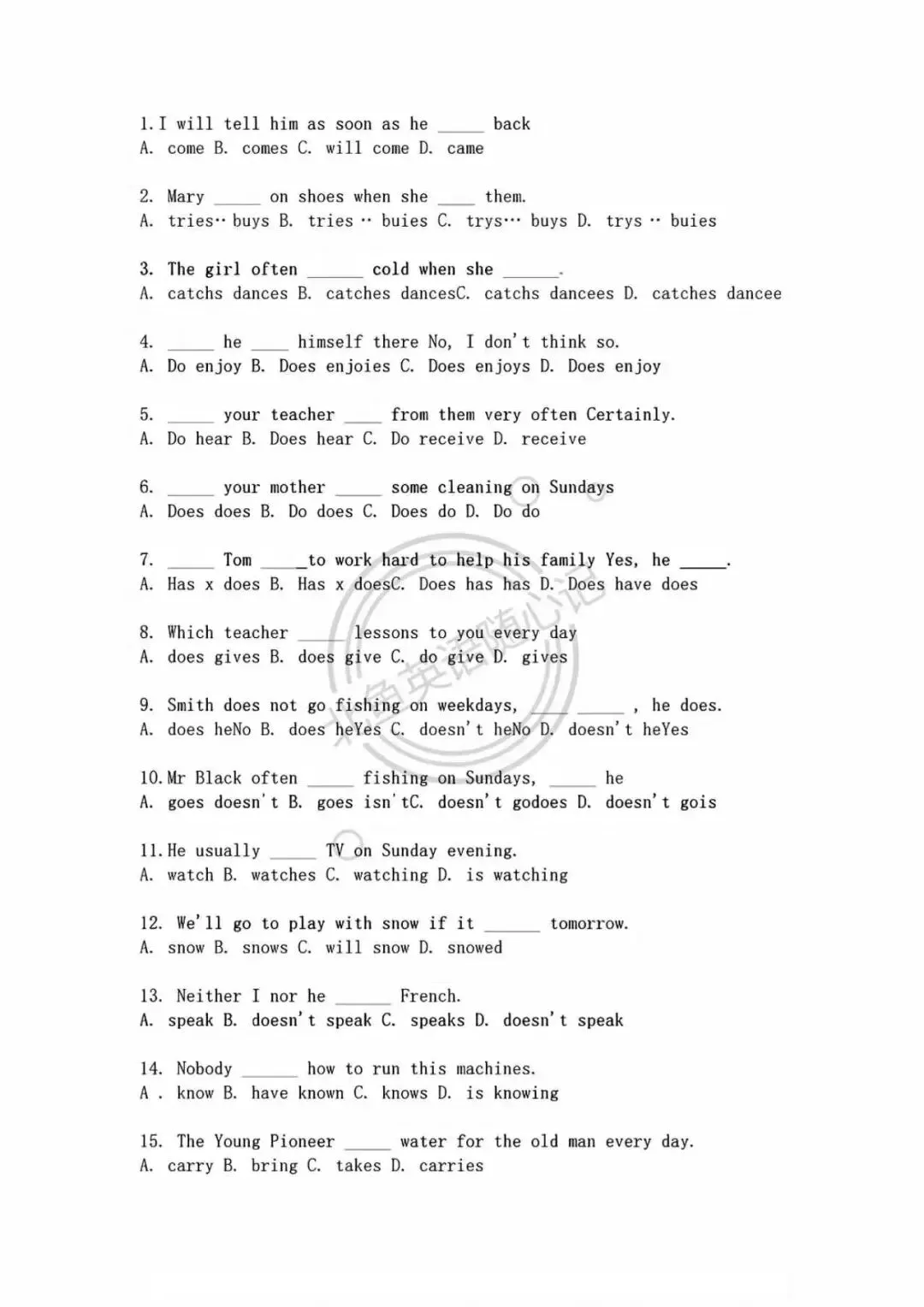
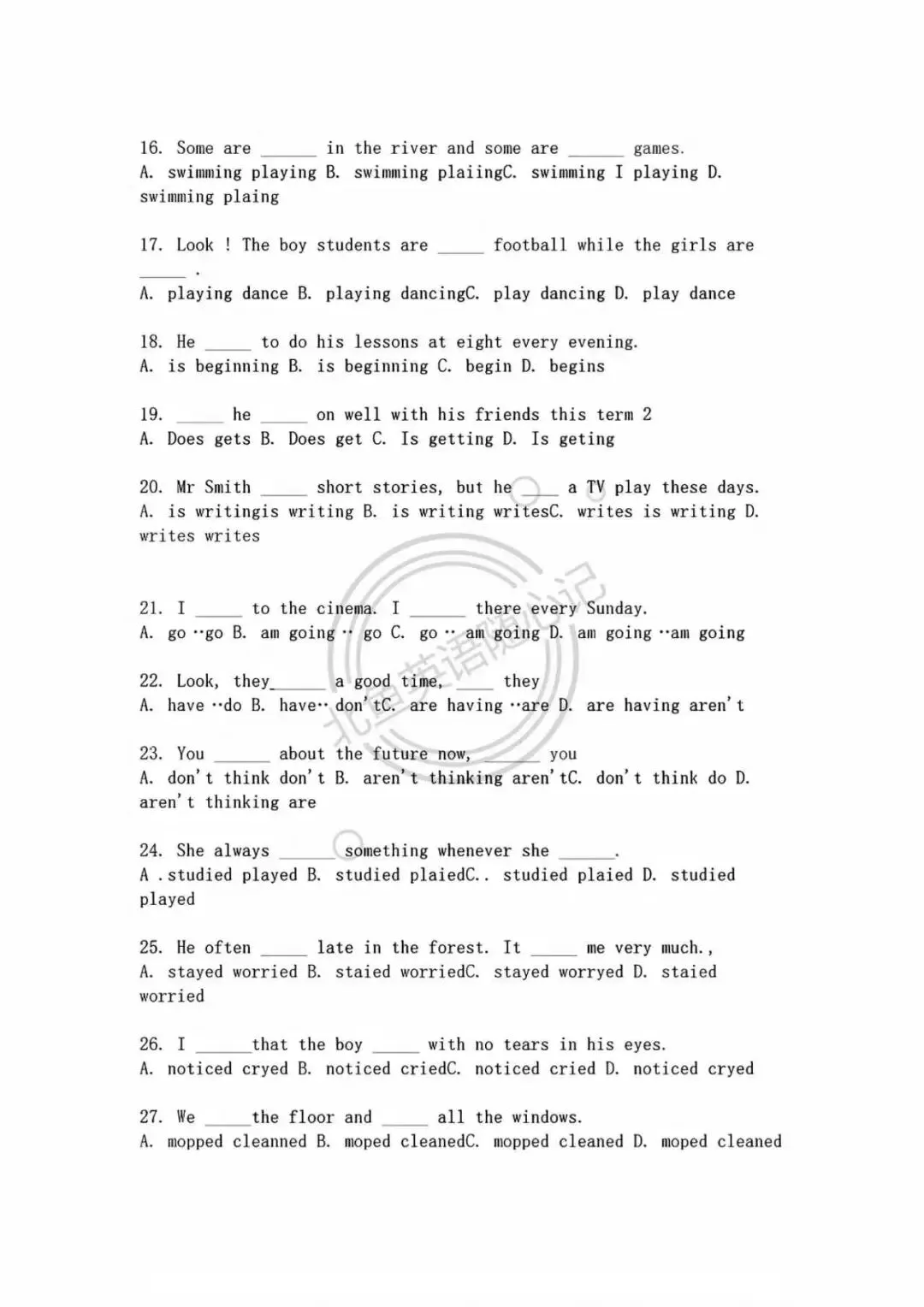
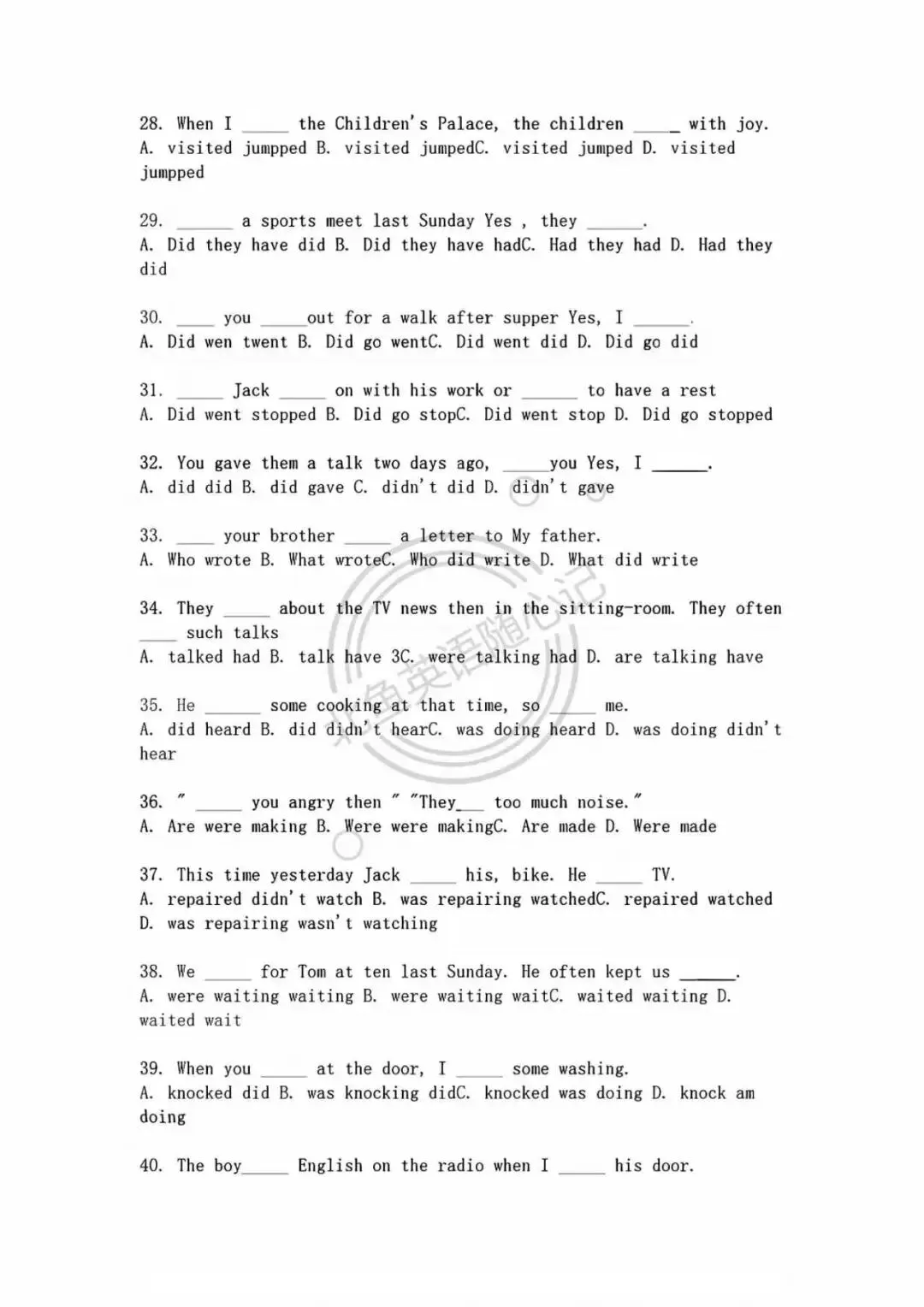
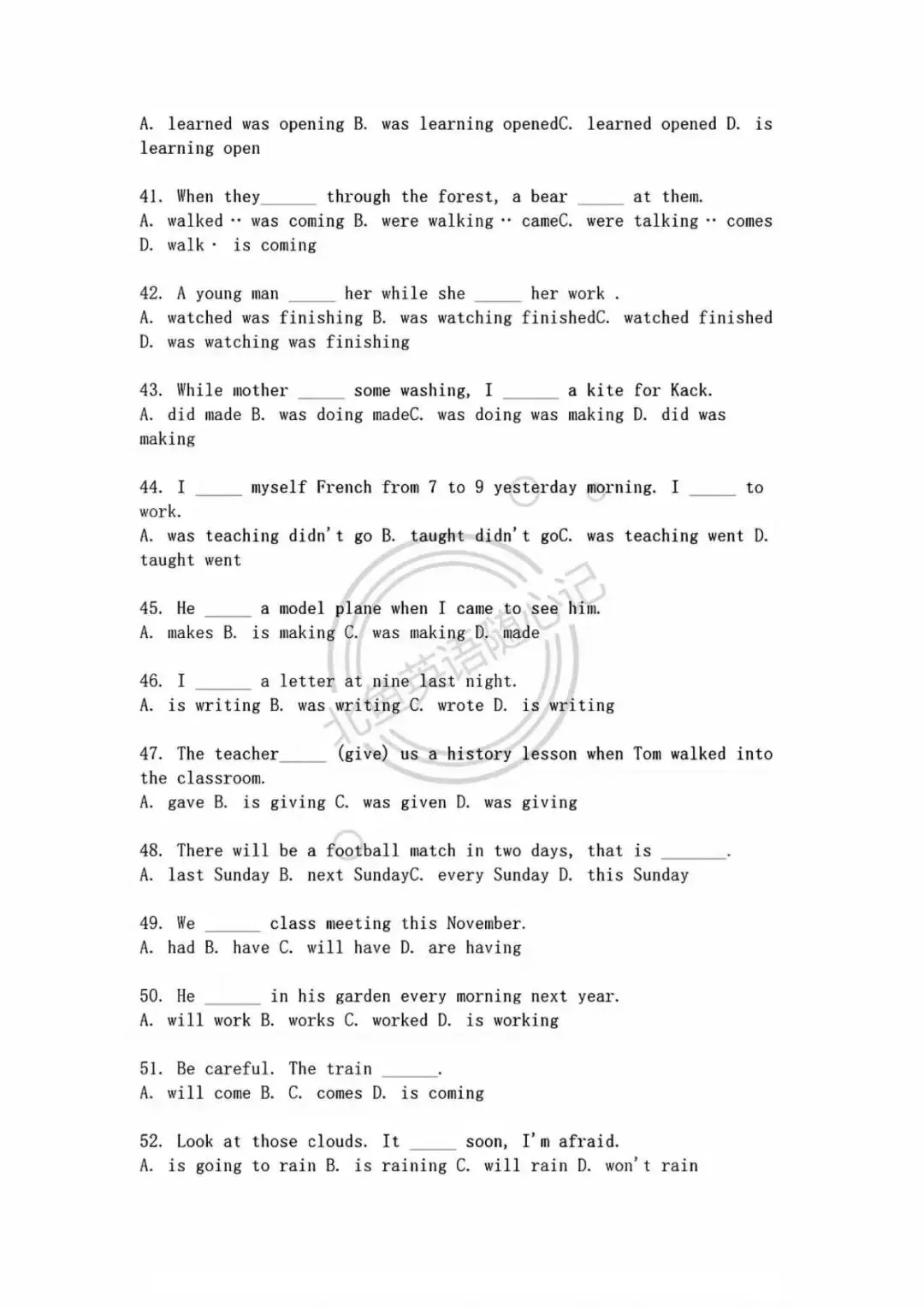
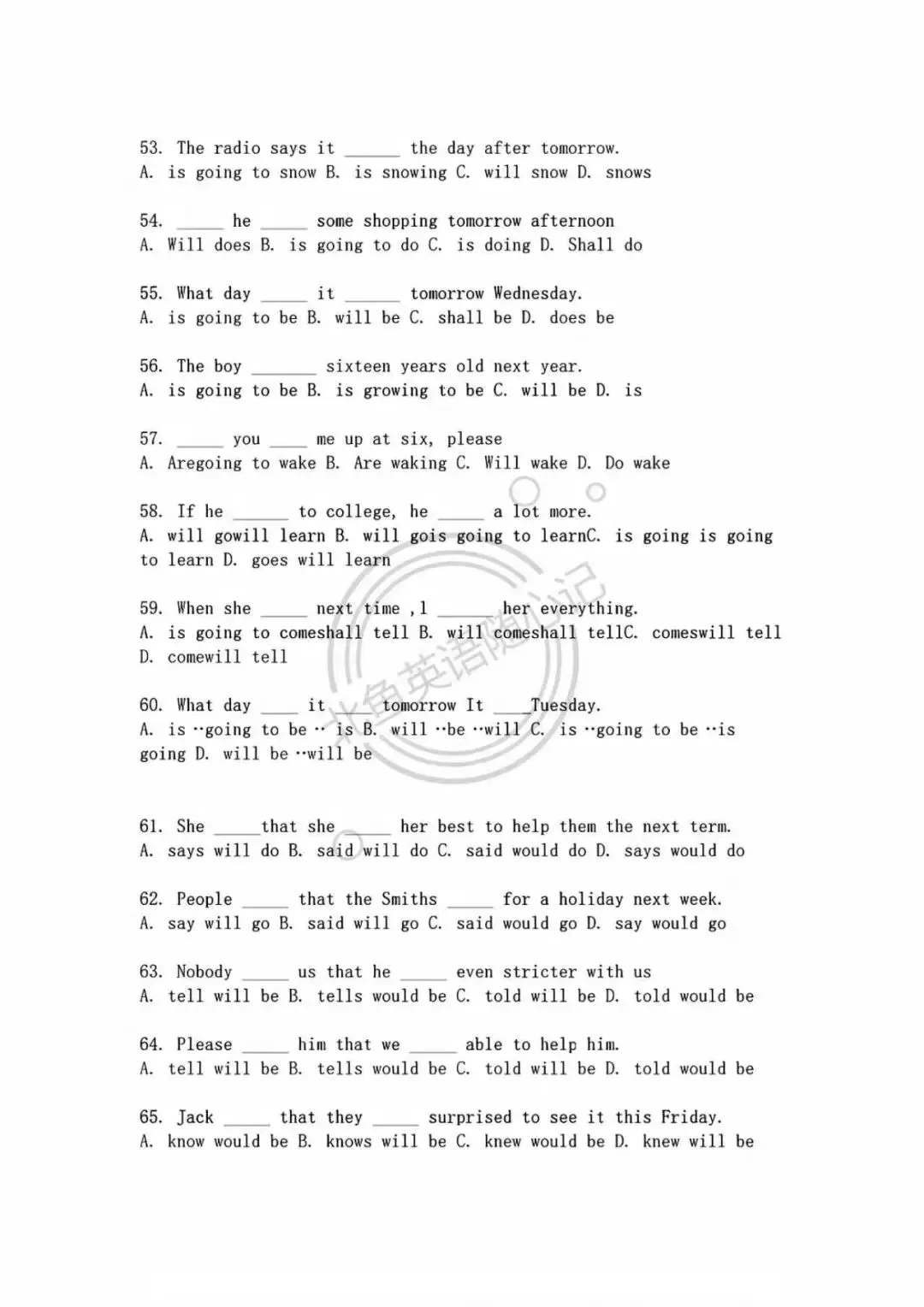
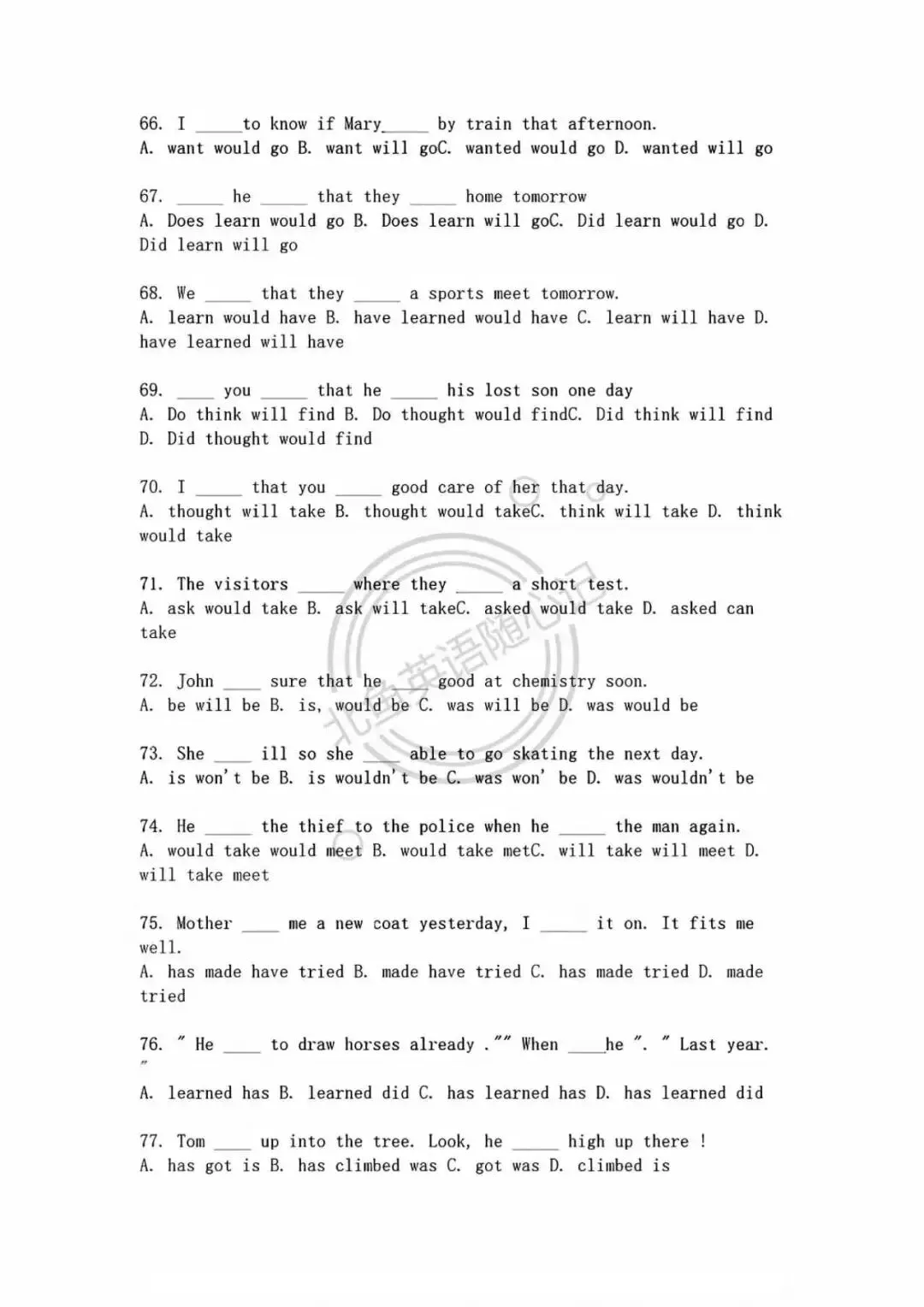
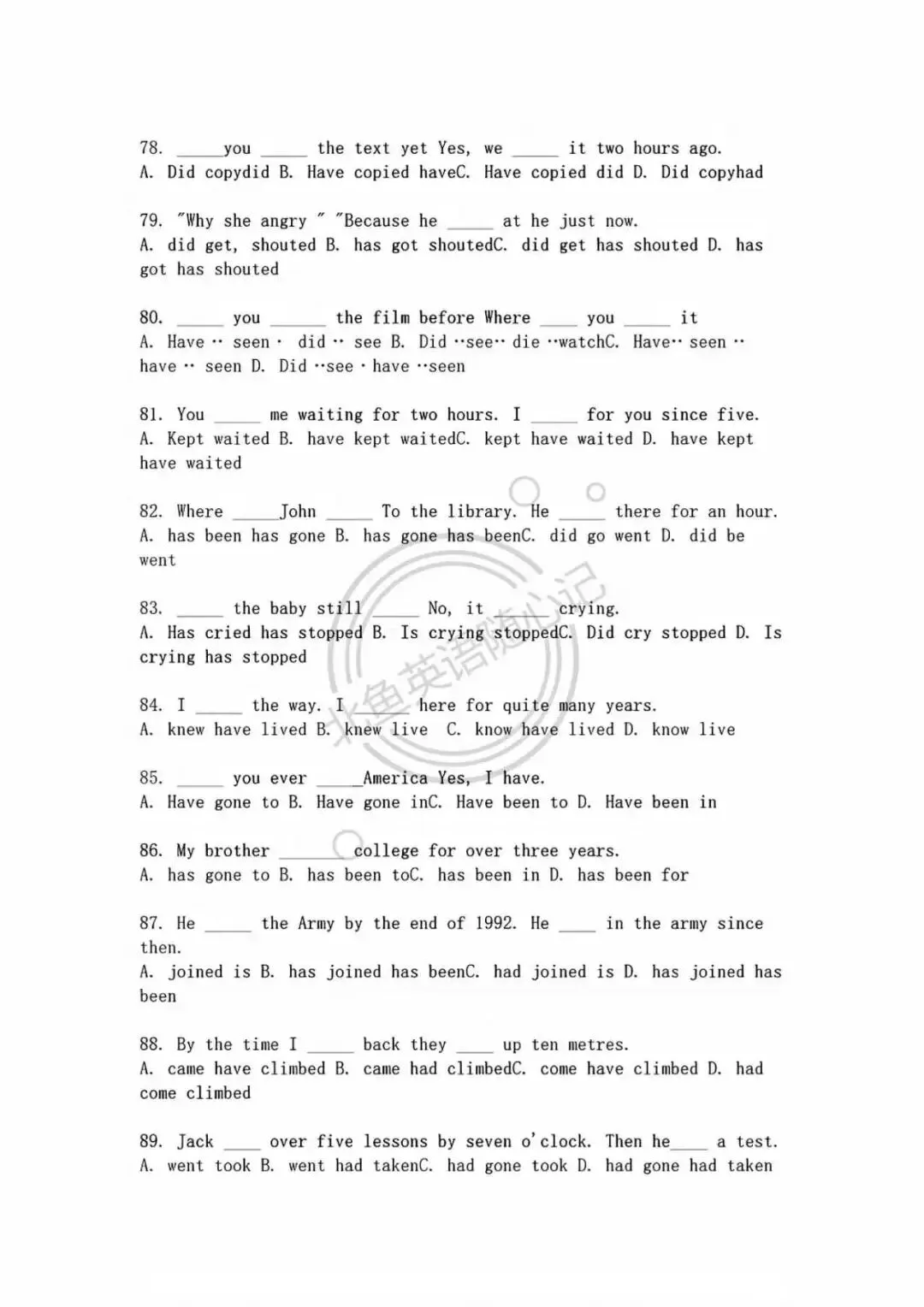
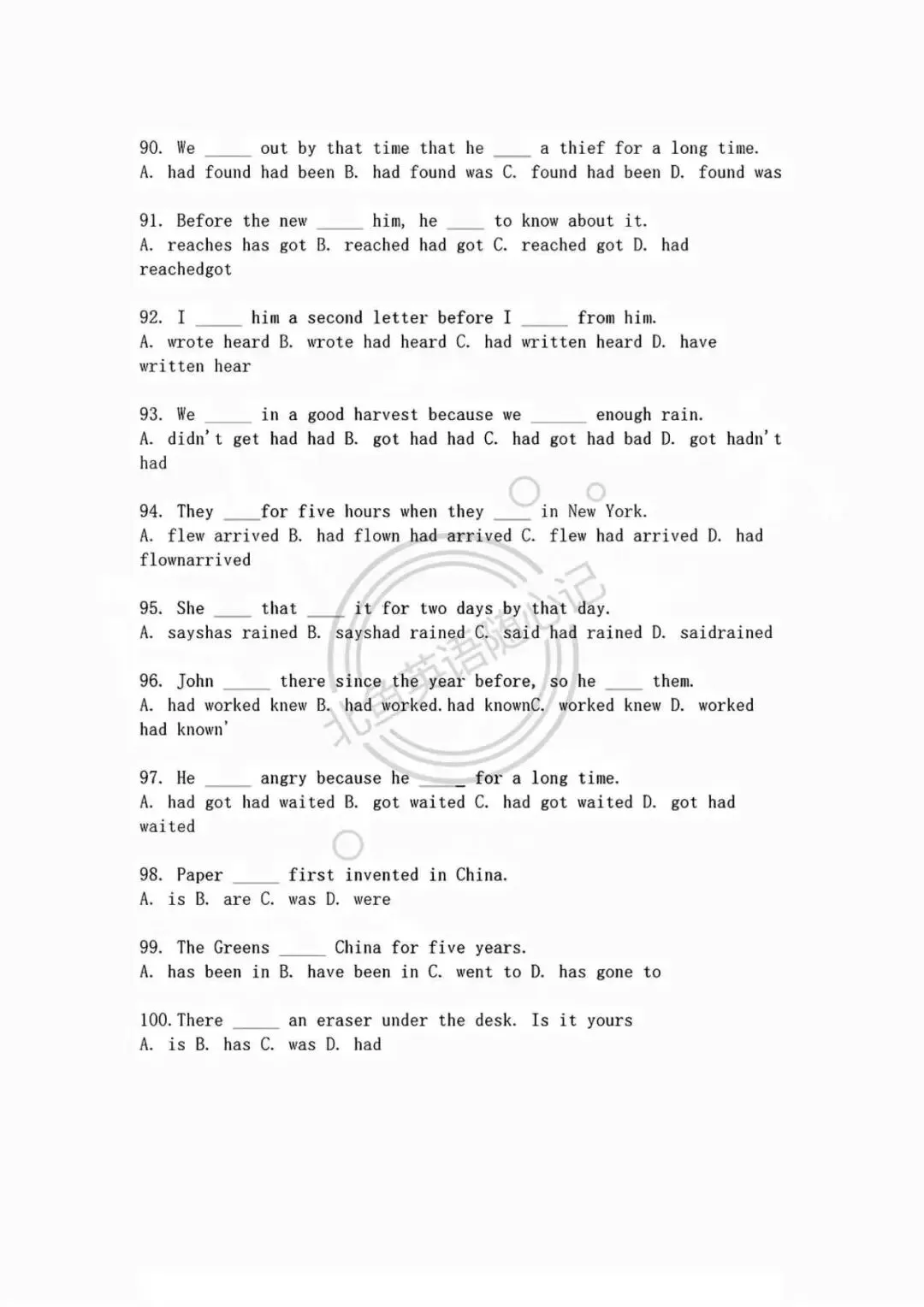
拓展笔记 ●hear - hear from sb. 收到某人来信/消息- hear of sb./sth. 听说过(知道存在)- hear about 听说,了解有关详情-I hear from them very often certainly. - very often:频度状语,修饰 hear from them- certainly:语气副词,修饰整个句子- play with sth. 玩弄东西- run:v. 跑;经营;操作;运转;流淌;(时间)流逝;持续;放映- get on well 相处好- get on with sb. 和某人相处很好- worry:v.(使人)担心,令…发愁(物作主语)- mop:n. 拖把;v. 用拖把拖、擦拭- go on with sth. 继续做某事(同一件事,中间停顿)- go on doing 继续做同一件事- give sb a talk 给某人做演讲、给某人谈话- lift sth up 举起某物- leftovers:n. 剩饭- strike:v. 撞、碰、击打- hurt:不及物动词,疼、疼痛;身体部位 + hurts- My finger hurts.- My head hurts.- My stomach hurts.- spread cream on my face 把霜涂在脸上- lotion:n. 乳液- tomb:n. 坟墓- bury:v. 埋葬、掩埋- spicy:adj. 辣的- chilli:n. 辣椒- stair / stairs:n. 楼梯- go up the stairs 上楼- go down the stairs 下楼♥I was going up the stairs yesterday. I hurt my finger accidentally. - suppose:v. 料想,认为,猜想- put medicine on:给…上药- apply medicine to sth:给…上药- have a cough 咳嗽- see a doctor 看医生- pick up:去取,提取- contribute:v. 捐献- make a contribution to sth 对…作出贡献- give it a try 试一试- take my breath away 美得让人惊叹- give sb a lift 载某人一程- go over:复习,温习,过一遍- reach:v.(消息、声音)传到- in a good harvest 丰收年✅ be going to 与 will 的区别 1. be going to:计划、打算;有明显迹象【天气变化】,证据,预判将要发生2. will + 动词原形:临时决定;单纯预测;或转述将来信息【电台播报,客观预告】意愿;客观自然发生的事;规定安排;承诺、保证;请求✅ often 搭配时态- often + 一般现在时:现在习惯(now / future)- often + 一般过去时:过去的习惯(past)✅ 主将从现条件状语从句、时间状语从句,主句将来,从句一般现在✅ 过去完成时(had + 过去分词)标志:by + 过去时间点,表示在过去某个时间之前就已经完成的动作(过去的过去)例句:We had found out by that time that he had been a thief for a long time.by that time:到那时(过去的时间为止)✅ since then 从那时起动作从过去某一时间开始,一直持续到现在 → 现在完成时✅ the Greensthe + 姓氏复数:一家人,复数含义,作主语,谓语用复数例句:The Greens have been in China for five years.✅ have been / have gone 辨析(高频考点)1. have gone to + 地点(不能加时间段):去了某地,人还在那里,没有回来2. have been to + 地点(一般不加时间段):去过某地,现已回来,重在经历3. have been in + 地点 + 时间段(必须搭配时间段):在某地持续待了多久拓展:短暂性动词变延续性动词join(加入,瞬间)→ be in +组织/团体 / be a member of +组织(是…的一员)✅ by the end of + 过去时间截止到过去某一时间点已经完成的动作 → 时态:过去完成时(had + 过去分词)✅ when 引导时间状语从句强调从句动作正在进行时,主句用一般过去时✅ 现在完成时 vs 一般过去时(对比理解)① We have learned that they will have a sports meet tomorrow.翻译:我们已经得知他们明天有运动会。重点:现在已经知道这个消息,重心在现在② Mother made me a new coat yesterday, I have tried it on. It fits me well.翻译:妈妈昨天给我做了一件新外套,我已经试穿过了,很合身。重点:已经试穿,对现在造成影响(现在知道合身)③ Tom has got up into the tree. Look, he is high up there!翻译:汤姆已经爬到树上了。看,他在高高的树上!重点:已经上树,强调现在的状态④ — Why did she get angry?翻译:她刚才为什么生气?重点:刚才那一刻发生的事(事情已经结束,一般过去时)⑤ — Why has she got angry?翻译:她为什么生气了?重点:过去的事造成现在还在生气的状态(现在完成时)⑥ — Is the baby still crying?— No, it has stopped crying.翻译:宝宝还在哭吗?不,已经不哭了。重点:现在完成时,强调已经停下,现在不哭- then:副词,那时,当时;作时间状语,相当于 at that time- Wednesday:n. 周三- next time(站在现在看,下次);the next time(站在过去看,下次)- 反意疑问句回答:yes 跟着事实,no 跟着实情,不跟着中文翻译 参考答案 1—5 BABDB 6—10 CDDBA 11—15 BBCCD 16—20 ABDCC 21—25 BDDDA 26—30 BCBAD 31—35 BCCCD 36—40 BDACB 41—45 BDCAC 46—50 BDDCA 51—55 DACBB 56—60 CCDCD 61—65 CADAB 66—70 CBDAB 71—75 CDDBB 76—80 DACBA 81—85 DBDCC 86—90 DDBCA 91—95 BCBDC 96—100 ADCBA
本文来自网友投稿或网络内容,如有侵犯您的权益请联系我们删除,联系邮箱:wyl860211@qq.com 。

