五上英语期中复习:老师什么样 · 我的一周 · 想吃什么
- 2026-11-21 03:10:39
五上英语期中复习:老师什么样 · 我的一周 · 想吃什么
五年级 · 英语 · 上册 · 人教版 PEP | 覆盖 Unit 1–3(教材 p2–35)
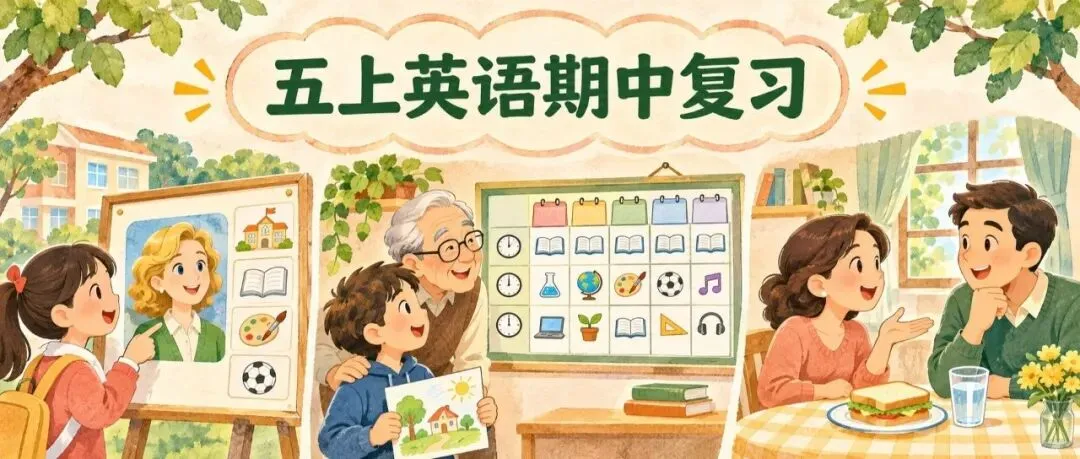
怎么用这份资料?
① 先看脉络图,说出每单元「要学会问什么、怎么答」。
② 读讲解时,把「跟着想一遍」的英文真的说出声。
③ 对照易错点做完自测题;家长用文末 3 个动作检查。
本册前三个单元的主干
听清问题,用固定句式答
Unit 1 老师什么样
先问是谁,再说什么样
Who's your ... teacher? · What's he / she like?
Unit 2 我的一周
先说有什么课,再说周末做什么
What do you have on ...? · Do you often ...?
Unit 3 想吃什么
先说想吃什么,再说最爱什么
What would you like? · What's your favourite food?
记法:三个单元都在练「听清问题里的关键词,用固定句式答」。
上图是骨架,下面每单元各有一张知识卡。三个单元的语音分别落在词尾 y、字母组合 ee 和 ow 上,复习时别漏。
Unit 1 · 老师什么样 · 看图复习
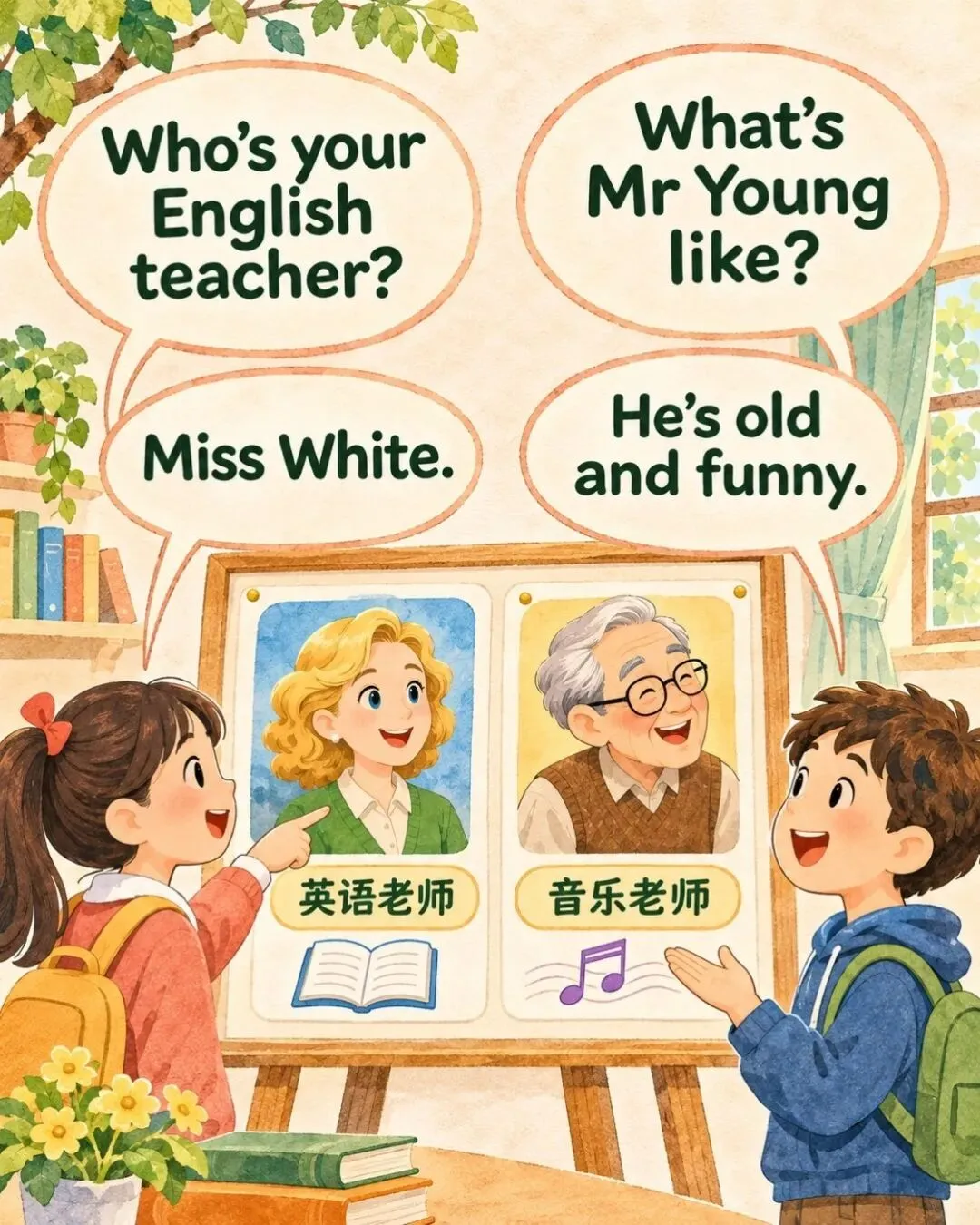
指着两张教师卡,和同伴轮流练习问老师是谁、问老师什么样。
Unit 1 · What's he like? · 知识卡
老师什么样
这单元记住什么?
① 用 Who's your ... teacher? 问老师是谁
② 用 What's he / she like? 问人什么样
③ 会说 kind, funny, strict 等性格词
④ 知道 am / is / are 各跟谁,听出词尾 y 的音
看一个例子
Who's your English teacher? / Miss White.
What's Mr Young like? / He's old and funny.
Is she strict? / Yes, sometimes.
问「什么样」答形容词,is 后面只接形容词
容易弄错
把 What's he like? 答成 He's like funny.。
一句口诀:问是谁报姓名,问「样」只给形容词。
答语用 Mr / Miss / Mrs 加姓,教材里六位老师各有称呼,先整块记熟。
Who's your English teacher? — Miss White.
六位老师:Mr Young 音乐 · Mr Jones 美术 · Mr Li 数学 · Miss White 英语 · Miss Green 科学 · Mrs Smith 校长(tall、strict)
Is he young? — No, he isn't. He's old. · Is he funny? — Yes, he is.
Do you know Mr Young? — No, I don't. Who is he? (问认不认识,再顺着问下去)
跟着想一遍 家长问 Who's your maths teacher?,你先只报姓名,再用 He's / She's our ... teacher. 说完整。
like 在这里是「像什么样子」,答语直接给形容词,不再带 like;追问用 Is he / she ...?。
What's she like? — She's kind. · Is she strict? — Yes, sometimes. (sometimes 是「有时候」)
What's Mr Young like? — He's old and funny.
What's Wu Binbin like? — He's hard-working. He is polite.
What are they like? — They are helpful. (问一群人用 are)
This is Amy. She's quiet. She's very hard-working. (介绍人用 This is ...)
跟着想一遍 家长问 What's your Chinese teacher like?,你用 He's / She's + 形容词答,再答一遍 Is he / she strict?
形容人的词分两拨记,选 be 动词只看主语:I 用 am,he、she、it 用 is,you、we、they 用 are。
外形:tall 高 · short 矮 · thin 瘦 · strong 强壮
性格:kind 善良 · friendly 友好 · funny 有趣 · quiet 安静 · nice 好的
品行:polite 礼貌 · helpful 乐于帮忙 · clever 聪明 · hard-working 勤奋 · shy 害羞 · strict 严格
I am helpful. / He is funny. / It is small. / They are old. / We are strong!
Robin is short but strong. He is really clever. He can speak Chinese and English. (机器人日记里的好例子)
跟着想一遍 指着家人用 He is / She is + 形容词说两句,再用 They are + 形容词说一句。
词尾的 y 读短音 /i/,像轻一点的「衣」;这些词多半是形容词,y 就守在词尾。
歌谣里:baby · happy · windy · sunny · sorry
练习里还有:candy · many · family · party
跟着想一遍 读 happy、baby、sunny、family,每读一个就指出词尾的 y;再挑一个词说一句 The baby is happy.
复习时这样做
把 Part A 问老师、Part B 问新老师的对话和家长演一遍;Read and write 的 Robin 日记读两遍,数数里面有几句 He is ...;Project「设计自己的机器人」是动手活动,了解即可。
Unit 2 · 我的一周 · 看图复习
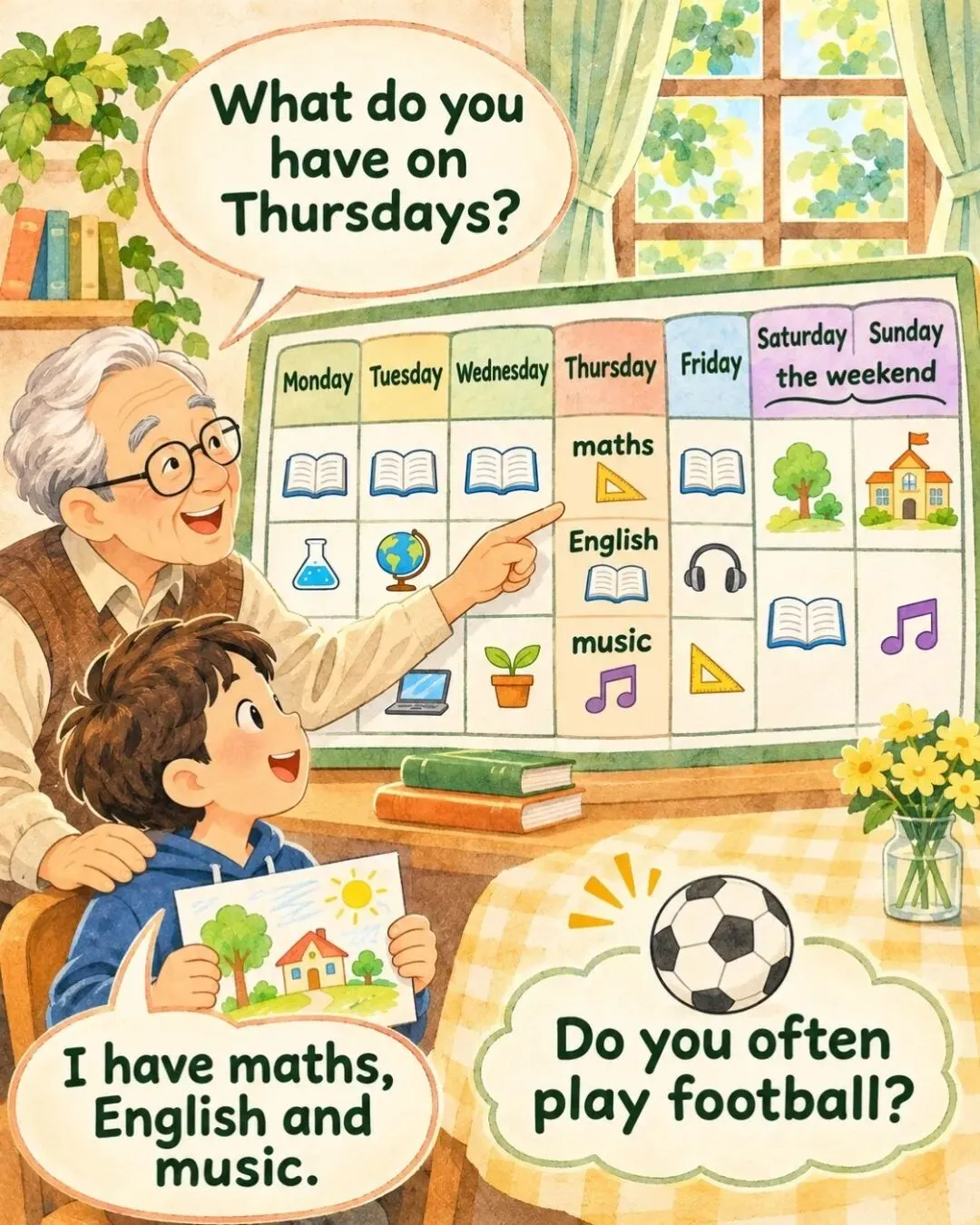
先指着周四用 I have ... 报出课程,再指着足球图标和同伴练习用 Yes, I do. 或 No, I don't. 回答。
Unit 2 · My week · 知识卡
我的一周
这单元记住什么?
① 用 What do you have on ...? 问有什么课
② 会说 Monday 到 Sunday 七个星期词
③ 用 Do you often ...? 问、用 Yes, I do. / No, I don't. 答
④ 认读含 ee 的词,听出长音 /iː/
看一个例子
What do you have on Thursdays? / I have maths, English and music.
Do you often play football? / Yes, I do.
I often watch TV on the weekend.
问课用 have 答,问常做用 do 答
容易弄错
把 Do you often read books? 答成 Yes, I often read.。
一句口诀:星期词大写开头,问课用 have、问常做用 do。
问有什么课用 What do you have on ...?,答语用 have 列出来;on 后面接星期几。
What do you have on Mondays? — I have Chinese, English, maths and music.
What do you have on Thursdays? — I have maths, English and music. (John 和爷爷的对话)
I have a cooking class with your grandma! (爷爷也要上课)
课程八个:Chinese · English · maths · music · art · PE · science · computer class
Is it Monday? — No. / Yes! (课本上拿课程表猜日子的游戏)
跟着想一遍 家长指着课程表问 What do you have on Wednesdays?,你用 We have ... 答一遍。
七个星期词开头字母都要大写,还能像教材 wrap 栏那样拆开记。
Monday · Tuesday · Wednesday · Thursday · Friday · Saturday · Sunday
拆开记:Mon + day = Monday · Wednes + day = Wednesday · Thurs + day = Thursday
同样的合成词:bed + room = bedroom · bath + room = bathroom
说「每周一」用复数:on Mondays · on Thursdays
Do you often read books on the weekend? — No, but I often sleep! (单元开头的玩笑话)
跟着想一遍 按顺序说七个星期词,说到 Saturday 和 Sunday 时,各补一句 I often ... on the weekend.
Do you often ...? 的答句先给 do 或 don't,再补一句 I often ... 说自己常做什么。
Do you often read books in this park? — No, I don't.
Do you often play football here? — Yes, I do.
What do you often do on the weekend? — I often wash my clothes, watch TV and draw pictures.
活动六个:wash my clothes 洗衣服 · watch TV 看电视 · do homework 做作业 · read books 读书 · play football 踢足球 · listen to music 听音乐
对话里还有:play the pipa 弹琵琶 · clean my room 打扫房间
You should play sports every day. (Robin 劝不爱运动的 Wu Binbin)
跟着想一遍 家长问 Do you often ...?,你用 Yes, I do. 和 No, I don't. 各答一次,再补一句 I often ... on the weekend.
两个字母合起来读长音 /iː/,像拉长的「衣」;两个字母只出一个长音。
教材给的词:feet · tea · read · meet · see · eat
歌谣里还有:feed · repeat · beef
跟着想一遍 读 see、tea、meet、beef,指出 ee 在第几个字母;再把 I like to read books. 说三遍。
复习时这样做
画一张自己的一周表,每天写一句 We have ...;对照 Robin 给 Wu Binbin 的新课程表,说说每天该做什么运动;Story time 里 Zoom 照课程表买文具的故事读一遍。
Unit 3 · 想吃什么 · 看图复习
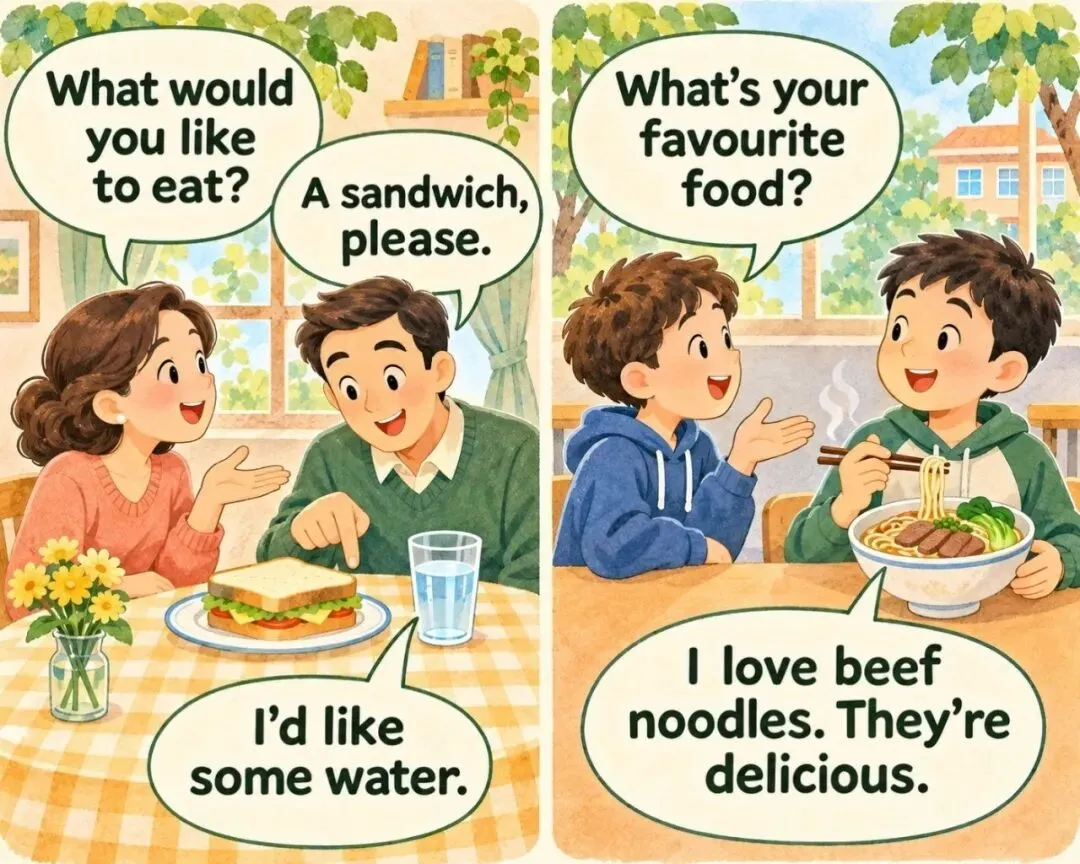
和同伴轮流指着图里的食物,用 I'd like ... 点一次餐,再问对方最爱吃什么。
Unit 3 · What would you like? · 知识卡
想吃什么
这单元记住什么?
① 用 What would you like to eat / drink? 问想吃什么喝什么
② 用 I'd like ... 说自己想要什么
③ 用 What's your favourite food? 问最爱,用 sweet, delicious 等说味道
④ 认读含 ow 的词,分清两种读音
看一个例子
What would you like to eat? / A sandwich, please.
What would you like to drink? / I'd like some water.
What's your favourite food? / Noodles. They're delicious.
想要就说 I'd like,最爱就说 favourite
容易弄错
把 two sandwiches 写成 two sandwichs.。
一句口诀:想要什么说 I'd like,最爱什么说 favourite。
would like 是「想要」,比 like 多一份客气;I'd 是 I would 的缩写,别写成 I like。
What would you like to eat? — A sandwich, please.
What would you like to drink? — I'd like some water. I'm thirsty!
食物:sandwich 三明治 · salad 沙拉 · hamburger 汉堡 · ice cream 冰淇淋 (喝的:tea 茶 · water 水)
I'd like a sandwich, a hot dog, a hamburger ... (Role-play 报一串)
小提醒:Don't eat too much!(别吃太多。)
跟着想一遍 饭前家长问 What would you like to eat?,你用 I'd like a / some ... 答一次,再说一句 I'm hungry. 或 I'm thirsty.。
问最爱用 What's your favourite food / drink?,答完用味道词接一句更好。
What's your favourite food? — Noodles. I love beef noodles. They're delicious.
Ice cream. It's sweet! · What's your favourite drink? — Milk. (Sarah 最爱喝的)
味道五个:delicious 美味 · sweet 甜 · hot 辣 · fresh 新鲜 · healthy 健康
My favourite food is ice cream. It is sweet. I don't like beef but chicken is OK. (写给 Robin 的邮件:最爱+味道+补一句不喜欢)
跟着想一遍 问家长 What's your favourite food?,听完用 It's + 味道词接一句,再说说你自己的最爱。
数吃的东西要变复数:s、x、ch、sh、o 结尾的词加 es,其余直接加 s。
one banana → two bananas (直接加 s)
one sandwich → two sandwiches (ch 结尾加 es)
potato → potatoes · tomato → tomatoes
box → boxes · dress → dresses (教材 wrap 栏的一组)
跟着想一遍 说 one sandwich / two sandwiches、one potato / two potatoes,每次听一听结尾多了哪个音。
拼写一样、声音不同,要靠整个词记,不能见词就猜。
ow 读 /aʊ/:cow · flower · down · how · now · wow
ow 读 /əʊ/:slow · snow · snowy · yellow · window · tomorrow
I see a yellow flower. · Slow down!
跟着想一遍 把 cow 和 snow 各读三遍,听两个 ow 一样不一样;再读 window 和 tomorrow 各两遍。
复习时这样做
用 I'd like ... 给家里人各点一顿饭,配上味道词;Read and write 两封写给 Robin 的信读一遍,圈出 favourite 和味道词;Story time「农场晚餐」是拓展故事,了解即可。
这几个地方最容易说错
✗ What's he like? — He's like funny.✓ like 只在问句里,答语直接说:He's funny.
✗ He are funny.✓ he、she、it 用 is:He is funny.;you、we、they 才用 are
✗ Do you often read books? — Yes, I often read.✓ 先用 Yes, I do. / No, I don't. 回答
✗ I like a sandwich, please.✓ 想要用 would like:I'd like a sandwich, please.
✗ two sandwichs✓ sandwich 以 ch 结尾,复数加 es:two sandwiches
□ 两连问:Who's your English teacher? 加 What's she like?,孩子要能用 Mr / Miss / Mrs 加姓报名字,再用 She's + 形容词答;追问 Is she strict?,听有没有用 Yes, sometimes. 这样完整的回答。
□ 指着课程表问 What do you have on ...?,再问 Do you often ... on the weekend?,重点听答句是不是以 Yes, I do. / No, I don't. 开头,星期词有没有大写开头。
□ 饭桌上问 What would you like to eat?,让孩子用 I'd like ... 点一次餐;再报两个复数 sandwiches、bananas,听词尾有没有多出 es 或 s。
1. 补全:— ______ your English teacher? — Miss White.
2. 补全:— What's Mr Young like? — He ______ old and funny.
3. 补全:— Do you often play sports? — No, ______ ______.
4. 补全:— What do you have on Thursdays? — I ______ a cooking class with my grandma.
5. 选词填空:What would you like ______ (eat / to eat)? — I'd like some water.
6. 写出复数:one sandwich → two ______;one banana → two ______.
参考答案(先做完再看)
1. Who's(问是谁用 Who's ...?)。
2. is(he、she、it 用 is)。
3. I don't(Do you ...? 用 do / don't 呼应)。
4. have(有什么课用 have 列出来)。
5. to eat(would like 后面接 to 加动词)。
6. sandwiches(ch 结尾加 es);bananas(直接加 s)。
复习到这里,试着连起来想
三个单元练的是同一件事:听清问题里的关键词,用固定句式答。问是谁就报姓名,问什么样就给形容词;问有什么课用 have 列,问常做用 do 答;问想吃什么用 I'd like 说,问最爱就说 favourite。句子的开头答对了,后面的词不过是往里填。期中考试里,问答配对题、补全对话题考的正是这几种句式,考前把每单元知识卡里的三个例子读熟,比多刷十道题更管用。
这份脉络和三张知识卡若帮孩子理清了前三个单元,点个「在看」,转给同样在准备期中的家长。
依据人教版 PEP《义务教育教科书·英语》五年级上册整理,覆盖 Unit 1–3(p2–35);Recycle 1(p32 起,陈杰到英国 Willow 小学交流,综合复习这三个单元)只作一句提示不展开,各单元 Story time、Project 与 Appendix 不展开。例句与图示为本号重新编写,具体进度与考查范围以学校老师安排为准。

