Make It Stick 第四章 原文要点(中英对照)
- 2026-11-29 09:36:32
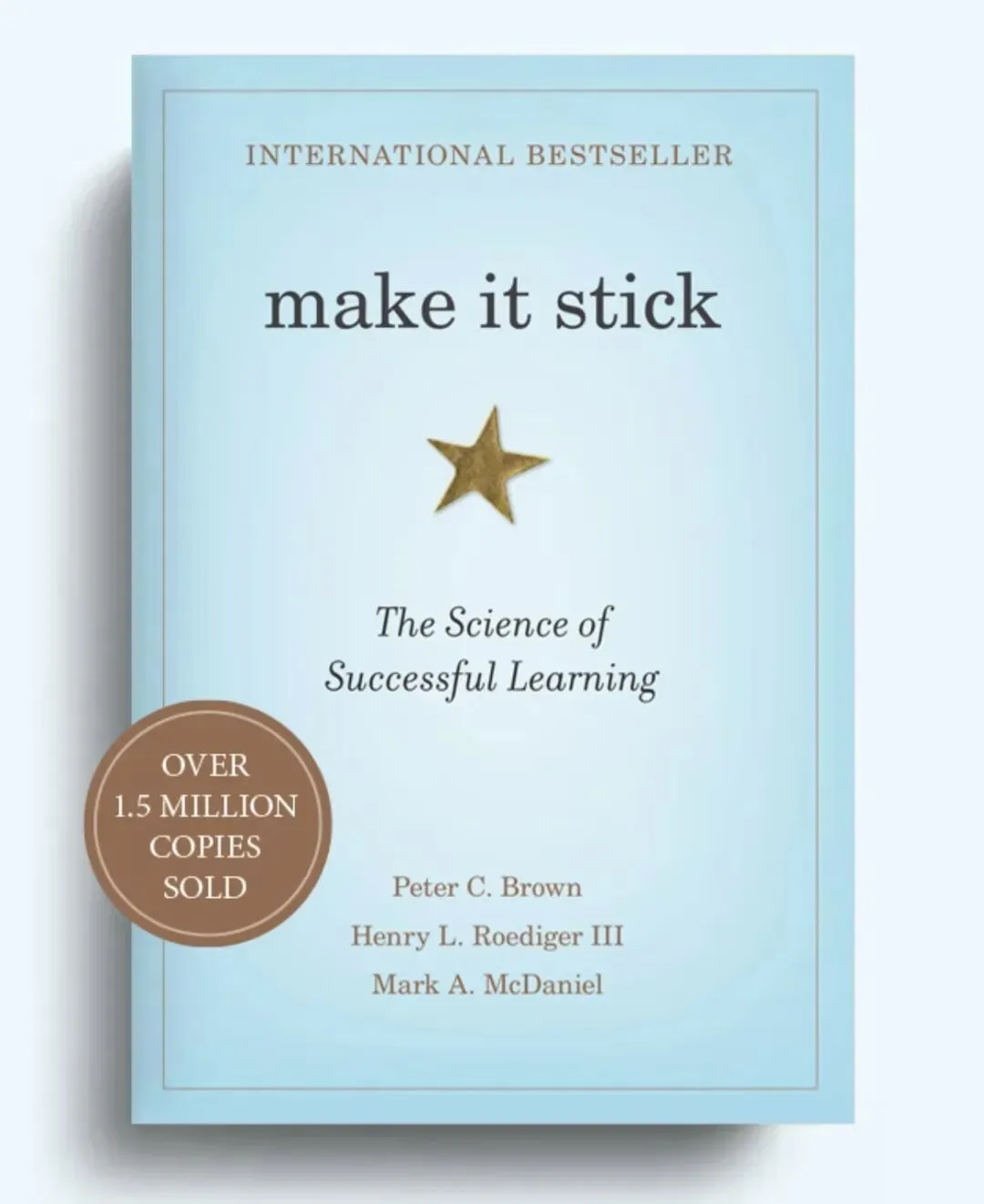
Chapter 4: Embrace Difficulties | 拥抱困难
一、核心主旨
•Learning is deeper and more durable when it’s effortful. Struggle is not a sign of failure but a necessary part of building lasting knowledge and skill.
•学习越费力,效果越深刻持久。困难不是失败的标志,而是构建长效知识与技能的必要环节。
二、关键概念:Desired Difficulties 有益困难
•Difficulties that can be overcome with effort and strengthen learning (e.g., retrieval practice, generation, variation, interleaving).
•可通过努力克服、且能强化学习的困难(如检索练习、生成式学习、变式练习、交叉练习)。
•Undesired difficulties: Obstacles that cannot be overcome and block understanding (e.g., unclear instructions, missing prerequisites).
•中文:无益困难:无法克服、阻碍理解的障碍(如指令模糊、前置知识缺失)。
三、四大高效学习策略(本章核心)
1. Retrieval Practice 检索练习
•Actively recalling information from memory (quizzing, self-testing, flashcards) instead of rereading. Effortful retrieval = stronger memory consolidation.
•主动从记忆中提取信息(自测、抽认卡、问答),而非重复阅读。费力检索 = 更强的记忆巩固。
2. Generation 生成式学习
•Attempting to answer a question or solve a problem before being given the solution. Errors with corrective feedback boost learning.
•在获知答案前,先尝试解题/作答。犯错+及时纠正,学习效果更强。
3. Elaboration 精细化加工
•Connecting new material to what you already know; explaining concepts in your own words; adding personal meaning.
•将新知识与旧知识关联;用自己的话解释概念;赋予个人意义。
4. Interleaving & Variation 交叉练习与变式
•Mixing different types of problems/topics during practice (vs. massed practice of one topic). Improves discrimination and transfer.
•练习中混合不同题型/主题(而非单一主题集中练习)。提升辨别能力与知识迁移。
四、关于错误的认知
•Errors are not harmful if followed by corrective feedback. Struggling and making mistakes primes the brain for better learning.
•犯错不可怕,关键是及时纠正。挣扎与试错会让大脑更易吸收知识。
•The myth of “errorless learning” is wrong; effort and mistakes build durable mastery.
•“零错误学习”是误区;努力与犯错才能构建扎实的掌握。
五、大脑机制:记忆重组与巩固
•Effortful retrieval triggers reconsolidation—updating and strengthening memory traces. Learning changes the brain’s structure.
• 费力检索触发记忆再巩固——更新并强化记忆痕迹。学习会改变大脑结构。
•Mental models are built through varied practice, enabling application in new contexts.
•通过变式练习构建心智模型,能在新场景中灵活应用知识。
六、实践启示
•Embrace struggle; avoid “easy” learning (rereading, cramming). Use quizzes, self-explanation, mixed practice.
•拥抱困难,拒绝“轻松学习”(重复阅读、临时抱佛脚)。多用自测、自我解释、混合练习。
•Calibrate your knowledge: Test yourself to spot gaps, don’t trust fluency from rereading.
•校准认知:自测发现知识漏洞,别轻信重复阅读带来的“流畅感”。
启发:
在阅读中,带着问题阅读,或者是读完后自测会让自己对知识掌握地更牢固。
关于错误的认知这部分,对生活学习很有指导意义。我自己在生活中也一直是这么想和做的。也要让孩子对错误有一个正确的认知。
错误是成长的开始。是人都会有犯错,把犯错当作成长的机会和养份,不害怕犯错,反而会让我们更有勇气去面对未知。犯错后反省,纠正,同样的错误不犯第二次。
犯错+及时纠正,可以让我们的学习效果更好。

