2010-1-ReadingPartA-T1-3-5
文章主题:《报纸艺术评论的衰落》
“So few authors have brains enough or literary gift enough to keep their own end up in journalism,” Newman wrote, “that I am tempted to define ‘journalism’ as ‘a term of contempt applied by writers who are not read to writers who are’ .”
词汇:
1.keep one's own end up in sth v.在...中尽到职责|坚持下去
2.be tempted to do sth v.有强烈欲望做某事(尤其是可能错误或有害的事)
3.a term of contempt n.轻蔑的称呼
【Step 1】找谓语
“So few authors have brains enough or literary gift enough to keep their own end up in journalism,” Newman wrote, “that I am tempted to define ‘journalism’ as ‘a term of contempt applied by writers who are not read to writers who are’ .”
·动词 have 时态:一般现在时
·动词 wrote 时态:一般过去时
·形容词短语 am tempted to 时态:一般现在时
·动词 are not read 被动语态+时态:一般现在时
·动词 are (read) 被动语态+时态:一般现在时
【Step 2】断句
“So few authors have brains enough or literary gift enough to keep their own end up in journalism,” Newman wrote,[“that I am tempted to define ‘journalism’ as ‘a term of contempt applied by writers <who are not read> to writers <who are>’ .”]
解析:本句的主句应是Newman wrote,其余引号中的话(即直接引语)都是Newman写的话,即相当于wrote的宾语,即宾语从句。
将句子做出如下调整,结构会更清晰:
Newman wrote [“So few authors have brains enough or literary gift enough to keep their own end up in journalism <that I am tempted to define ‘journalism’ as ‘a term of contempt applied by writers <who are not read> to writers <who are>’> .”]
解析:本句包含4个从句:1.wrote后的大从句为宾语从句<位置:在动词wrote后>;2.that引导的结果状语从句;3.2个who引导的定语从句。
that引导的结果状语从句:
...[“So fewauthors have brains enough or literary gift enough to keep their own end up in journalism<that I am tempted to define ‘journalism’ as ‘a term of contempt applied by writers <...> to writers <...>’> .”]
判断方法:1.形式:so...that...;2.根据语境:that从句表示一种结果,句意大致为“能够拥有智慧或文学天赋来做好新闻的作家是如此之少,以至于我想把“新闻”定义为一种蔑称”。
2个who引导的定语从句:
...writers <who are not read>to writers <who are>’
判断方法:1.位置:在表示人的名词|代词后<writers>;
其中,2个who分别指代名词writers在从句中作主语。
重点成分标注:
主语:在句首|谓语前
宾语:在动词|介词后
表语:在系动词后
主语:蓝色;谓语:红色;表语:绿色;宾语:紫色;宾补:深蓝
主句:
Newman wrote
that引导的结果状语从句:
...[“So few authorshavebrains enough or literary gift enough to keep their own end up in journalism<that I am tempted todefine ‘journalism’ as ‘a term of contempt applied by writers <...> to writers <...>’> .”]
其中,
1.两个enough——后置定语修饰名词brains和名词短语literary gift<这种情况比较少见,大多数情况下都是前置>;
2.to keep their own end up in journalism——非谓语短语作结果状语【判断方法:1.位置:在句首|句尾|主谓之间<在句尾:完整句to do sth】
补充:该非谓语短语修饰前面的2个enough,构成enough to do sth的结构,表达到某种程度后引发的结果,大意为“能够拥有足够的智慧和文学天赋,以至于能把新闻做好”。
3.a term+后置定语1+后置定语2
后置定语1:介宾结构of contempt;
后置定语2:非谓语短语applied by writers(A) to writers(B) ——根据句意作者A应是将一个称呼<term>应用于作者B上,所以非谓语短语修饰的应是名词term <term与applied之间为被动关系>。
补充:apply A to B——将A应用于B上
2个who引导的定语从句:
...writers <who are not read> to writers <who are>’
【Step 3】翻译
“So few authors have brains enough or literary gift enough to keep their own end up in journalism,” Newman wrote,[“that I am tempted to define ‘journalism’ as ‘a term of contempt applied by writers <who are not read> to writers <who are>’ .”]
wrote后宾语从句:
英文:“So few authors have brains enough or literary gift enough to keep their own end up in journalism,” Newman wrote,...
直译:如此少的作家有足够的头脑或足够的文学天赋来在新闻方面尽职尽责。
<理解句意:有头脑+有天赋+尽职尽责——这种作家真的太少了>
改译:“能够拥有足够的智慧或文学天赋,且能尽职尽责做好新闻工作的作家是如此之少”,纽曼写道,
<本句较长,利用标点断开,使句子更具可读性,且符合汉语句子擅用短句的特点>
that引导的结果状语从句:
英文:“that I am tempted to define ‘journalism’ as ‘a term of contempt applied by writers <A> to writers <B>’ .”
中文:“以至于我禁不住想把“新闻”定义为一种被作家A应用于作家B身上的蔑称”。
改译:“以至于我禁不住想把“新闻”定义为一种作家A对作家B的蔑称”。
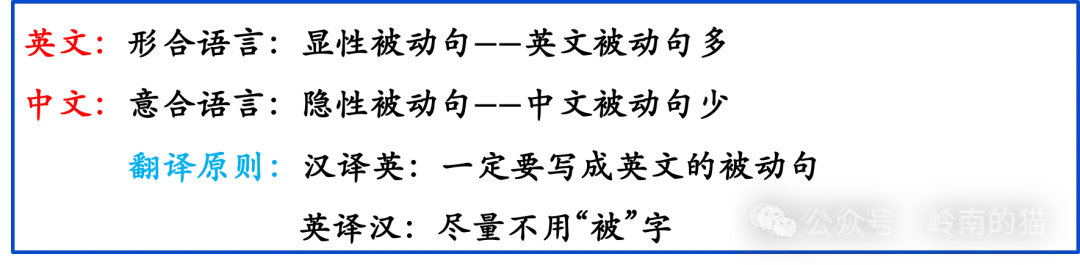
翻译解释:本句涉及“被动的翻译”
根据句意,作家A把这种蔑称应用于作家B身上,即作家A就是这么称呼作家B的,因此译为“作家A对作家B的蔑称”以巧妙解决“被”字。
2个who引导的定语从句:
英文:...writers <who are not read> to writers <who are>’
中文:不被阅读的作家对被阅读的作家
改译:没读者的作家对有读者的作家
翻译解释:
1.此处亦涉及被动的翻译,根据句意,“不被阅读的作家”,即没人阅读这种作家的作品,实则“没读者的作家;另外一个也是一样,两个定语从句因为结构相似,所以还出现了省略现象,将其补全,应为“writers who are read,即被阅读的作家——有读者的作家;
2.此处还涉及定语从句的翻译,定语从句词数小于等于8个,遂采取前置译法,即译为“...的”。
“能够拥有足够的智慧或文学天赋,且能尽职尽责做好新闻工作的作家是如此之少”,纽曼写道,“以至于我禁不住想把“新闻”定义为一种没读者的作家对有读者的作家的蔑称”。终译:“能够拥有足够的智慧或文学天赋,且能尽职尽责做好新闻写作工作的作家是如此之少”,纽曼写道,“以至于我禁不住想把“新闻写作”定义为一种没读者的作家对有读者作家的蔑称”。













 10个月宝宝每天需要喝多少奶粉?

