2027届模拟试卷速递21:202609学军中学开学考试卷+答案+音频+解析(word+音频 下载链接)
- 2026-10-03 04:07:01
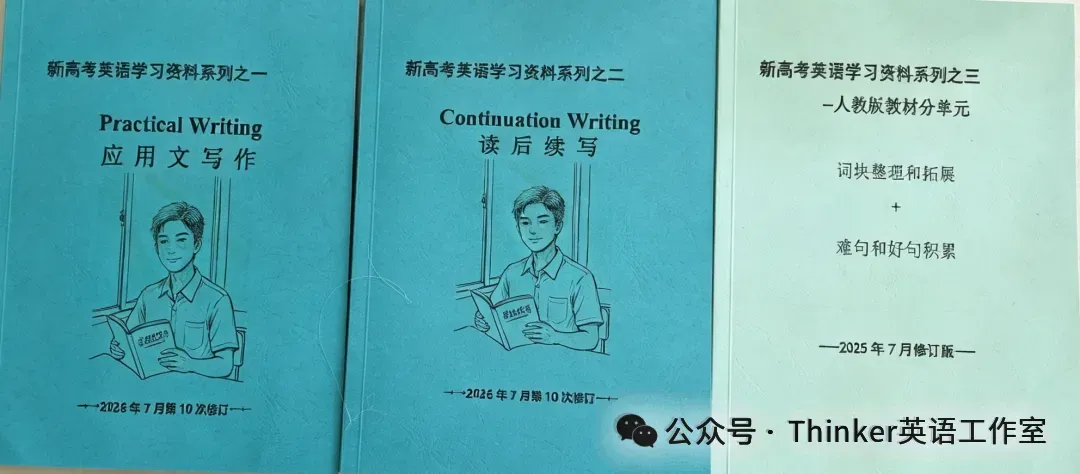
开学了,推荐高中英语学习必备书:最新2026版应用文写作和读后续写:
2026年7月第10版《新高考英语应用文写作+读后续写+人教版单元词块整理三驾马车》来啦!
我用夸克网盘给你分享了「202609学军中学开学考.docx」,点击链接或复制整段内容,打开「夸克APP」即可获取。
链接:https://pan.quark.cn/s/4714fc13c92c
音频下载链接:
我用夸克网盘给你分享了「202609学军中学开学考听力.mp3」,点击链接或复制整段内容,打开「夸克APP」即可获取。
链接:https://pan.quark.cn/s/4b6e054f0f11
第一部分听力(共两节,满分30分)
第一节(共5小题;每小题1.5分,满分7.5分)
听下面5段录音。每段录音后有一个小题,从题中所给的A、B、C三个选项中选出最佳选项。听完每段录音后,你都有10秒钟的时间来回答有关小题和阅读下一小题。每段录音播放两遍。
1. How will the man probably get to the concert?
A. By taxi.B. On foot.C. By subway.
2. What did the man probably do yesterday?
A. He went camping.B. He stayed at home.C. He played a sport.
3. Why is the woman worried?
A. She may be late.B. She has missed the bus.C. She cannot find the office.
4. When will Dr. Lee give the talk?
A. On Wednesday.B. On Thursday.C. On Friday.
5. What are the speakers talking about?
A. A piece of artwork.B. A children’s book.C. A public sign.
第二节(共15小题;每小题1.5分,满分22.5分)
听下面5段录音。每段录音后有几个小题,从题中所给的A、B、C三个选项中选出最佳选项。听每段录音前,你将有时间阅读各小题,每小题5秒钟;听完后,每小题都有5秒钟的作答时间。每段录音播放两遍。
听下面一段对话,回答以下小题。
6. Why does the woman come to the man?
A. To fix the old lamp.B. To buy a new lamp.C. To get some new parts.
7. What does the man suggest the woman do?
A. Replace the power adapter.B. Bring the power adapter.C. Buy new parts.
听下面一段对话,回答以下小题。
8. What is the GoPro 13 probably for?
A. A movie project.B. A surprise for Lisa.C. Amy’s birthday party.
9. Where is Lisa probably now?
A. At the woman’s place.B. In a movie theater.C. In a camera shop.
10. What will the woman do next?
A. Watch a film.B. Buy a gift.C. Decorate a house.
听下面一段对话,回答以下小题。
11. Who is Ms. Green?
A. Daniel’s mother.B. Daniel’s teacher.C. Daniel’s friend.
12. What do we know about Daniel?
A. He skips listening homework.
B. He does writing practice carefully.
C. He does listening exercises quickly.
13. What do the speakers agree to do?
A. Stop the listening task for a week.
B. Ask Daniel to start with fewer sentences.
C. Let Daniel listen to the words before reading.
听下面一段对话,回答以下小题。
14. What is the main purpose of the Green Shelf project?
A. To help students reuse things.
B. To raise money for the school.
C. To sell cheap clothes on campus.
15. What things can students leave on the Green Shelf?
A. An old pan.B. A new dress.C. A broken lamp.
16. What will the project do next term?
A. Open a bigger shop.B. Check items online first.C. Show available items online.
听下面一段独白,回答以下小题。
17. What consultation service is provided on Tuesday afternoons?
A. Academic writing.B. Mental health support.C. Examination techniques.
18. Who should students meet if they fail to get along with roommates?
A. Mr. Zhang.B. Ms. Chen.C. Ms. Parker.
19. How many advisers are there in the Student Support Center?
A. 4.B. 5.C. 6.
20. Where can students find the booking steps?
A. On the university website.B. At the Student Life Office.C. In a guidebook in the pack.
第二部分阅读(共两节,满分50分)
第一节(共15小题;每小题2.5分,满分37.5分)
阅读下列短文,从每题所给的A、B、C、D四个选项中选出最佳选项。
A
The 24th Washington Chinese Culture Festival
Want to enjoy a wonderful cultural trip without travelling far away? Don’t miss the 24th Washington Chinese Culture Festival, a one-day immersive event bringing authentic Chinese culture to downtown Washington, D. C.
Hands-on Cultural Experience
Instead of simply watching shows, visitors can take part in various interactive activities. You may try on hanfu, wear traditional floral headpieces or get Chinese festive face painting. Skilled masters will offer lessons in calligraphy, paper-cutting and velvet flower crafting. You can also play traditional Chinese musical instruments, join weiqi games and ribbon dragon dances.
Two Performance Stages
1. The Main Stage (The Culture Show)
It offers non-stop top-level performances all day long, including traditional dances, folk songs, classical music, acrobatics, wushu, Tai Chi, Peking Opera and lion dances.
2. The 2nd Stage (Audience Co-Creation Zone)
This stage is open to all visitors. You can learn group dances and take part in ping-pong matches with other guests.
A Taste of China
The food area works as a map of Chinese flavors. You can try classic dishes from Sichuan, Shanghai, Xinjiang and other regions, such as dumplings, roujiamo and bubble tea. It is a perfect stop for food lovers.
Extra Services
●Free instant digital photos taken by professional photographers.
●Collect stamps on your free “Cultural Passport” to get special souvenirs and food discounts.
●A grand opening ceremony will be held with local officials and international guests present.
Basic Information
Time: Saturday, August 29, 2026 (10:00 am-6:00 pm)
Location: Pennsylvania Avenue NW (Between 3rd & 4th Streets), Washington, D. C.
Admission: Free
Contact: cccaa.org. us@gmail. com
Bring your family and friends and explore fantastic Chinese culture in the heart of Washington!
21. What can visitors do in interactive activities?
A. Create Chinese digital art works.B. Design Chinese traditional dresses.
C. Watch Chinese private dance shows.D. Learn Chinese traditional folk crafts.
22. What is special about the 2nd Stage?
A. It welcomes visitors’ participation.B. It presents martial arts shows.
C. It plays classic music pieces.D. It hosts professional operas.
23. What benefit can a “Cultural Passport” bring?
A. Discounts on travel tickets.B. Gift items and food bargains.
C. Access to private ceremonies.D. Free professional video shooting.
B
Maggie Doyne is caring for and educating helpless children and orphans in rural Nepal. What started with a plot of land that she purchased with her babysitting money has become a global model for poverty relief and development through her nonprofit, BlinkNow Foundation.
After high school, Doyne began her work after meeting a young girl in Surkhet, Nepal, whose life was ruined during the country’s decades-long civil conflict. Today, Doyne cares for 93 children, addressing their immediate needs and supporting them for long-term growth and self-sufficiency.
The organization also has a separate home for at-risk girls who have been victims of harm, human trafficking (贩卖) and violence, a food and farming program that trains women and farmers, and a full-service medical clinic. Doyne and a team of 175 caregivers, teachers, and professionals work together to offer comprehensive services that address the roots of poverty.
Her Kopila Valley School, once a small “bamboo shack (棚屋)”, has now served 1,000 students with state-of-the-art facilities, modern technology, and diverse course offerings. Students participate in gardening, farming, and conservation classes and are provided healthy meals to address poor nutrition. There is a daycare, as well as a readiness program called “Futures” to launch students toward college and job training programs.
At a speaking engagement in Los Angeles, Doyne connected with a filmmaker who shared a passion for humanitarian causes and storytelling. He started documenting Doyne’s work and life story. And the two began a journey together, professionally and personally. Now married, they raise their children in Nepal among their 93 siblings (兄弟姊妹).
Hope and action are ideas that Doyne made a reality two decades ago. And today, her message remains: “Keep doing what you can, no matter where you are. Keep showing up, keep loving, and keep going with your acts of kindness. It all matters.”
24. Where did Doyne’s early fund for charity land come from?
A. Donations from a filmmaker.B. Income from school students.
C. Earnings from her former job.D. Support from medical workers.
25. What inspired Doyne to start charity work in Nepal?
A. A speech about global poverty relief.B. An encounter with a girl in Surkhet.
C. A bamboo school built by local farmers.D. A medical clinic for homeless children.
26. What is the “Futures” program designed for?
A. Training local women in farming skills.
B. Offering medical treatment for poor girls.
C. Building modern classrooms for rural children.
D. Preparing teenagers for further study and career.
27. Which of the following can best describe Doyne’s approach to poverty relief?
A. Systematic and sustainable.B. All-sided and imaginary.
C. Personalized and traditional.D. Accidental and immoral.
C
A massive concrete-and-glass structure hangs above traffic on Wilshire Boulevard. It is the new home of the Los Angeles County Museum of Art (LACMA), the largest art museum in western America. Its daring architecture is not the only unusual thing about it.
“We’ve given up traditional categories of geography,” says Michael Govan, LACMA’s director. “The idea is to wander.” The museum’s single floor treats all artworks equally: no one movement is presented as more important than another. The museum is loosely organized around oceans to emphasize trade and cultural exchange. The Indian Ocean section, for example, includes Turkish ceramics (瓷器) with blue-and-white flower patterns, influenced by earlier Chinese designs.
LACMA’s break from conventional organization symbolizes a movement towards global galleries as the global economy expands. London’s Tate Modern traditionally centered on Western European art. However, it rearranged its works by theme after 2000 to highlight cultural links. The press hated it. In 2019, the Museum of Modern Art (MoMA) rejected fixed long-term displays. Van Gogh’s “Starry Night” will probably always be on view but the neighbouring wall will sometimes hold photography. Such an adaptable approach allows for unexpected encounters. Yet not everyone may appreciate it.
What is a thoughtful contrast to one visitor may be hard to understand for another. At LACMA a giant coffee table shows off ceramics from various eras. Why? Visitors who can scan QR codes will find out; the rest will merely wonder. But if such experiments fail to impress, curators (策展人) can rearrange the art again.
Museums should not be inflexible palaces for artworks, many curators argue: they should reflect their surroundings and times. At the new LACMA, says Govan, “We don’t go into a dark box and somebody tells us what to think.” Rather, it tries to be in conversation with Los Angeles (LA). Architecturally, the museum’s uneven shape and floor-to-ceiling windows frame the palm trees (棕榈树) and hills, putting LA itself on display.
28. What is special about the new LACMA?
A. Displaying artworks flexibly.B. Stressing ocean movement.
C. Treating artworks differently.D. Featuring Chinese designs.
29. Why does the writer mention Tate Modern and MoMA?
A. To compare them with LACMA.B. To highlight an exhibition trend.
C. To promote long-term displays.D. To explain economic globalization.
30. What is a potential problem with the new exhibition style?
A. It limits the variety of artworks.B. It depends on QR code technology.
C. It brings little profit to art galleries.D. It causes confusion for some visitors.
31. What can be inferred about the new museum from the last paragraph?
A. It values architecture over artworks.B. It may raise argument over art styles.
C. It can mirror environments and times.D. It guides how visitors view the art world.
D
Experts are calling for a global effort to identify “positive tipping points” to accelerate the green transition and have devised a method to find them in a new academic paper. A tipping point is a threshold (临界点) where a small change can cause a significant, often irreversible (不可逆转的), transformation. Positive tipping points in human societies and economies can bring about rapid reductions in emissions and other environmental harm, even as climate breakdown becomes increasingly damaging and dangerous.
Some positive tipping points are already happening — with solar power and electric vehicles rapidly replacing fossil-fuelled alternatives — but many more are needed to ensure a sustainable future.
“The global economy is decarbonising (脱去……的碳) at least five times too slowly to meet the Paris Agreement target of limiting global warming to well below 2℃,” said Professor Tim Lenton, from the Global Systems Institute at the University of Exeter. “The challenge now is to identify potential positive tipping points, and the actions that can bring them forward — while avoiding wishful thinking about their existence, or oversimplification of their nature, drivers and impacts.”
The paper sets out a method for identifying positive tipping points, assessing their proximity, identifying the factors that can influence them, and the actions that can lead to them. This includes looking for evidence that a system, or a similar system, has “tipped” in the past.
Another factor is whether there is potential for “self-pushing uptake” of zero-or low-carbon behaviors. For example, as more people buy electric cars, the performance, price and infrastructure improve — making it easier for others to follow, and therefore accelerating the transition.
“We know positive tipping can happen in sectors such as power and road transport,” said Dr Steve Smith, also from the Global Systems Institute at the University of Exeter. “In other sectors, there is little sign of approaching tipping points and in a few, such as nuclear power and concrete production, we should not expect there to be tipping points at all.”
32. How does the author present the topic in the first paragraph?
A. By raising a question.B. By defining a key concept.
C. By listing specific data.D. By telling a personal story.
33. What is the current situation of positive tipping points?
A. They remain purely theoretical at present.
B. They are too slow to affect global warming.
C. They have occurred in some areas already.
D. They are happening in all economic sectors.
34. What is Dr Steve’s attitude to the tipping points of nuclear power?
A. Negative.B. Cautious.C. Optimistic.D. Indifferent.
35. Which can be the best title for the text?
A. The Role of Electric Vehicles in Climate Action
B. The Way to Decarbonise the Global Economy Rapidly
C. Challenges of Reaching Environmental Tipping Points
D. Identifying Positive Tipping Points for Green Transition
第二节(共5小题;每小题2.5分,满分12.5分)
阅读下面短文,从短文后的选项中选出可以填入空白处的最佳选项。选项中有两项为多余选项。
In the digital age, we interact with others online so much, so it’s especially important to be aware of digital etiquette (礼节). Here is something about digital etiquette you need to know.
Keep things respectful, truthful, and kind in your online interactions. When you’re commenting, posting, or sending a message on the Internet, remember that you’re interacting with actual people who have feelings and deserve respect. Treat others the way you would want to be treated. ____36___
Review messages, comments, and posts before sending. ____37____ Unfortunately, this often leads to hurt feelings, and you’ll often end up regretting it later — especially because what you say online is memorialized forever. To avoid this regret, it helps to pause and reflect before posting or sending something. As part of that reflection, reread what you’ve written, and make sure it’s truthful, respectful, and fair.
____38____ If you see a negative comment, you may be tempted to fight back with some heated words of your own. Though this may feel good in the moment, it only escalates things and makes them worse. Plus, unlike verbal arguments, online conversations can be preserved forever, so your words can come back to bite you in the future. ____39____
Be mindful of your audience. ____40____ The key is to adjust your behavior appropriately based on the relationship you have with the receiver and the purpose of your message. It’s appropriate to use informal language when you are sending a message in a group chat with your friends. If you’re posting a message in your online classroom for school, nevertheless, use proper spelling and punctuation, as well as more formal language.
A. Stay on topic in group chats.
B. Digital etiquette礼仪 will vary from setting to setting.
C. Don’t engage in digital drama(网络撕吵) in the comment section.
D. In the heat of the moment, it’s easy to react too quickly.
E. This golden rule applies just as much online as it does in person.
F. The wisest response is to break the cycle with a positive comment.
G. What seems harmless to you may be embarrassing or unsafe for them.
第三部分语言运用(共两节,满分30分)
第一节(共15小题;每小题1分,满分15分)
阅读下面短文,从每题所给的A、B、C、D四个选项中选出可以填入空白处的最佳选项。
When I first went river rafting (漂流) with my family, I was only 12 years old. The bus ride down the rocky roads was ____41____, and we loved passing the scenic mountains along the way.
When we finally ____42____ the rough waters, our guide led us onto a large raft. Over the rapid currents, my brother learned to pull his weight in rowing, while I learned to read the river and ____43____ hitting the rocks. We both learned to ____44____ each other and work as a team.
And now, I have my son. Last summer I decided to take him rafting, so he could ____45____ the same lessons. Just like my own trip years ago, our tour guide taught him the fundamentals of the ____46____. He showed my son the ____47____ of leaning into the rapids — a lesson that I hoped would encourage him to ____48____ all of life’s challenges.
At first, ____49____ made him shake, yet he gradually calmed down and ____50____ navigated (驾船) the rough rapids without my help. The rafting trip taught my son how to stay ____51____ instead of being distracted, and how facing hardships directly is better than ____52____ halfway.
Watching him overcome his inner fight ____53____ me of the young 12-year-old version of myself on that long-ago trip. I hope my son learns that, though the waters may be ____54____ and unexpected challenges may come about on the way, with ____55____ and courage, he can navigate them with strength and ease.
41. A. tiringB. enjoyableC. frighteningD. ordinary
42. A. crossedB. discoveredC. reachedD. approached
43. A. imagineB. ignoreC. riskD. avoid
44. A. forgiveB. persuadeC. judgeD. trust
45. A. planB. teachC. learnD. preview
46. A. cultureB. projectC. sportD. tradition
47. A. importanceB. dangerC. pressureD. evidence
48. A. faceB. questionC. rejectD. assess
49. A. excitementB. fearC. surpriseD. disappointment
50. A. nervouslyB. confidentlyC. aimlesslyD. hesitantly
51. A. focusedB. relaxedC. curiousD. uncertain
52. A. breaking upB. cheering upC. dressing upD. giving up
53. A. convincedB. informedC. remindedD. freed
54. A. dangerousB. calmC. shallowD. dirty
55. A. determinationB. appreciationC. expectationD. inspiration
第二节(共10小题;每小题1.5分,满分15分)
阅读下面短文,在空白处填入1个适当的单词或括号内单词的正确形式。
In spring, visitors going to Li’erkou Great Wall can see the season paint a scene of obvious contrasts. The ancient rammed-earth (夯土) structure stretches ____56____ (it) earthen body across the rolling land. Suddenly, the view softens: Apricot (杏) trees burst into clouds of delicate pink and white flowers. Petals (花瓣) drift like soft snow beside old ____57____ (watchtower), telling a quiet tale of war history and mild spring.
Built in the Ming Dynasty, this section is famous as the place ____58____ two sections of the Great Wall meet, one running from north to south ____59____ the other from east to west. This feature is linked to changes in the construction plans ____60____ (make) during its construction.
The original plan would have led to a ____61____ (defence) gap near the border of Shanxi and Hebei provinces. ____62____ a result, the plan was revised, and the wall ____63____ (build) back from a point near Li’erkou Village, running along the mountain ridge to connect with the Great Wall in Hebei. This achieved a continuous line of defence, although the ____64____ (mistaken) constructed section has also been preserved.
For visitors _____65_____ (want) a quiet experience, this section is an ideal choice. Visitors can also explore Datong Great Wall Museum to learn more about the region’s history.
第四部分写作(共两节,满分40分)
第一节(满分15分)
假定你是李华,你校新学期计划新增一个社团,特向全校学生征集建议。你校交换生Alex发邮件与你交流此事,请你用英语给他回一封邮件,内容包括:(1)你希望新增的社团类型;
(2)你的理由。
注意:(1)写作词数应为80个左右;(2)请按如下格式在答题卡的相应位置作答。
Dear Alex,
____________________________________________________________________________________________________________________________________________________________________
Yours,
Li Hua
第二节(满分25分)
阅读下面材料,根据其内容和所给段落开头语续写两段,使之构成一篇完整的短文。
I was riding down a mountain bike trail (小路) one Sunday morning when I suddenly felt a strange pain in my chest. Because I had worked as a doctor for years, I knew at once that something was seriously wrong. My heart began to race, and fear quickly filled my mind. I realized I was having a heart attack halfway down the mountain, where no ambulance could easily reach me.
Fighting against the growing pain, I carefully rode my bike to the bottom of the track. Every second felt like forever, but I knew stopping was not an option. By the time I reached the car park, my chest felt as if something were pressing against it. I grabbed my phone from the car and called an ambulance, trying to keep my voice calm as I told the operator exactly where I was.
Soon I became too weak to stand. Afraid that the ambulance workers might not be able to find me, I lay down beside my car. My vision gradually became blurry (模糊的), and I felt weaker with every passing minute. As more cyclists disappeared into the distance without noticing me, I began to wonder whether help would come in time.
Just as I was beginning to lose hope, someone stopped nearby and asked whether I was all right. I managed to whisper that I thought I was having a heart attack and that an ambulance was on its way. The stranger immediately stayed by my side, speaking to me calmly and reassuring me that help would arrive soon. He told me he was Leo, a regular rider on this trail.
While waiting for the ambulance, I was extremely worried about what would happen to my mountain bike. After all, mountain bikes weren’t cheap.
注意:(1)续写词数应为150左右;(2)请按如下格式在答题卡的相应位置作答。
Leo noticed my anxious look fixed on the bike.
After I recovered days later, I called the number to get my bike back.
第一部分听力(1—20题,每小题1.5分)
1-5 CCACC 6-10 ABBAA 11-15 BBBAA 16-20 CBABC
第二部分阅读理解(第一节21—35题,第二节36—40题)
21-23 DAB 24-27 CBDA 28-31 ABDC 32-35 BCAD
36-40(七选五) EDCFB
第三部分语言运用
完形填空 41-45 BCDDC 46-50 CAABB 51-55 ADCAA
语法填空 56. its 57. watchtowers 58. where 59. and 60. made
61. defensive 62. As 63. was built 64. mistakenly 65. wanting
写作(参考范文)
第一节应用文(回邮件:新增社团建议)
Dear Alex,
I’m writing to share my view on the new club our school is planning to establish this term. If I could choose, I’d propose a Public Speaking and Debate Club.
To begin with, many students struggle with expressing ideas confidently in public. This club would provide a safe space to improve our communication skills. Moreover, debates encourage critical thinking and teamwork, which are essential for our future studies and careers. Lastly, it’s a great way to bond with classmates, making our school life more vibrant.
I believe such a club would benefit everyone. What do you think? Looking forward to your reply!
Yours,
Li Hua
第二节读后续写
【语篇导读】续写线索:注意到焦虑——安慰承诺——照看自行车——留下号码——康复归车——共进午餐——结为好友——感悟。
Leo noticed my anxious look fixed on the bike.He quickly understood my worry and patted my shoulder gently, saying, “Don’t worry about it. I’ll take care of your bike.” With that, he carefully picked up the bike and secured it to his own. He also took out a piece of paper, scribbled down his phone number, and pressed it into my trembling hand, promising to keep it safe until I was back on my feet. His calm and considerate words, which came at the most critical moment, instantly eased my anxiety.
After I recovered days later, I called the number to get my bike back.Leo arrived soon, returning the bike in perfect condition. He also checked how I was feeling, showing his sincere concern. Grateful for his timely help and kindness, which had pulled me back from the edge of despair, I insisted on treating him to lunch. During the meal, we shared our riding stories and became close friends. That accident, instead, brought me a precious friendship that I would cherish forever.
【答案解析】
阅读A篇(第21—23题)
主题语境:人与社会——历史、社会与文化(华盛顿中国文化节活动宣传)
【语篇导读】本文是一篇应用文。文章介绍了第24届华盛顿中国文化节的互动体验、双舞台演出、美食区与增值服务等活动内容,旨在吸引当地民众参与这场免费的沉浸式中国文化一日体验。
第21题.D 细节理解题解析:根据Hands-on Cultural Experience部分“Skilled masters will offer lessons in calligraphy, paper-cutting and velvet flower crafting.”(技艺精湛的大师们将开设书法、剪纸以及绒花制作课程。)可知,游客可以在互动活动中学习中国传统民间工艺。故选D项。
第22题.A 细节理解题解析:根据Two Performance Stages部分“This stage is open to all visitors. You can learn group dances and take part in ping-pong matches with other guests.”(这个舞台对所有游客开放,你可以学习集体舞,还能和其他来宾一同参加乒乓球比赛。)可知,2号舞台的核心特点是面向所有游客开放、鼓励观众亲身参与。故选A项。
第23题.B 细节理解题解析:根据Extra Services部分“Collect stamps on your free ‘Cultural Passport’ to get special souvenirs and food discounts.”(在免费的“文化护照”上集章,即可获得特色纪念品和餐饮折扣。)可知,“文化护照”可带来纪念品与餐饮优惠。故选B项。
阅读B篇(第24—27题)
主题语境:人与社会——社会服务与公益(尼泊尔慈善扶贫事业)
【语篇导读】本文是一篇记叙文。文章讲述Maggie Doyne在尼泊尔乡村投身慈善事业,创办BlinkNow基金会和Kopila Valley School,从照顾孤儿到开展教育、医疗、农业等多类项目,系统性地帮助当地脱贫发展。
第24题.C 细节理解题解析:根据第一段“What started with a plot of land that she purchased with her babysitting money has become a global model for poverty relief and development”(最初她用做保姆赚来的钱买下一块土地,如今已成为扶贫与发展的全球典范。)可知,Doyne早期购置慈善土地的资金来自她以前做保姆工作的收入。故选C项。
第25题.B 细节理解题解析:根据第二段“After high school, Doyne began her work after meeting a young girl in Surkhet, Nepal”(高中毕业后,Doyne在尼泊尔苏尔凯特遇到一位小女孩之后开启了事业。)可知,在苏尔凯特与一个女孩的相遇激发了Doyne开展慈善工作的想法。故选B项。
第26题.D 细节理解题解析:根据第四段“a readiness program called ‘Futures’ to launch students toward college and job training programs”(一个名为“Futures”的预备项目,帮助学生步入大学以及参与职业培训项目。)可知,“Futures”项目旨在为青少年的深造和职业发展做准备。故选D项。
第27题.A 推理判断题解析:根据第二段“addressing their immediate needs and supporting them for long-term growth and self-sufficiency”(既解决他们当下的迫切需求,也扶持他们实现长期成长与自给自足。)以及第三段“offer comprehensive services that address the roots of poverty”(提供综合性服务,从根源上解决贫困问题。)可知,Doyne的扶贫方式兼顾当下与长远,是系统且可持续的。故选A项。
阅读C篇(第28—31题)
主题语境:人与社会——艺术(博物馆布展理念的变革)
【语篇导读】本文是一篇说明文。文章介绍洛杉矶郡艺术博物馆(LACMA)新馆打破传统分类、灵活布展的做法,列举泰特现代美术馆和MoMA的同类变革以突出展览趋势,指出新模式可能让部分观众困惑,并强调博物馆应反映其所处的环境与时代。
第28题.A 细节理解题解析:根据第二段“The museum’s single floor treats all artworks equally: no one movement is presented as more important than another.”(博物馆的单层展厅对所有艺术作品一视同仁:没有任何一种艺术运动被视作比另一种更重要。)可知,新LACMA展出艺术作品的方式灵活。故选A项。
第29题.B 推理判断题解析:根据第三段“LACMA’s break from conventional organization symbolizes a movement towards global galleries as the global economy expands.”(LACMA对传统组织方式的突破,象征着全球经济扩张背景下向全球性美术馆发展的运动。)以及泰特现代美术馆2000年后按主题重排展品、MoMA拒绝固定长期展览的例子可知,作者提到这两座博物馆是为了突出展览方式的变革趋势。故选B项。
第30题.D 细节理解题解析:根据第四段“What is a thoughtful contrast to one visitor may be hard to understand for another.”(对一位访客而言意味深长的对比,在另一位看来可能难以理解。)以及“Visitors who can scan QR codes will find out; the rest will merely wonder.”(能扫码的游客会明白,其余人只能纳闷。)可知,新展览风格的潜在问题是让部分参观者感到困惑。故选D项。
第31题.C 推理判断题解析:根据最后一段“Museums should not be inflexible palaces for artworks... they should reflect their surroundings and times.”(博物馆不应是僵化的艺术宫殿,而应反映其周围环境和时代背景。)可知,新博物馆能够映照环境与时代。故选C项。
阅读D篇(第32—35题)
主题语境:人与自然——环境保护(正向临界点与绿色转型)
【语篇导读】本文是一篇说明文。文章介绍专家提出识别“正向临界点”以加速绿色转型的倡议,阐释了临界点的概念、识别方法以及不同领域的现实进展。
第32题.B 推理判断题解析:根据第一段“A tipping point is a threshold where a small change can cause a significant, often irreversible, transformation.”(临界点是一个阈值,微小变化可引发重大且往往不可逆转的转变。)可知,作者通过给核心概念下定义的方式引出文章话题。故选B项。
第33题.C 细节理解题解析:根据第二段“Some positive tipping points are already happening — with solar power and electric vehicles rapidly replacing fossil-fuelled alternatives”(一些正向临界点正在发生——太阳能与电动汽车正迅速取代化石燃料驱动的同类产品。)可知,正向临界点已经在部分领域出现。故选C项。
第34题.A 推理判断题解析:根据最后一段“in a few, such as nuclear power and concrete production, we should not expect there to be tipping points at all.”(在核能和混凝土生产等少数领域,我们压根不应该指望会存在临界点。)可知,Dr Steve认为核能领域不会出现临界点,对此持否定态度。故选A项。
第35题.D 主旨大意题解析:根据第一段“Experts are calling for a global effort to identify ‘positive tipping points’ to accelerate the green transition”(专家呼吁全球共同努力识别“正向临界点”以加速绿色转型。)可知,全文围绕识别绿色转型的正向临界点展开,D项“Identifying Positive Tipping Points for Green Transition”最能概括全文核心。故选D项。
七选五(第36—40题)
主题语境:人与社会——网络礼仪与人际交往
【语篇导读】本文是一篇说明文。文章围绕数字时代的网络礼仪展开,介绍了友善发言、发帖前审核内容、不卷入网络争吵、言行适配社交场景等准则。
第36题.E 上下文衔接解析:根据空前“Treat others the way you would want to be treated.”(你希望别人如何对待你,你就应该如何对待别人。)可知,空处承接这条交往准则;E项“This golden rule applies just as much online as it does in person.”(这条黄金法则在网络上和现实生活中同样适用。)中的“This golden rule”正指代上句,承上说明该准则在网络同样适用。故选E项。
第37题.D 上下文衔接解析:根据空前“Review messages, comments, and posts before sending.”(发送之前检查信息、评论以及帖子。)以及空后“this often leads to hurt feelings, and you’ll often end up regretting it later”(这往往会伤害别人的感情,而你事后常常会追悔莫及。)可知,空处讲述冲动之下快速回复的情况;D项“In the heat of the moment, it’s easy to react too quickly.”(情绪上头时,人们很容易反应过快。)能引出下文的不良后果。故选D项。
第38题.C 段落主旨解析:根据空后“If you see a negative comment, you may be tempted to fight back with some heated words of your own... it only escalates things”(看到负面评论就想激烈回击……只会激化矛盾。)可知,本段告诫不要在评论区卷入网络争吵;C项“Don’t engage in digital drama in the comment section.”(不要在评论区卷入网络纷争。)概括本段主旨,其中“comment section”与下文“negative comment”相呼应。故选C项。
第39题.F 上下文衔接解析:根据空前“online conversations can be preserved forever, so your words can come back to bite you in the future.”(网上对话会永久留存,你说过的话日后可能会反噬自己。)可知,空处应给出面对网络争吵的明智做法;F项“The wisest response is to break the cycle with a positive comment.”(最明智的回应是用积极的评论打破恶性循环。)承接上文,给出解决对策。故选F项。
第40题.B 上下文衔接解析:根据空后“The key is to adjust your behavior appropriately based on the relationship you have with the receiver and the purpose of your message.”(关键是根据你和接收者的关系以及信息目的,恰当调整你的言行。)以及群聊用语随意、网课用语正式的对比可知,空处说明网络礼节会随场景变化;B项“Digital etiquette will vary from setting to setting.”(数字礼节会因场景不同而有所变化。)承上启下。故选B项。
完形填空(第41—55题)
主题语境:人与自我——成长经历(两代人的漂流之旅)
【语篇导读】本文是一篇记叙文。文章讲述作者带儿子重走自己的漂流之路,儿子由恐惧到独立驾驭激流,学会专注与直面困难;这让作者忆起12岁的自己,感悟到决心与勇气可助人渡过人生险阻。
第41题.B 语境推断解析:根据空后“we loved passing the scenic mountains along the way”(我们喜欢沿途观赏风景秀丽的群山。)可知,作者一家人的感受积极美好,大巴车行驶在崎岖道路上应是“令人愉快的”。故选B项。
第42题.C 语境推断解析:根据空后“our guide led us onto a large raft”(向导带领我们登上一艘大皮筏。)可知,此处表示最终“抵达”汹涌水域后才上筏开漂。故选C项。
第43题.D 语境推断解析:根据本句“I learned to read the river and ___ hitting the rocks”(我学着观察河水并且……撞上礁石。)可知,漂流时要“避开”礁石以防止危险。故选D项。
第44题.D 语境推断解析:根据空后“work as a team”(团队协作。)可知,团队合作的前提是学会“信任”彼此。故选D项。
第45题.C 语境推断解析:根据本句“I decided to take him rafting, so he could ___ the same lessons”(我决定带他去漂流,这样他可以……同样的经验教训。)可知,主语he指代儿子,是去“学到”当年作者悟到的道理。故选C项。
第46题.C 语境推断解析:根据上文“When I first went river rafting with my family”(我第一次和家人去漂流。)可知,河流漂流属于一项体育运动,导游教他这项“运动”的基本要点。故选C项。
第47题.A 语境推断解析:根据空后“a lesson that I hoped would encourage him to face all of life’s challenges”(我希望这一课能鼓励他去面对生活中的一切挑战。)可知,导游向儿子展示的是顺应急流的“重要性”。故选A项。
第48题.A 语境推断解析:根据后文“how facing hardships directly is better than giving up halfway”(直面困境比中途放弃要好。)可知,此处指鼓励他去“面对”人生的一切挑战,face与后文facing相呼应。故选A项。
第49题.B 语境推断解析:根据空后“made him shake, yet he gradually calmed down”(让他浑身发抖,但他渐渐冷静下来。)可知,漂流刚开始,“恐惧”让孩子发抖。故选B项。
第50题.B 语境推断解析:根据上文“yet he gradually calmed down”以及空后“without my help”(他渐渐冷静下来,无需我的帮助。)可知,转折之后状态变好,他是“自信地”驾驭汹涌急流。故选B项。
第51题.A 语境推断解析:根据空后“instead of being distracted”(而不是分心。)可知,漂流教会儿子如何保持“专注”。故选A项。
第52题.D 动词短语辨析解析:根据空前“facing hardships directly is better than ___ halfway”(直面困境比中途……要好。)可知,与直面困难相对的是“中途放弃”,giving up halfway符合语境。故选D项。
第53题.C 固定搭配解析:根据空后“me of the young 12-year-old version of myself on that long-ago trip”(多年前那次旅行中12岁的自己。)可知,remind sb. of sth.(使某人想起)为固定搭配,这一场景让作者想起了当年的自己。故选C项。
第54题.A 语境推断解析:根据空后“and unexpected challenges may come about on the way”(途中还可能出现意想不到的挑战。)及全文类比可知,此处将水路比作人生,waters指“危险的”暗流,与challenges相呼应。故选A项。
第55题.A 语境推断解析:根据空后“and courage, he can navigate them with strength and ease”(……与勇气,他就能坚定从容地渡过难关。)可知,与courage并列的是“决心”。故选A项。
语法填空(第56—65题)
主题语境:人与自然——历史文化遗产(李二口长城)
【语篇导读】本文是一篇说明文。文章介绍了李二口长城的春季景观、两段长城交汇的历史由来与游览特色。
56. its 考查代词。根据句中“stretches ___ earthen body across the rolling land”(把它的土筑身躯绵延在起伏的土地上。)可知,空处修饰名词短语earthen body,表示“它的”,故填its。
57. watchtowers 考查名词的数。根据句中“Petals drift like soft snow beside old ___”(花瓣像柔雪一样飘落在古老的烽火台旁。)可知,watchtower为可数名词,此处无冠词限定、泛指多座烽火台,故填复数watchtowers。
58. where 考查定语从句。根据句中“this section is famous as the place ___ two sections of the Great Wall meet”(这段长城因是长城两段交汇之处而闻名。)可知,先行词the place指地点,且关系词在从句中作地点状语,故填where。
59. and 考查并列连词。根据句中“one running from north to south ___ the other from east to west”(一段南北走向,另一段东西走向。)可知,两个独立主格结构为并列关系,故填and。
60. made 考查非谓语动词。根据句中“changes in the construction plans ___ during its construction”(建造过程中做出的建造计划变更。)可知,plans与make之间是被动关系,故填过去分词made作后置定语。
61. defensive 考查词性转换。根据句中“a ___ gap near the border of Shanxi and Hebei provinces”(山西与河北两省边界附近的一个防御缺口。)可知,空处修饰名词gap,应用defence的形容词形式,故填defensive。
62. As 考查介词(固定搭配)。根据句中“___ a result, the plan was revised”(因此,计划被修改。)可知,as a result为固定搭配,意为“因此”,句首首字母大写,故填As。
63. was built 考查动词的时态和语态。根据句中“the wall ___ back from a point near Li’erkou Village”(城墙从李二口村附近的一处点位返回修建。)可知,主语the wall与build之间是被动关系,且事情发生在明代(过去),主语为单数,故填was built。
64. mistakenly 考查词性转换。根据句中“the ___ constructed section has also been preserved”(那段修错的长城也被保留了下来。)可知,空处修饰过去分词constructed,应用副词,故填mistakenly。
65. wanting 考查非谓语动词。根据句中“For visitors ___ a quiet experience, this section is an ideal choice.”(对想要安静游览体验的游客来说,这段长城是理想的选择。)可知,visitors与want之间是主动关系,故填现在分词wanting作后置定语。

