2026广东省大湾区二模英语试卷+答案
- 2026-09-21 17:59:10
广东省大湾区2025-2026学年下学期名校共同体第二次模拟考试英语试题
一、 阅读理解
A
Most passwords are still weak. A study by Specops found that 98.5% of real-world passwords are objectively weak. Only 1.5% of passwords made it into the “strong” zone, defined as being at least 15 characters long and using two or more character types. Only 3.3% of passwords were longer than 15 characters. This means that most passwords can be cracked quickly using inexpensive powerful computer tools.
The most common passwords were eight characters long with just two character types, such as “Summer22” or “Office99”. About 8% of all passwords fell into this dangerously basic zone. Close behind were eight-character passwords with only one character type, most often letters alone, and in many cases lowercase letters only. These accounted for another 7.6% of all passwords.
When password length is held constant, security depends largely on the variety of characters used. The table below illustrates this effect.
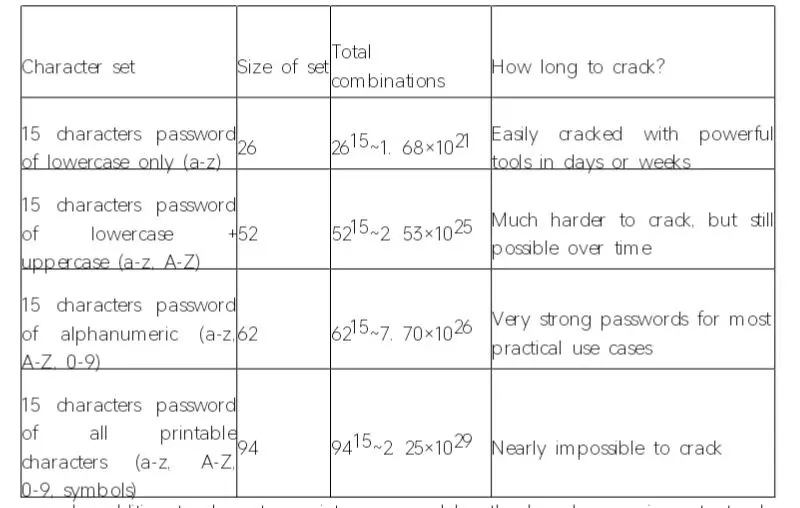
In addition to character variety, password length also plays an important role in security. Using passwords of 16 to 20 characters with at least two different character types-letters, numbers, or symbols-pushes the number of possible combinations into the trillions. Even high-end cracking farms would take years or centuries to break them. In reality, however, weak passwords are still very common. As Darren James, Senior Product Manager at Specops, notes, “Many users are still low-hanging fruit for online thieves, who can crack their passwords in seconds.”
1.What percentage of passwords are the most common type?
A.1.5%. B.3.3%. C.7.6%. D.8%.
2.What is the main factor the table compares?
A.The size of set. B.Use of letters.
C.The cracking method. D.Password length.
3.Why does the author quote Darren James?
A.To introduce his company. B.To warn the online thieves.
C.To stress the worrying reality. D.To criticize users for poor choices.
B
Dear Mom,
It’s me, Faisal Abdullah Malik, your son from Pakistan, who crossed the border for a heart transplant. You saved my life a decade ago by making a decision that only a mother as extraordinary as you could make.
On 26 December 2014, both our lives changed forever. Karthick, your beloved son, was brought to Tirupur Government Hospital, near Coimbatore, in southern India, after a tragic road accident. He was later transferred to G. Kuppusamy Naidu Memorial (GKNM) Hospital. When the doctors declared him brain dead, you had to face the unthinkable, holding his hand, saying your silent goodbyes.
In the depths of that unimaginable grief, Mom, you made a choice that speaks of boundless courage and selflessness. You not only gave me Karthick’s heart but also donated five other organs, giving the gift of life to six strangers. You made this difficult decision without ever questioning the race, religion, or nationality. Your decision was solely about saving lives.
Today, as a father of two growing children, I can truly understand the magnitude of your sacrifice. I can only imagine the storm of emotions you must have battled. Did you question if it was the right decision? Did you fear it was too much to bear? And yet, in the darkest hour of your life, you chose life for others. You chose hope. I know Karthick must be so proud of you, as am I, Mom. I am alive today because of your strength.
Tearing apart the political divide, I have longed to meet you, Mom. I have travelled to Chennai several times since receiving Karthick’s heart, always hoping to somehow find a way to Coimbatore. But my medical visa restricts me from travelling outside Chennai. You might be wondering why I don’t even call you? Names of donors and recipients are kept confidential, and I feel helpless.
Allah tells us in The Qur’an, “Whoever saves a life, it is as if they saved all of humanity.” Mom, you embody it. I love you, Mom, forever and always.
Yours always,
Faisal
4.What can we learn about Karthick from the text?
A.He donated all his organs to six strangers.
B.He received treatment in GKNM Hospital.
C.He died immediately in the road accident.
D.He was a man of courage and selflessness.
5.Which of the following words can best describe the mother?
A.Noble and open-minded. B.Friendly and hard-working.
C.Loyal and strong-willed. D.Modest and warm-hearted.
6.Why did Faisal feel “helpless” in the letter?
A.His poor health prevented his traveling.
B.He lost touch with his mother in India.
C.He was limited in his travel and contact.
D.The government banned border crossing.
7.What is the author’s primary purpose in writing this letter?
A.To ask for medical assistance.
B.To advocate for organ donation.
C.To record his transplant experience.
D.To express his sincere gratitude.
C
A study led by Professor Michael T. French shows that there is a strong connection between high school grades and how much money people earn later in life. The research, which was published in the Eastern Economic Journal, found that each additional point on a high school grade point average (GPA) can increase a person’s earnings by about 12% for men and 14% for women when they become adults.
Previous research has already shown that higher levels of education are connected to higher earnings, but the exact relationship between high school grades and income wasn’t well understood. French notes that while good grades are important for getting into college, this study is the first to show their impact on how much money people make later in life.
The study used information from the National Longitudinal Survey of Adolescent Health, looking at the records, demographics (人口特征), and backgrounds of over 10,000 people. Their educational background and income were checked when the participants were between 24 and 34 years old, which was about ten years after they finished high school.
The study looked at data for men and women separately and found that women generally have higher high school GPAs, but men earn more money each year. However, no matter the gender, a higher GPA makes it twice as likely for someone to finish college.
It’s also interesting to note that without considering GPA and other performance measures, students from disadvantaged backgrounds seem to have lower levels of education compared to their peers (同龄人). However, when these factors are included, these groups of students achieve higher levels of education if they have similar high school GPAs to their peers. This could be because students with good grades, regardless of their initial socioeconomic status, are more motivated to go to college.
By understanding the importance of high school performance, teachers and counselors (辅导员) can help students see how it affects both their short-term goals like getting into college and their long-term goals like how much they’ll earn as adults. The findings of the research are important for policymakers and educators who want to help students succeed.
8.What is the main value of French’s study?
A.Proving the value of higher education.
B.Measuring GPA’s effect on future income.
C.Finding women get higher grades than men.
D.Using a large national survey for research.
9.What is paragraph 4 intended to do?
A.To question the reliability of the data.
B.To stress the great importance of college.
C.To focus on the issue of gender inequality.
D.To present two key findings of the study.
10.What is suggested about disadvantaged students with good grades?
A.They lack the drive to attend college.
B.Their GPAs should be assessed differently.
C.They can achieve educational success equally.
D.Their family background still holds them back.
11.What can be the best title for the text?
A.The Gender Gap in Grades and Income
B.Financial Background Affects Achievement
C.High School Grades matter for Future Earnings
D.A Study on Education Equality and Career Success
D
Poet and Harvard Professor Henry Wadsworth Longfellow famously said, “Music is the universal language of mankind.” A new Harvard study suggests he may have been right.
The study conducted by a research team found that people around the world could identify lullabies (摇篮曲), dance songs, and comforting songs — regardless of the songs’ cultural origin — after hearing just a 14-second clip (片段). The finding suggests that not only is music deeply rooted in human nature, but that some types of songs break cultural boundaries.
The findings are based on a wide-reaching experiment in which 750 online participants in 60 countries listened to brief clips of songs collected from nearly 90 small societies around the world, including hunter-gatherers and some special farmers. Participants then answered six questions, rating each clip according to whether they believed the song was used for dancing, calming a baby, treating illness, or expressing love. Two additional uses — mourning (哀悼) the dead and telling a story — were included as controls.
The data showed that despite participants’ unfamiliarity with the cultures, the random sampling of each song, and the short duration of the samples, people were able to reliably infer the songs’ functions, and that their ratings were consistent across the world.
The findings ran counter to expert expectations. The team had also asked professionals, including performers, composers, psychologists, and scientists about whether they believed people would be able to identify the song types. Their answer was no. And not only that, but they predicted that people’s responses will be inconsistent with one another. “That’s not what we found,” the researchers said.
The researchers also wanted to know whether listeners were recognizing certain non-musical characteristics of the songs. To test that, the team conducted a second study. This time, they asked listeners about a number of contextual and musical features, ranging from the gender of the singers to the rhythm of the song.
When data from the two studies were combined, the results showed that songs of the same function shared similar characteristics — lullabies, for example, tended to be slower and simpler than dance music — suggesting that something about musical characteristics crosses cultural boundaries.
12.What did the participants do in the first study?
A.They distinguished functions of the songs.
B.They identified the cultural origins of the songs.
C.They recognized the non-musical characteristics of the songs.
D.They sorted the songs according to the gender of the singers.
13.What does the underlined part “ran counter to” in paragraph 5 probably mean?
A.Were equal to. B.Were similar to.
C.Were superior to. D.Were opposite to.
14.Why did the researchers carry out the second study?
A.To test the musical knowledge of a wider audience.
B.To collect more diverse songs from various cultures.
C.To confirm the surprising results from the first one.
D.To explore the underlying reasons behind the findings.
15.What can we learn from the two studies?
A.Listeners recognize music by its rhythm.
B.Something about music might be universal.
C.Dance music is usually slower and simpler.
D.Cultural similarities lead to similar musical features.
二、七选五
During the journey of achieving success, everyone often encounters obstacles that test their determination. Adversity is an unavoidable part of life, but the ability to manage it sets individuals apart. This ability is often referred to as Adversity Quotient (AQ). 16 While IQ and EQ focus on cognitive and emotional abilities, AQ focuses on one’s capacity to bounce back from failure. Fortunately, researchers suggest that your AQ is not fixed and can be strengthened through several key strategies.
Cultivate a growth mindset
A growth mindset is the belief that your abilities can be developed through dedication and hard work. Instead of seeing challenges as unbeatable barriers, you should view them as chances to improve. 17 . By focusing on learning and perseverance, individuals can significantly enhance their Adversity Quotient. This shift in thinking allows people to see themselves as active participants in their growth rather than passive victims.
18
Having a strong support network is crucial in times of adversity. Surrounding yourself with positive individuals can provide encouragement and guidance. Sharing experiences and looking for support from others who have faced similar challenges can help in building resilience and enhancing your adaptability. Knowing you are not alone often provides the extra strength needed to keep moving forward.
Learn from every setback
Every failure presents an opportunity for learning and growth. 19 . Reflecting on past experiences and identifying areas for improvement can contribute to the development of your resilience. This habit prevents individuals from being frozen by the fear of making mistakes again.
20 . With the right mindset, strong external support, and a habit of reflecting on setbacks, anyone can navigate life’s storms and emerge stronger than before. Resilience, after all, is not about never falling, but about how quickly you get back up.
A.Lean on a reliable community
B.Expand your social connection
C.Focusing on the negative side of a crisis is a natural tendency
D.This internal perspective acts as a guide through hardship
E.High AQ individuals actively draw lessons from their failures
F.It serves as a practical tool to evaluate one’s future potential
G.Embracing these shifts in attitude will lead to lasting growth
三、完形填空
My dad is 68 and on a fixed income. He is too 21 to ask for help, but I know money is tight. Yesterday, I went grocery shopping with him. He spent twenty minutes 22 everything in his head, choosing generic brands and 23 items back — doing that math my generation doesn’t have to do anymore.
At checkout, his card 24 . He wasn’t even surprised; he just quietly asked the cashier to remove items until the total 25 worked. The woman behind us in line, who didn’t look 26 at all, suddenly 27 and said, “Ring it all up on mine.”
My dad refused. But the woman 28 . He refused harder, his face turning slightly red. She looked him 29 in the eye and said, “Sir, someone did this for my family when I was 7 years old. I remember how 30 it made my dad feel to be unable to provide. But I also remember how we ate that week. Let me pay it forward. You can pay me back by doing the same for someone else when you are 31 ”
She paid $83 for his groceries and 32 to give her name. She just remarked that his turn would come and left. My dad cried in the car. Faced with numerous hardships, he never 33 in his life, yet that stranger’s silent understanding finally broke through his defenses.
I’m going to remember this. Next time I see someone 34 change at checkout, I’m going to be that 35 for them. Kindness, I realized, is a chain that should never stop moving.
21.A.tired B.proud C.lazy D.anxious
22.A.calculating B.evaluating C.reviewing D.predicting
23.A.taking B.putting C.throwing D.pushing
24.A.worked B.disappeared C.broke D.declined
25.A.eventually B.constantly C.occasionally D.suddenly
26.A.healthy B.wealthy C.friendly D.lonely
27.A.turned up B.looked around C.stepped forward D.passed by
28.A.hesitated B.wondered C.bargained D.insisted
29.A.sharply B.directly C.narrowly D.fixedly
30.A.small B.brave C.calm D.restless
31.A.lucky B.able C.generous D.stable
32.A.promised B.failed C.decided D.refused
33.A.took credit B.gave way C.held ground D.took flight
34.A.counting B.trading C.checking D.saving
35.A.cashier B.witness C.person D.hero
四、语法填空
A Latin translation of The Tao Te Ching, 36 (forget) in the British Library for more than 300 years, has recently been rediscovered and published through the efforts of Misha Tadd, a scholar at Nankai University.
Tadd says, “Compared with The Analects of Confucius, which 37 (root) in the traditions and rules of the Spring and Autumn Period (770-476 BC), The Tao Te Ching does not involve specific names, places, 38 social systems.” This quality allows it to go beyond cultural boundaries and speak directly to universal human concerns.
Tadd’s connection with The Tao Te Ching began at the age of 14, when he came 39 an English edition in a small-town library in the United States. That chance encounter sparked 40 one-of-a-kind interest in Chinese culture.
Years later, while 41 (study) a Latin translation of The Republic by Plato, Tadd wondered if The Tao Te Ching could also be translated into Latin. His search eventually led him to the British Library, 42 he discovered a Latin manuscript of the text, translated by early missionaries. He discovered parts of the manuscript were faded and 43 (complete), and it was not until 2022 that he obtained a full digital scan of the work. He spent a long time transcribing, comparing, and annotating the text word by word. “It requires enduring 44 (patient),” Tadd says.
The thought system of The Tao Te Ching is grounded in China, but its interpretation and influence are now 45 (true) global.
五、书面表达
第一节(满分15分)
假定你是李华,你校英文报正在开展以“Traditional Culture in the Digital Age”为主题的征文活动。请你写一篇短文投稿,内容包括:
1. 传统文化的数字化现状;
2. 数字化带来的影响;
3. 你的看法。
注意:
1. 写作词数应为80左右;
2. 请按如下格式在答题卡的相应位置作答。
第二节(满分25分)
阅读下面材料,根据其内容和所给段落开头语续写两段,使之构成一篇完整的短文。
I moved to the US alone three months ago. I missed my family and friends so much that I felt lonely and isolated. One day, I volunteered at an animal shelter. There I met Luna, a stray cat that had been badly hurt. She was so scared that she hid in the corner of her cage and refused to come out or let anyone touch her. I felt a connection with Luna—we were both lonely and trying to find a place to belong. I decided to adopt her.
When I brought Luna home, she still refused to trust anyone. She ran under the bed and stayed there for two days. I left food and water near the bed, but I didn’t disturb her. I knew trust takes time. I sat by the bed every night, talking to her softly about my life in this new country. Gradually, Luna relaxed a little, but she still didn’t show up.
Paragraph 1:
I opened the cage door and sat quietly beside her.
Paragraph 2:
Luna’s progress soon began to change me as well.
注意:
1. 续写词数应为150左右;
2. 请按如下格式在答题卡的相应位置作答。
答案(含作文范文)
一、阅读理解
1.D 2.A 3.C 4.B 5.A 6.C 7.D 8.B 9.D 10.C 11.C 12.A 13.D 14.D 15.B
二、七选五
16.F 17.D 18.A 19.E 20.G
三、完形填空
21.B 22.A 23.B 24.D 25.A 26.B 27.C 28.D 29.B 30.A 31.B 32.D 33.B 34.A 35.C
四、语法填空
36.forgotten 37.is rooted 38.or 39.across 40.a 41.studying 42.where 43.incomplete 44.patience 45.truly
五、书面表达
第一节
Traditional Culture in the Digital Age
In the digital age, traditional Chinese culture is experiencing a new form of preservation. For example, the Palace Museum uses digital technology to document each cultural relic in detail, allowing people to explore them on virtual screens. This not only lets them “live forever” digitally but also conveys the brilliance of Chinese civilization. Through such technology, we can explore restored ancient relics at any time.
Digital tools thus bridge the past and the future of Chinese culture. They make cultural resources easier to access and more engaging for the public. By combining technology with respect for tradition, I believe we can ensure that traditional culture continues to live.
第二节
I opened the cage door and sat quietly beside her. I didn’t reach out, but simply leaned against the wall, humming a soft tune from my childhood against the sound of the rain lashing the windows. I expected to wait a long time, yet to my great surprise, I soon felt a faint, warm pressure against my knee. Luna had crept out from the shadows, her emerald eyes fixed on mine. With a trembling heart, I tentatively stroked her soft fur. She didn’t run; instead, she let out a tiny, shaky purr. In that small, shared space, I realized I had finally gained her trust, and the cold knot of loneliness in my chest began to dissolve.
Luna’s progress soon began to change me as well. Watching her transform from a terrified stray into a confident companion gave me a new perspective. If Luna could adapt to her new environment, I realized I could do the same. Inspired by her bravery, I began to step out of my shell, joining other volunteers for lunch and sharing stories about my culture. My once-quiet apartment was no longer a cage, but a home filled with warmth. I finally understood that a sense of belonging isn’t something you find on a map; it’s something you build through connection, one small step at a time.

