7.12雅思考试阅读真题:The Importance of Being Playful 保持爱玩心态的重要性
- 2026-09-23 13:40:52
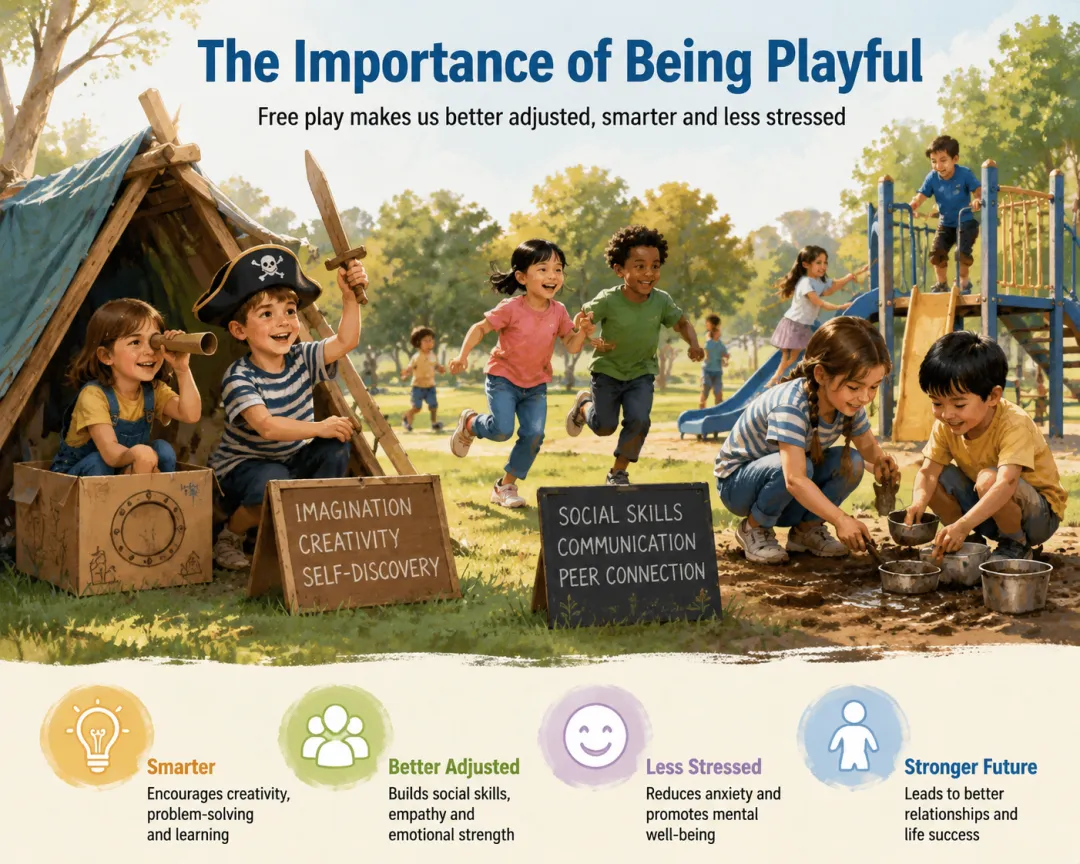
The Importance of Being Playful
Free play makes us better adjusted, smarter and less stressed
A While it has long been recognized that play affords benefits that last through adulthood, psychologists in the US are now becoming concerned that lack of play could actually be, harming their country's kids. In the past, few.children grew up without ample free-play 15. time. But youngsters' leisure hours are now filled with structured activities such as music lessons and sports. Kids play soccer, Scrabble and saxophone so why are experts worried that these activities are eating into free play?. Most games are fun and sources of learning experiences fostering group cohesion, for instance, says educational psychologist Anthony Pellegrini. But, Pellegrini explains, "games have predetermined rules-set up in advance and followed Play, on the other hand, does not have rules... affords more creative responses. Children initiate and create free play, and use their imagination to try out new activities and roles."
B Perhaps most crucially, play helps us develop strong social skills. "You don't become socially competent via teachers telling you how to behave. Pellegrini says. "Kids learn those skills by interacting with peers, learning what is and isn't acceptable. They want this thing to keep going, so they're willing to 'go the extra mile to accommodate their playmates` desires. Keeping things friendly requires communication - arguably the most. valuable social skill of all, Play among peers is the most important in this regard." Studies show that children use more sophisticated language when playing with other. children than when playing with adults. In pretend play, for instance, they have to communicate about something that's not physically present, so they have to use complicated language to communicate what it is that they're trying to say," Pellegrini explains.
C If play helps children become socialized, then lack of play should impede social development and research suggests that it does. A study of children in Michigan revealed that kids who enrolled in play-oriented preschools were more socially adjusted later in life- and less likely to commit a felony or be suspended from work - than kids who attended play-free preschools where they were constantly instructed by teachers.
Questions 14-18
Reading Passage 2 has eight paragraphs, A-H.
Which paragraph contains the following information?
Write the correct letter, A-H, in boxes 14-18 on your answer sheet.
NB You may use any letter more than once.
14 reference to how play can develop children's verbal skills. ..............
15 mention of a change in the amount of free play children engage in. ..............
16 an account of some research indicating that free play stimulates children's creativity. ..............
17 evidence of the link between antisocial behaviour and a lack of free play. ..............
18 a comparison between free play and other forms of play. ..............
Questions 19-22
Look at the following statements about free play (Questions 19-22) and the list of researchers below.
Match each statement with the correct researcher, A, B, C or D.
Write the correct letter, A, B, C or D, in boxes 19-22 on your answer sheet.
NB You may use any letter more than once.
19 It encourages children to take other people`s wishes into account. ............
20 It can serve to relieve stress. ............
21 It prepares children for dealing with unpredictable situations. ............
22 It is less useful for children when adults are involved. ............
List of researchers
A Anthony Pellegrini
B Jaak Panksepp
C Stephen Siviy
D Marc Bekoff
私信up主免费领取完整原文,答案,解析,机考刷题账号!