APS系列复习指导-《财务报表分析》课程
- 2026-10-07 22:36:28
指导说明
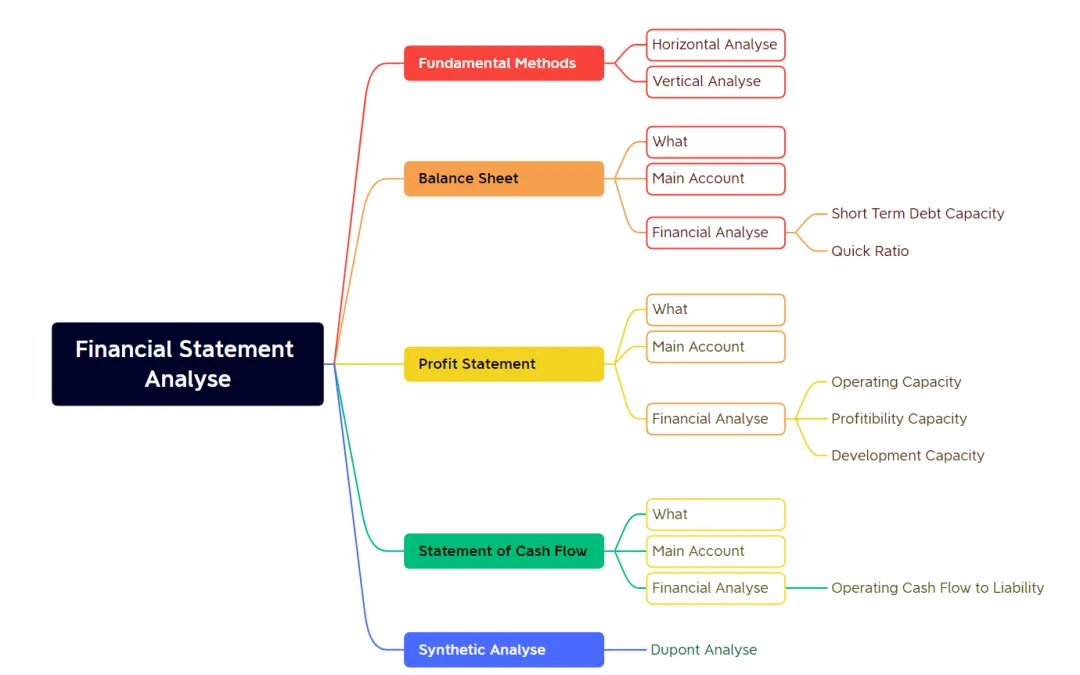
Financial statement analysis is a method involving specific techniques to evaluate risks, performance, financial health and future prospects of an organization.
财务报表分析是审查和分析公司财务报表以做出更好的经济决策的过程。这些报表包括损益表、资产负债表、现金流量表和权益变动表。财务报表分析是一种涉及特定技术的方法,用于评估组织的风险、绩效、财务状况和未来前景。大家可以从这个方向下手:学习了如何分析资产负债表、利润表、现金流量表以及如何分析财务效率。
在这门科目中比较重要的一部分就是分析财务报表的方法。需要能简单的说明。比如:横向分析和纵向分析。横向分析比较一段时间内的财务信息,通常来自过去的季度或年份。纵向分析是对财务报表的百分比分析。财务报表中列出的每一行项目都以另一行项目的百分比列出。There are two methods to analyze the balance sheet, horizontal analysis and vertical analysis. Horizontal analysis compares financial information over time, usually from past quarters or years. Vertical analysis is a percentage analysis of financial statements. Each line item listed in the financial statements is listed as a percentage of the other line item.

资产负债表
Balance sheet
资产负债表是这个科目中最核心的内容,审核时候的重点,当然笔试中也可能大机率的出现。
是以“资产=负债+所有者权益”为平衡关系编制的报表,反映企业的财务状况。
It is a statement prepared with "assets=liabilities+owner's equity" as the balance relationship, reflecting the financial status of the enterprise.
在资产负债表中里面有一些常见的表内数据需要能够罗列出一些,并且能够解释。
比如:
Asset:
流动
·货币资金 Monetary Capital
·应收账款 Account receivable
·存货inventories
非流动
·长期股权投资 long term equity investment
·固定资产 fixed asset
Liability:
·短期借款 Short Term borrowing
·应付账款 Accounts payable
Ownership interest:
·实收资本 Paid in Capital
·资本公积Capital Reserve

利润表
Profit Statement
利润表是反映企业在一定时期经营成果的会计报表。
Reveal the income and expense of the enterprise in a certain period(a month/a season or a year...).
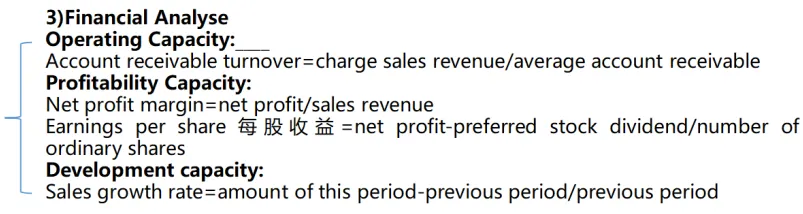
Operating income/operating cost:
The total inflow of economic benefits formed in the course of daily business operations of the enterprise.
营业收入:
企业在从事日常经营业务的过程中形成的经济利益的总流入。
毛利(gross profit)
Equals Operating income Minus operating cost
Including selling expenses; Administrative expenses; R&D expenses; Financial expenses
营业成本
销售费用;管理费用;研发费用;财务费用

现金流量表
Statement of Cash flow
The accounting statements reflecting the inflow and outflow of cash and cash equivalent in a certain accounting period can generally reflect the impact of business activities, investment activities and financing activities on the cash flow of an enterprise during the accounting period.
反应一定会计时期,现金和现金等价物流入流出相关信息的会计报表,可以概括反映企业会计期间所发生的经营活动、投资活动和筹资活动对其现金流所产生的影响。
Main Account
1).Cash from selling goods and providing labor services销售商品提供劳务取得的现金
2)Cash Flow from Financing Activity筹资活动所取得的现金
Investment of cash/the cash form investment
Cash borrowed form banks
1) Cash flow from buying product paying for wage
Financial Analyse
Operating cash flow to liability现金与负债总额比率=经营活动现金净流量与平均总负债的比率
=Ratio of net cash flow from operating activities to average total liabilities
It reflects how much debt the enterprise can bear based on its ability to create cash
The higher the ratio, the stronger the ability to bear debt; The lower the proportion, the weaker the ability to bear debt
反映了企业依据自身创造现金的能力多能承担债务规模的大小
比率越高,说明承担债务的能力就越强;比例越低,承担债务的能力就越弱

杜邦分析
Dupont analysis
杜邦分析法是本科内需要重点记忆的内容。包括里面一些专有名词的名词解释,也是常常被考到的内容。
Return on equity (ROE) is a comprehensive indicator of a firm’s performance because it provides an indication of how well managers are employing the funds invested by shareholders to generate returns. Dupont analysis break ROE into three parts, profit margin, total assets turnover and equity multiplier.
ROE=profit margin×total assets turnover×equity multiplier.
=net profit/sales revenue×sales revenue/total assets×total assets/equity
equity multiplier refers to the liability level of the company, the bigger equity multiplier is, the higher liability level it has.
股本回报率(ROE)是一个公司业绩的综合指标,因为它表明了管理层如何利用股东投资的资金来产生回报。杜邦分析将净资产收益率分为三部分,即利润率、总资产周转率和权益乘数。
ROE=利润率×总资产周转率×权益乘数。
=净利润/销售收入×销售收入/总资产×总资产/股权乘数是指公司的负债水平,股权乘数越大,负债水平越高。
SPRING FESTIVAL

SPRING FESTIVAL

