考研英语真题长难句攻坚计划|Day11
- 2026-09-21 10:10:55
考研
英语



【长难句每日打卡】day 11

2013-1-ReadingPartC-3-2 讲义74页
文章主题:《花园始于人类的需求》
When we are deprived of green, of plants, of trees, most of us give into a demoralization of spirit which we usually blame on some psy chological conditions, until one day we find ourselves in a garden and feel the oppression vanish as if by magic.
词汇:
1.deprive v.剥夺、使丧失 deprive sb of sth剥夺某人某物
2.demoralization n.士气低落
3.blame v.责怪、指责 blame A on B 把A归咎于B
4.psychological adj.心理的、精神上的
5.oppression n.压迫、压迫感、郁闷
6.vanish v.消失
7.give into v.向...让步、屈服于


【Step 1】找谓语
When we are deprived of green, of plants, of trees, most of us give into a demoralization of spirit which we usually blame on some psy chological conditions, until one day we find ourselves in a garden and feel the oppression vanish as if by magic.
·本句谓语动词都是一般现在时态
【Step 2】断句
[When we are deprived of green, of plants, of trees], most of us give into a demoralization of spirit [which we usually blame on some psy chological conditions], until one day [we find ourselves in a garden and feel <the oppression vanish as if by magic>].
解析:
本句共包含四个从句:1.when引导的时间状语从句;2.which引导的定语从句;3.省略when的定语从句;4.省略连接词that的宾语从句。
when引导的时间状语从句:
判断方法:1.位置:在句首:when...,完整句.
which引导的定语从句:
...a demoralization of spirit [which we usually blame on some psy chological conditions],...
判断方法:
鉴于which引导的从句在名词|代词后,即要么定从,要么同位从。
判断方法1<站在定语从句的角度进行判断>:1.位置:在名词|代词后;2.指代功能:代入翻译 通顺即可<which指代demoralization在从句中作blame的宾语>,<我们通常将demoralization归咎于某些精神状况>。
判断方法2<站在同位语从句的角度进行判断>:1.位置:在名词|代词后;2.译为“A是B"通顺即可。显然,<demoralization≠which we usually blame on some psy chological conditions>,因此不是同位从。
⚠️注意:本句中出现了后置定语的分隔结构,即“名词|代词+后置定语1+后置定语2”——后置定语1:介宾结构of spirit;后置定语2:which定语从句——二者都修饰demoralization。
省略when的定语从句:
..., until one day [we find ourselves in a garden and feel <...>].
判断方法:1.位置:在名词|代词后;2.指代功能:该名词|代词表时间(day)<day是典型的表示时间的名词,所以可以将关系词when直接省略>。
省略连接词that的宾语从句:
... feel <the oppression vanish as if by magic>].
判断方法:1.位置:在动词|介词后(feel)<that引导宾从可省略>。
重点成分标注:
主语:在句首|谓语前
宾语:在动词|介词后
表语:在系动词后
主语:蓝色;谓语:红色;表语:绿色;宾语:紫色;宾补:深蓝
主句:
most of usgive intoa demoralization of spirit...
when引导的时间状语从句:
which引导的定语从句:
...a demoralization of spirit [which we usually blameon some psy chological conditions],...
省略when的定语从句:
..., until one day [wefindourselves in a garden and feel <...>].
省略连接词that的宾语从句:
...feel <the oppressionvanish as if by magic>].
【Step 3】翻译
·翻译思路:
1.when引导的时间状语从句保留在原位置,即直接顺译【中英文在状语方面的差别:英文:往往先说正事,再说废话;中文:往往先说废话,再说正事。
注意⚠️:通俗讲就是,在汉语语文课堂上,老师教我们写作时,往往说“同学们,我们要先交代时间地点条件等,再说发生了什么事!;而英语则是先说发生了什么事,再说什么时间什么地点等不重要的状语成分。
我们在课堂上讲过状语常见的位置:以when引导的时间状从为例:1.句首:when...,完整句;2:句尾,完整句when....;3.主谓之间:主语,when...,谓语...;甭管是以上哪种情况,译为汉语时,我们通常都会译为“当...,谁干啥了。”
例句:英文:My mother was sleeping when I was back. 中文:我回来的时候,妈妈正在睡觉。
2.which引导的定语从句出现了分隔结构,这种结构在翻译时,我们通常采取融合法:前置法+后置法<即将短的后置定语前置,译为“...的”;将长的后置定语单独成句>。
3.省略when的定语从句采取后置译法,即单独成句<当后置定语词数>8个时,通常采取后置译法>;
4.省略that的宾语从句则直接顺译。
when引导的时间状语从句:
中文:当我们被剥夺了绿色、植物和树木时。
改译:当我们丧失了绿色、植物和树木时。
注意⚠️:中英文在被动上的差异!
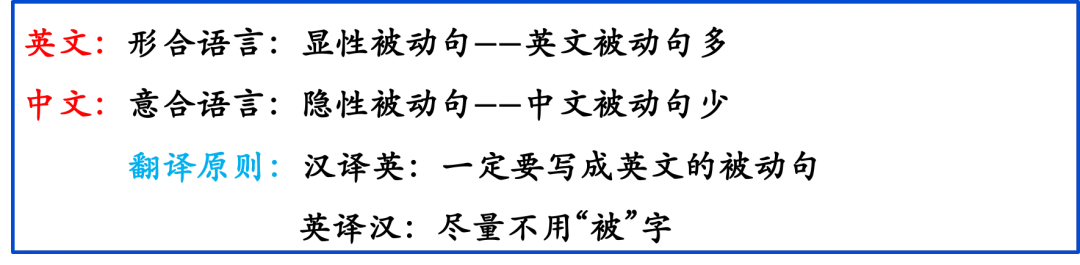
理解:“我们被剥夺了某些东西”,即“我们失去了或丧失了某些东西”。
主句:
英文:most of us give into a demoralization of spirit...
中文:我们大多数人会屈服于一种精神颓丧。
which引导的定语从句:
英文:...a demoralization of spirit [which we usually blameon some psychological conditions],...
中文:我们通常将这种精神颓丧归咎于某些精神状况。
省略when的定语从句+省略连接词that的宾语从句:
英文:..., until one day [we find ourselves in a garden and feel <the oppression vanish as if by magic>].
中文:直到有一天,我们发现自己在花园里,并感觉这种压迫神奇般地消失了。
当我们丧失了绿色、植物和树木时,我们大多数人会屈服于一种精神颓丧。我们通常将这种精神颓丧归咎于某些精神状况。直到有一天,我们发现自己在花园里,并感觉这种压迫神奇般地消失了。


1.deprive v.剥夺、使丧失 deprive|rob sb of sth剥夺某人某物
2.demoralization n.士气低落
3.moral n.道德、道义
4.moralize v.论道德、说教
5.demoralize v.使泄气、使灰心
6.blame v.责怪、指责
7.blame A on B 把A归咎于B
8.blame sb for sth因某事责怪某人
9.psychological adj.心理的、精神上的
10.oppression n.压迫、压迫感、郁闷
11.oppress v.压迫、压制(某群体);使烦恼、焦虑;
12.suppress v.镇压、压制(暴乱、叛乱等)
13.vanish v.消失
14.give into v.向...让步、屈服于


1.sb be deprived| robbed of sth 某人丧失|失去了...

END

评论区留言或私信晒出你的学习笔记or提出疑问,
看到即答复!
祝大家考研上岸!
扫码关注