7.8雅思考试阅读真题:A River Reveals its Roman Past 河流揭开古罗马往事
- 2026-09-23 03:28:03

A River Reveals its Roman Past
A 2,000 years ago the town of Arles, in what is now south-western France, was a busy gateway to the area of the Roman Empire known as Gaul. Goods from all over the Mediterranean were transferred there to barges – long, shallow riverboats – then pulled up the Rhône river to supply the northern half of the great empire. Today, Arles is a small, quiet place, and the Rhône is polluted and mostly ignored.
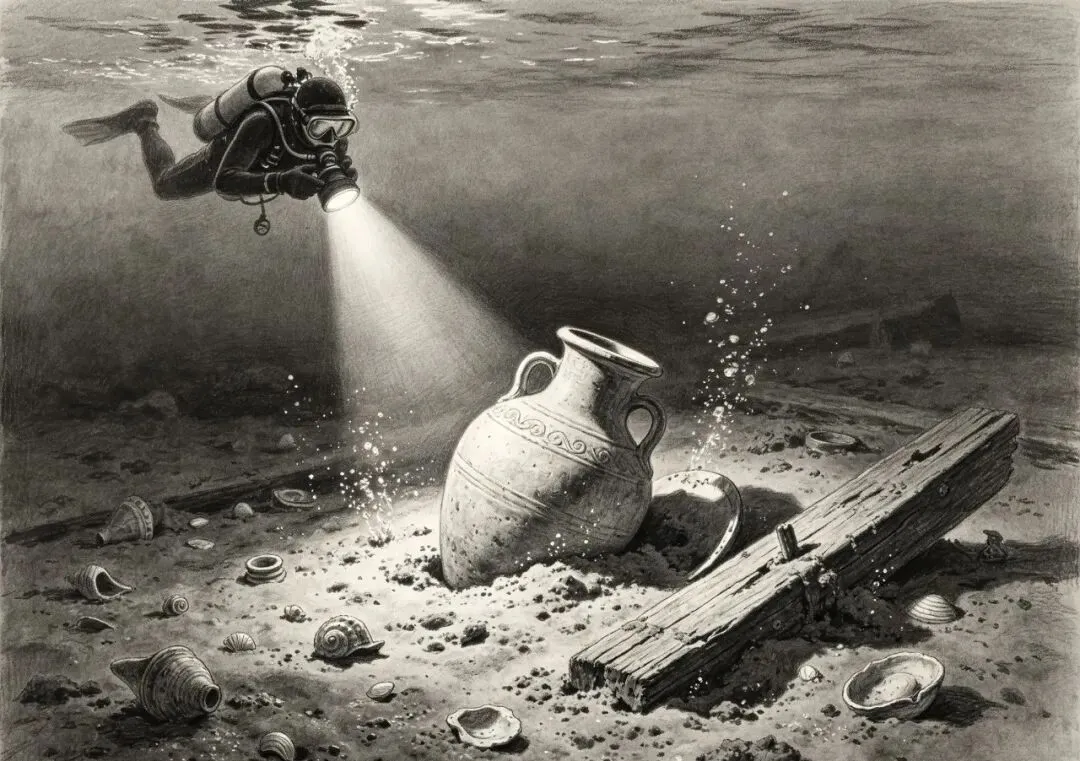
B Archaeologist Luc Long is a native of Arles. He had already worked on sunken ships all over the Mediterranean when, in 1986, a friend persuaded him to dive for the first time in his home river. Long reluctantly agreed. The two men entered the river on a chilly November morning, when the water was around 8°C, thick, cloudy and foul-smelling. They could see no more than a metre ahead through the murky water. At a depth of about six metres, Long saw a sunken truck. To his surprise, he discovered an ancient Roman jar – known as an amphora – on the driver’s seat. These containers were used throughout the Roman Empire to transport olive oil, fish sauce, and other products. When empty, they would simply be discarded. Within a short time the divers found themselves swimming over a vast field of amphorae. Long had never seen so many intact ones, and he has been mapping this Roman rubbish dump ever since.
C For the first 20 years or so, no one paid much attention to what Long was doing. When, in 2004, one of his colleagues came across a 34-metre-long Roman barge, Long doubted that there would ever be enough money available to raise it. In 2007, Long handed over the study of this wreck – which he named Arles-Rhône 3 – to three younger archaeologists, and continued his survey of the rest of the dump, around 50 metres upstream. This was where he started finding pieces of the Roman town of Arles, including statues. Word began to leak out. The French customs police warned Long that antiquities thieves might be watching his operation. So when his divers found a two-metre statue of the god Neptune, they brought it to the surface at night.
Questions 1-6
Do the following statements agree with the information given in the text?
Choose
TRUE if the statement agrees with the information
FALSE if the statement contradicts the information
NOT GIVEN if there is no information on this.
1 In 1986 Luc Long had been looking for an opportunity to dive in the Rhone for some time. ...........
2 Long and his friend were the first divers to find Roman remains in the Rhone. ...........
3 Long's work in the Rhone attracted immediate interest. ...........
4 It was thought that the Neptune statue would be of interest to thieves. ...........
5 Benoit Poinard doubted that the barge could be raised in one diving season. ...........
6 The restorers were surprised to discover a silver coin in the barge. ...........
私信up主免费领取完整原文,答案,解析,机考刷题账号!