我一直提倡高中英语学习要坚持“考啥学啥,不考不学”的原则,因为只有这样,你才有时间兼顾到高考所有科目,给自己的高考复习做出合理的时间安排。
关于学单词,也是一样。你只有知道高考经常考什么,有针对性的背诵,而且结合具体语境背单词才能有立竿见影的效果。
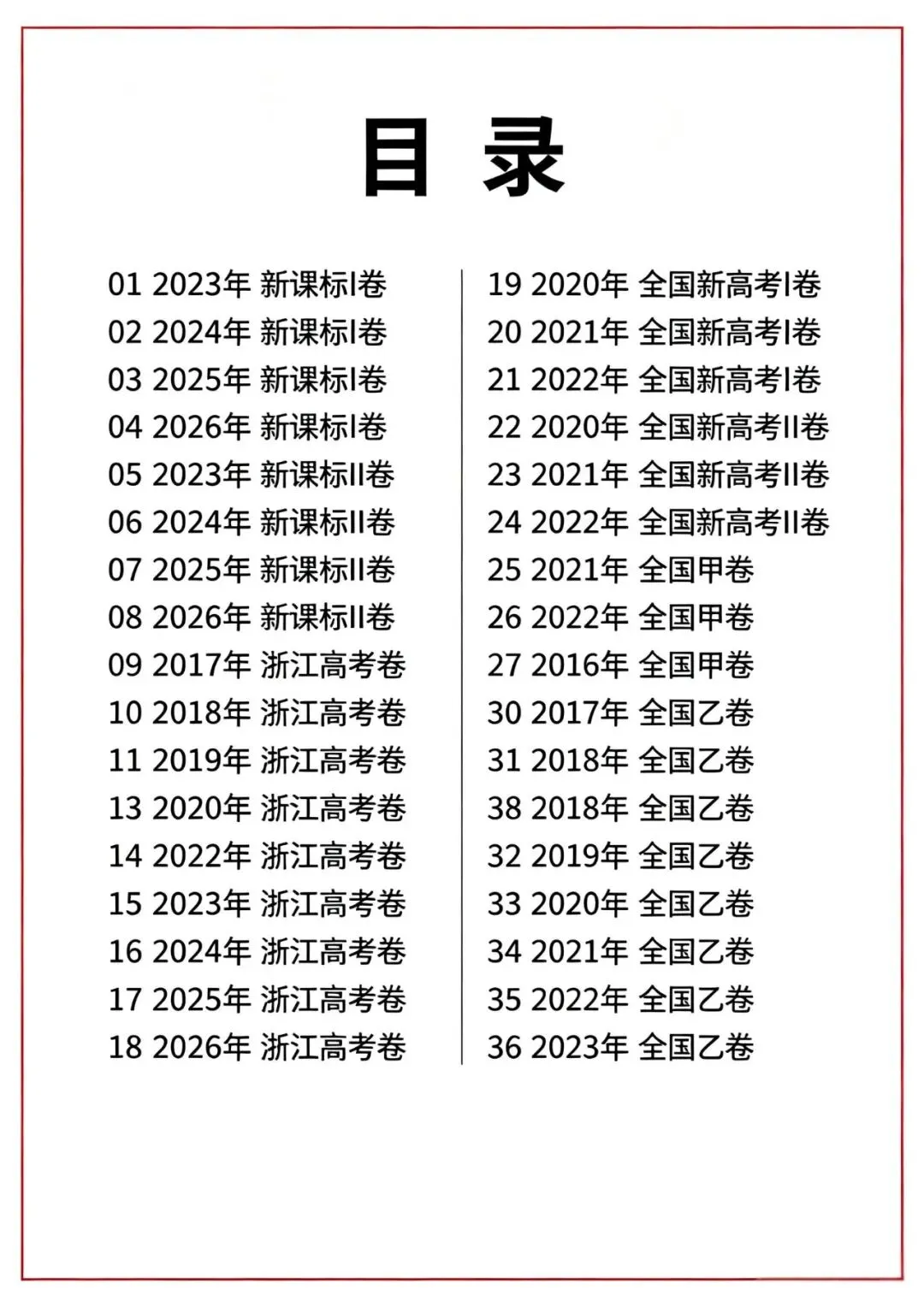
最近,我完成了《用历年高考真题学高考高频词》这份学习资料。整本资料共收集了近十年高考英语真题(含全国高考、浙江高考等数十套),并用真题文章作为素材整理了文中出现的重要的新课标单词。
高中生宝宝们阅读这份材料,不仅能迅速熟悉高考文章的风格也能同时掌握单词,达到一箭双雕的效果。因此,特别适合时间不够,又急于想提高词汇量和成绩的同学。
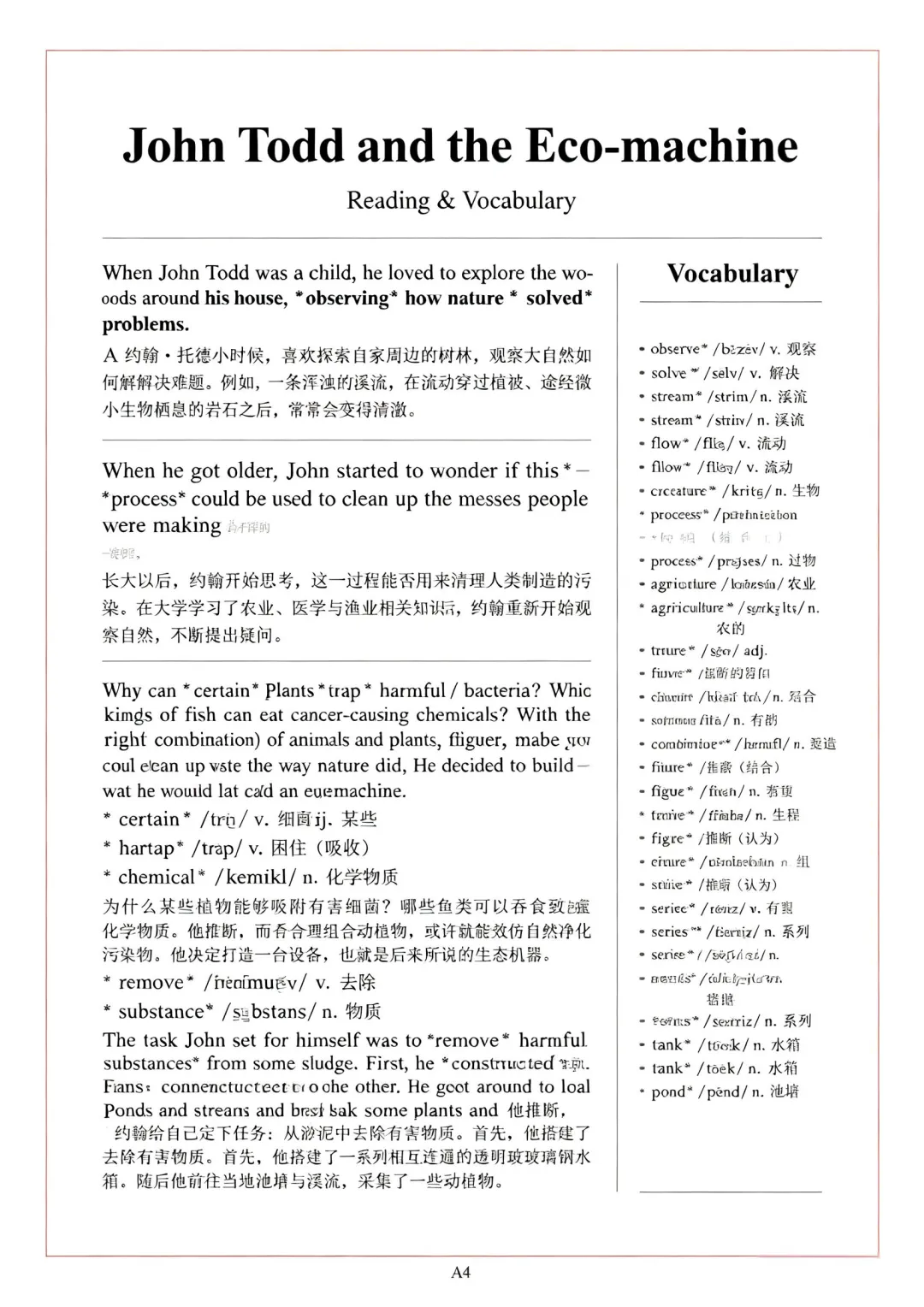
价格49.9元(纸质版全国包邮),需要的宝宝可以在评论区留言或私信我。以下是选自2024年全国新课标一卷文章样稿。
John Todd and His Eco-machine
When John Todd was a child, he loved to observe(/əbˈzɜːv/;v.;观察) the woods around his house,observing(/əbˈzɜːv/;v.;观察) how naturesolves(/sɒlv/;v.;解决) problems. A dirty stream(/striːm/;n.;溪流), for example, often became clear afterflowing(/fləʊ/;v.;流动) through plants and along rocks where tiny creatures(/ˈkriːtʃə/;n.;生物) lived.
中文翻译:约翰·托德小时候,喜欢观察家周围的树林,探寻大自然解决问题的方式。例如,一条浑浊的溪流,在流经植物地带和栖息着微小生物的岩石后,往往会变得清澈干净。
When he got older, John started to wonder if this process(/ˈprəʊses/;n.;过程) could be used to clean up the messes people were making. After studying agriculture(/ˈæɡrɪkʌltʃə/;n.;农业), medicine, and fisheries in college, John went back to observing(/əbˈzɜːv/;v.;观察) nature and asking questions.
中文翻译:长大后,约翰开始思考能否将这一自然过程用于清理人类造成的污染。大学期间学习了农业、医学和渔业相关知识后,他重新回归对自然的观察,不断探索、提出疑问。
Why can certain(/ˈsɜːtn/;adj.;某些) plants trap(/træp/;v.;困住(吸收)) harmful(/ˈhɑːmfl/;adj.;有害的) bacteria(/bækˈtɪəriə/;n.;细菌)? Which kinds of fish can eat cancer-causingchemicals(/ˈkemɪkl/;n.;化学物质)? With the rightcombination(/ˌkɒmbɪˈneɪʃn/;n.;组合(结合)) of animals and plants, he figured(/ˈfɪɡə/;v.;推断(认为)), maybe he could clean up waste the way nature did. He decided to build what he would later call an eco-machine.
中文翻译:为什么某些植物可以吸附有害细菌?哪些鱼类可以分解致癌化学物质?他推断,只要合理搭配动植物,或许就能效仿自然的方式净化污染物。于是他决定打造一台设备,这便是后来的生态机器。
The task John set for himself was to remove(/rɪˈmuːv/;v.;去除) harmful(/ˈhɑːmfl/;adj.;有害的) substances(/ˈsʌbstəns/;n.;物质) from some sludge. First, he constructed(/kənˈstrʌkt/;v.;建造) a series(/ˈsɪəriːz/;n.;系列) of clear fiberglass tanks(/tæŋk/;n.;水箱) connected to each other. Then he went around to local ponds(/pɒnd/;n.;池塘) and streams and brought back some plants and animals.
中文翻译:约翰给自己定下的目标是去除淤泥中的有害物质。首先,他搭建了一系列相互连通的透明玻璃水箱,随后前往当地的池塘和溪流,采集了各类动植物放入水箱中。
He placed them in the tanks and waited. Little by little, these different kinds of life got used to one another and formed their own ecosystem. After a few weeks, John added the sludge. He was amazed at the results.
中文翻译:他将动植物安置在水箱中耐心等待。渐渐地,这些不同的生物相互适应,形成了专属的小型生态系统。几周后,约翰向水箱中投入淤泥,最终的实验结果让他大为震惊。
The plants and animals in the eco-machine took the sludge as food and began to eat it! Within weeks, it had all been digested(/daɪˈdʒest/;v.;消化), and all that was left was pure(/pjʊə/;adj.;纯净的) water.
中文翻译:生态机器中的动植物将淤泥当作食物不断分解吸收!短短数周,淤泥被完全分解,水箱中最终只剩下纯净的清水。
Over the years, John has taken on many big jobs. He developed(/dɪˈveləp/;v.;开发(发展)) agreenhouse(/ˈɡriːnhaʊs/;n.;温室) — like facility(/fəˈsɪləti/;n.;设施) that treated(/triːt/;v.;处理) sewage from 1,600 homes in South Burlington. He also designed an eco-machine to clean canal(/kəˈnæl/;n.;运河) water in Fuzhou, a city in southeast China.
中文翻译:多年来,约翰承接了诸多大型生态治理项目。他研发出一套温室式净水设施,能够处理南伯灵顿1600户居民产生的污水。他还为中国东南城市福州设计了生态机器,用于净化运河水质。
“Ecological(/ˌiːkəˈlɒdʒɪkl/;adj.;生态的) design” is the name John gives to what he does. “Life on Earth is kind of a box of spare parts for the inventor(/ɪnˈventə/;n.;发明家),” he says. “You put organisms(/ˈɔːɡənɪzəm/;n.;有机体(生物)) in new relationships(/rɪˈleɪʃnʃɪp/;n.;关系) and observe(/əbˈzɜːv/;v.;观察) what’s happening. Then you let these new systems(/ˈsɪstəm/;n.;系统) develop their own ways to self-repair.”
中文翻译:约翰将自己的研究工作命名为“生态设计”。他说:“地球上的生命,就像是发明家的一套备用素材库。我们只需让各类生物建立全新的共生关系,观察系统的变化,再任由这些全新的生态系统形成自我修复的运转模式。”
 10个月宝宝每天需要喝多少奶粉?

